Source : INDIA TODAY NEWS
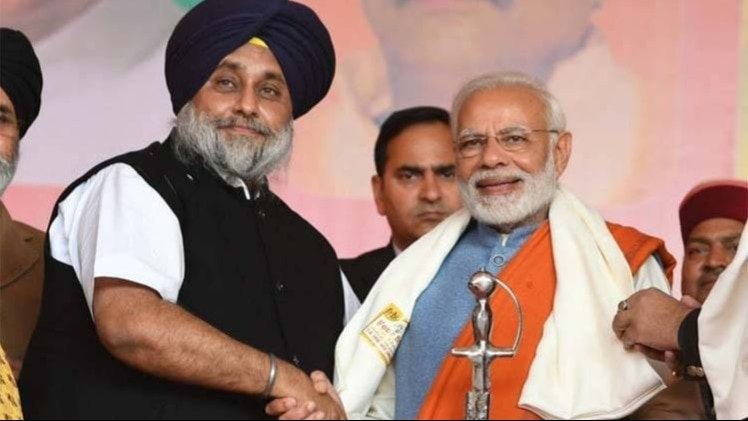
Shiromani Akali Dal (SAD) president Sukhbir Singh Badal’s recent meeting with Prime Minister Narendra Modi in Delhi, followed by the party’s support for key bills, has reignited speculation about a possible BJP-SAD alliance ahead of the 2027 Punjab Assembly elections.
The meeting, the first significant public engagement between the two sides since their split over the farm laws in 2020, has also brought renewed attention to a relationship that has rarely been straightforward. While political exchanges between the two parties had remained strained in Punjab over the past several years, the relationship between the Shiromani Akali Dal and the Jana Sangh, and later the BJP, has historically oscillated between confrontation and cooperation.
advertisement
Their political journey reflects decades of shifting alliances, ideological disagreements and electoral compulsions. It also offers insight into the roots of mistrust towards the BJP among sections of the Sikh community.
At the core of the relationship was not necessarily ideological convergence, but a shared opposition to the Congress. This common ground, at various points, also brought the Akalis closer to Left parties despite significant ideological differences.
THE RELATIONSHIP DATES BACK TO 1952
The political engagement between the Akalis and the Jana Sangh can be traced to the first general elections of 1952 and the political developments that followed in Punjab.
There were periods when the Akali Dal worked with the Congress, while the Jana Sangh opposed such arrangements. The Hindi-Punjabi language divide later emerged as one of the most significant points of contention between the two parties.
HINDI AGITATION AND PUNJABI SUBA MORCHA
The demand for a Punjabi Suba became one of the biggest fault lines in the relationship. While the Akali Dal strongly advocated for a Punjabi-speaking state, the Jana Sangh firmly opposed the demand.
The language issue became deeply intertwined with Punjab’s politics and widened the ideological and political divide between the two sides.
The Nehru-Tara Singh agreement also became a source of disagreement. Jana Sangh leader Atal Bihari Vajpayee questioned aspects of the understanding, reflecting the party’s broader opposition to the Akali position on Punjab’s political and linguistic demands.
FROM CONFRONTATION TO COALITION GOVERNMENTS
Despite their differences, political compulsions eventually brought the Akali Dal and the Jana Sangh together.
The two parties formed coalition governments in Punjab at different points, with their partnership largely driven by the objective of challenging Congress dominance.
Former Punjab Chief Minister Justice Gurnam Singh’s observations on the Jana Sangh’s role in coalition politics provide important insight into the nature of this alliance.
However, the partnership remained fragile and often vulnerable to disputes over regional and identity-related issues.
GURU NANAK UNIVERSITY ISSUE EXPOSES FAULT LINES
Differences resurfaced over the jurisdiction of Guru Nanak University.
The Jana Sangh eventually withdrew from the coalition over the issue, highlighting how questions concerning Punjab’s identity, institutions and regional interests could quickly strain the alliance.
THE 1981 CIGARETTE-BEEDI CONTROVERSY
The relationship came under strain again in 1981 when a march supporting the interests of the cigarette and beedi trade was taken out in Amritsar under the leadership of a BJP legislator.
The episode emerged as another flashpoint at a time when political and social tensions in Punjab were already escalating.
ARTICLE 25 AND THE GROWING POLITICAL DIVIDE
The debate over the constitutional status of Sikhs became another major point of contention.
When Parkash Singh Badal burnt a copy of Article 25(b) of the Constitution as a mark of protest, Vajpayee criticised Prime Minister Indira Gandhi over the prevailing situation rather than fully endorsing the Akali position.
The period also saw the BJP and Jana Sangh leadership taking a firm stand on the use of military force, describing Army action as unavoidable and opposing what they viewed as attempts to reach a political compromise with the Akalis.
1996: A NEW PHASE IN THE RELATIONSHIP
By 1996, the Akali Dal and the BJP entered into an alliance without conditions, marking a significant transformation in their relationship.
The partnership went on to become one of Punjab’s most significant political alliances, with both parties working together for nearly two decades.
Yet the history of the relationship suggests that the alliance was built less on complete ideological agreement and more on political necessity, particularly their shared opposition to the Congress.
That complicated legacy—marked by alternating phases of confrontation and cooperation—remains central to understanding the continuing debate over the BJP’s relationship with the Sikh community and the Akali Dal.
According to Akali Dal insiders, any future alliance discussions could revolve around issues such as national security and law and order, given Punjab’s status as a border state. Efforts to create an urban-rural electoral balance, seat-sharing arrangements, the political space occupied by Punar Surjit and Waris Punjab De, and a Punjab-centric agenda are also expected to feature in discussions.
With both sides appearing to soften their stance towards each other, rival political parties have also begun recalibrating their strategies in anticipation of possible political realignments in the state.
– Ends
SOURCE :- TIMES OF INDIA