
Source : INDIA TODAY NEWS
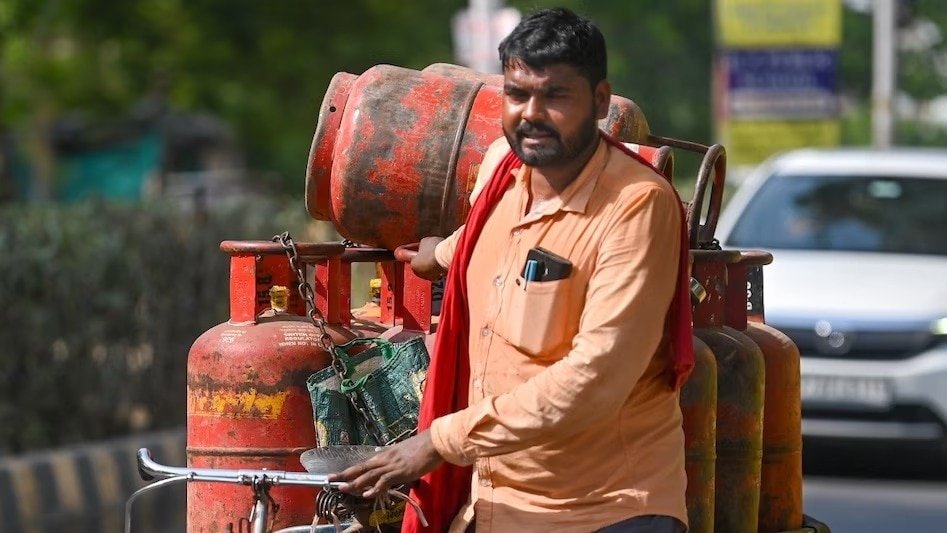
Hours after domestic LPG prices were raised by Rs 29 per cylinder, the Centre mounted a detailed defence of the increase, arguing that Indian households continue to be protected from the full impact of a sharp rise in global energy prices triggered by the West Asia crisis.
The government said the cost of supplying a 14.2-kg LPG cylinder has now crossed Rs 1,600, while a general consumer in Delhi will pay Rs 942 after the latest revision and a Pradhan Mantri Ujjwala Yojana beneficiary will effectively pay Rs 642 on eligible refills.
advertisement
“The Indian household continues to buy cooking gas much cheaper than the household in any neighbouring country, and far below the price paid in advanced economies such as the United States, Australia and Canada,” the government said on June 7.
The latest increase takes the price of a domestic LPG cylinder in Delhi from Rs 913 to Rs 942. It follows a Rs 60 increase announced on March 7, taking the cumulative rise over the past three months to Rs 89.
GLOBAL PRICES HAVE SURGED, SAYS GOVERNMENT
According to the Centre, the main reason behind the increase is the sharp rise in international LPG prices following disruptions in West Asia and the Strait of Hormuz.
India imports around 60 per cent of its LPG requirement and domestic prices are linked to international benchmarks, particularly the Saudi Contract Price.
The government said the Saudi benchmark stood at about US$542.5 per tonne in February, before the crisis intensified. Following the disruption of shipping routes through the Strait of Hormuz, the benchmark rose to US$775 per tonne in April and further to US$790 per tonne in June.
“The blended LPG benchmark has thus risen by about 46% since the pre-crisis February level,” the statement said.
According to the government, this increase has pushed the cost of supplying a domestic cylinder to more than Rs 1,600.
‘CONSUMERS ARE NOT PAYING THE FULL COST’
A key argument put forward by the Centre is that households are still paying substantially less than the actual cost of LPG.
The government estimated that even after the latest increase, the under-recovery on every domestic cylinder remains about Rs 700.
“What the household does not bear the brunt of is the several hundred rupees a cylinder which the Government is bearing,” the statement said. “Through a period of sharp international cost increases, that burden has been absorbed upstream rather than passed to the consumer.”
The Centre also sought to distinguish between the subsidy paid to Ujjwala beneficiaries and the under-recovery borne by public sector oil companies.
While Ujjwala beneficiaries continue to receive Rs 300 per cylinder on the first four refills every year, the government said all domestic consumers benefit from regulated pricing that keeps retail rates below market-linked costs.
A Ujjwala beneficiary will continue to pay an effective Rs 642 per cylinder, while a non-beneficiary will pay Rs 942.
The government said the effective Ujjwala price is about 60 per cent lower than the actual international cost of a cylinder, while the non-Ujjwala price is about 45 per cent lower.
INDIA PAYS LESS THAN NEIGHBOURS, CENTRE CLAIMS
The government also released a comparison of LPG prices across countries to support its argument that Indian consumers continue to receive relatively cheap cooking gas.
According to the figures, an effective Ujjwala cylinder price of Rs 642 is lower than Pakistan’s Rs 1,046, Nepal’s Rs 1,207, Bangladesh’s approximately Rs 1,225 and Sri Lanka’s Rs 1,241.
The gap is wider when compared with developed countries. Equivalent prices were estimated at around Rs 1,755 in the US, Rs 1,765 in Australia and Rs 2,411 in Canada.
The government said that even a non-Ujjwala consumer paying Rs 942 continues to pay about Rs 700 less than the market-linked cost.
HORMUZ CRISIS AND INDIA’S RESPONSE
The Centre also used the occasion to detail the measures taken during the Strait of Hormuz disruption.
According to the government, around 54 per cent of India’s LPG consumption depended on imports routed through the Strait, making the country vulnerable when the waterway came under pressure.
Despite this, the government said India was among the few countries that managed to keep energy cargoes moving.
“India was among the few to keep its energy cargoes moving through the Strait of Hormuz,” the statement said.
“There has been no shortage of any petroleum product.”
The government said domestic LPG production was increased by more than 60 per cent, from about 32 TMT to about 52 TMT, while sourcing was expanded to countries including the US, Canada and Algeria.
It also said LPG supplies were prioritised for households and critical services such as hospitals and educational institutions.
RS 60,000 CRORE BURDEN ON OIL FIRMS
The Centre said public sector oil marketing companies have absorbed a substantial part of the increase in global costs.
According to official figures, cumulative under-recovery on domestic LPG rose to Rs 60,000 crore by the end of the last financial year, compared with Rs 41,338 crore a year earlier.
The Union Cabinet has approved Rs 30,000 crore in compensation to the companies.
The government said the burden is separate from the Ujjwala subsidy, which covers more than 10.58 crore connections.
Summing up its position, the Centre said the latest increase must be viewed against the backdrop of a 46 per cent rise in international LPG prices and a domestic supply cost that has crossed Rs 1,600 per cylinder.
“The Government of India has ensured among the lowest cooking gas prices in the world for Indian citizens over several years, despite extreme volatility in international prices,” it said.
– Ends
SOURCE :- TIMES OF INDIA