

Source : the age
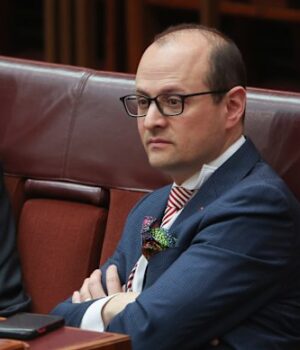
Labor senator Raff Ciccone has launched a blistering attack on critics of the AUKUS submarine pact, dismissing a crowd-funded inquiry backed by former Labor ministers as backward-looking and unconstructive.
In a speech to the Senate on Tuesday night, the Victorian argued that opposition to Australia’s planned acquisition of US Virginia-class nuclear-powered submarines was driven more by politics and nostalgia than genuine concerns about national security.
Ciccone, the chair of the Parliamentary Joint Committee on Intelligence and Security, took aim at a recently established inquiry into AUKUS, chaired by former Labor minister and anti-nuclear campaigner Peter Garrett and other party luminaries, which is calling for a fresh examination of the program’s strategic assumptions, costs and risks.
“Distinguished voices, now animated by nostalgia, are basing dramatic claims about the very purpose of AUKUS on the strategic needs of the past,” Ciccone told the Senate on Tuesday night. “Australia must respond to the world as it exists today, not as it existed in the past.”
The intervention from the chair of the Parliamentary Joint Committee on Intelligence and Security marks one of the strongest public defences yet of the defence program, as scrutiny intensifies over the cost, timing and viability of Australia’s plan to acquire second-hand submarines from the United States before building a future fleet of AUKUS-class boats.
Without naming anyone, Ciccone suggested critics were viewing Australia’s strategic circumstances through the lens of a bygone era.
The comments represent a direct challenge to a growing group of former ministers, diplomats, defence officials and strategic experts who have questioned whether AUKUS remains the best option for Australia’s long-term defence needs.
Gareth Evans, who served as foreign minister from 1988 to 1996, used the first day of hearings at the inquiry to savage the nuclear-powered submarine plan as “misconceived from the outset”, and argued it has made Australia a “compliant cash cow” to the United States. Former prime minister Paul Keating and retired Labor frontbenchers Kim Carr, Doug Cameron and Bob Carr have also criticised the pact.
Ciccone argued that after almost five years of debate since the alliance was announced, the time for further reviews had passed.
“Now is the time for concrete action,” he said. “Vague questions and concerns are not constructive.”
Ciccone reserved his sharpest criticism for the Greens, and accused the party of allowing its hostility towards the US to override Australia’s strategic interests.
“Their position deserves to be called out for what it is,” he told the Senate. “It is not principled opposition. It is not strategic caution. It is ideological hostility toward the United States.”
The senator also used the speech to attack the Coalition’s handling of previous submarine programs, blaming the former Morrison government for abandoning the Japanese submarine option before pursuing a French-designed conventional submarine fleet that was later scrapped when Australia joined AUKUS.
“After years of indecision, false starts and wasted money, this government’s plan is forging ahead despite the mess they made,” Ciccone said.
Last month, Defence Minister Richard Marles announced that taxpayers would save money by ditching a plan to acquire a new and upgraded nuclear-powered submarine from the US, and instead buy three second-hand submarines. Experts have warned that Australia would receive a less capable vessel with a shorter lifespan under the shift.
But Ciccone rejected those concerns, arguing each submarine would have more than 20 years of operational life remaining and describing criticism of the arrangement as overblown.
Quoting former defence secretary Dennis Richardson, Ciccone said the debate surrounding the submarines was “one of the greatest beat-ups I’ve ever seen in my life”.
He argued that purchasing three in-service Virginia-class submarines would reduce costs, simplify maintenance and improve Australia’s submarine capability long before the first AUKUS-class submarine enters service.
Cut through the noise of federal politics with news, views and expert analysis. Subscribers can sign up to our weekly Inside Politics newsletter.
 Rob Harris is the national correspondent for The Sydney Morning Herald and The Age based in Canberra. He is a former Europe correspondent.Connect via email.