
Source : Perth Now news
Migration’s contribution to Australia’s population growth is set to be revealed as political parties lock horns over how many arrivals to cut and consensus on diversity frays.
The Australian Bureau of Statistics will release figures on Thursday for migration levels for the 12 months to June as part of annual population data.
The Liberals and One Nation have attacked Labor for underestimating net overseas migration in previous years, with the government revising their forecast upwards by 55,000 arrivals in May’s federal budget.
Having projected an intake of 240,000, they now believe just shy of 300,000 foreigners will have made Australia home in the past year.
That’s almost identical to the 2024/25 figure of 306,000 and well below bumper years in 2022 and 2023, where a post-pandemic boom caused net arrivals to swell to a record 538,000.
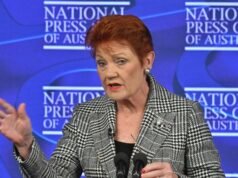
In her career-first speech to the National Press Club, One Nation leader Pauline Hanson claimed a fixation on multiculturalism and floods of overseas arrivals amounted to a national crisis.
“Do Australians feel that the nation, that the nation is losing its identity along with its values? We all know the answer to that,” she said on Wednesday.
“Under the failed policy of multiculturalism, all cultures are allowed equivalents to ours. Surely opposing that is not racist, it’s common sense.”
Her party favours a visa cap of 130,000, well below the government’s longer-term forecast of 225,000 arrivals a year.
The coalition has proposed tying migration policy to home completions, which could cut migrant intake by at least 70 per cent, according to opposition leader Angus Taylor.
It comes as the number of Australians who agreed it was good for society to be made up of different cultures fell from 85 to 75 per cent, according to separate data from the statistics bureau in May.
Anthea Hancocks, chief executive of the Scanlon Foundation Research Institute, which researches social cohesion, said the drop was concerning, but diversity still enjoyed strong societal backing.
“It does sound like a lot”, she told AAP in reference to the bureau’s findings.
“(Social cohesion) has actually taken a bit of a hit recently … and it’s still very high.
“We are very much a strong middle in Australia, so you’ve still got 75 per cent.”
Pointing fingers at migrants for economic hardship and radicalism also distracted from badly needed discussion about how to improve the system, she said.
“When it comes to immigration, it really deserves a very non-partisan approach”, Ms Hancocks said.
“There are things that we should be actually working on, and the changes around that should be happening continuously … it’s an incredibly important part of Australia’s prosperity.”