

source : the age
YouTube has been accused of having a “really serious deficiency” in its hateful speech guidelines after the royal commission was told a video suggesting the Bondi Beach massacre was a false flag event remained on the video-sharing platform.
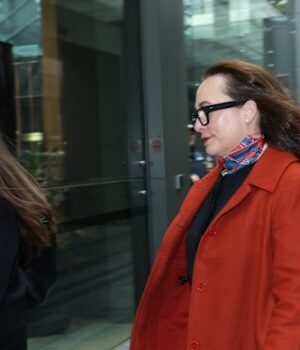
Counsel assisting the Royal Commission into Antisemitism and Social Cohesion, Richard Lancaster, issued a stinging rebuke of YouTube on Tuesday after its head of government affairs in Australia, Rachel Lord, confirmed that the video had been reviewed and had not violated any guidelines.
The video featured in evidence to the commission last week, in which Bondi massacre victim Arsen Ostrovsky detailed the attacks levelled at him on social media after the December 14 massacre.
The Jewish Australian, who had taken shelter in Israel during the October 7, 2023 attacks, had been described as a “trauma tourist” and a “false flag actor” after a photo of his blood-soaked head was shared online, with his permission, following the terror attack.
Ostrovksy told the commission on June 29 that despite complaints to X, YouTube, and Meta, only Meta had taken action by removing AI-manipulated images of himself from Instagram and Facebook. X and YouTube only confirmed receipt of the report.
A video titled “False Flag. Why the Bondi Beach Narrative Doesn’t Add Up” remained on YouTube, he said.
Lord on Tuesday acknowledged that the video was still on the platform, prompting Lancaster to ask her whether, based on her earlier evidence to the commission, it “constitutes a very clear breach of YouTube’s community guidelines”.
“I know the teams have reviewed the video, and they have determined it to be non-violative,” Lord told Lancaster.
“Beyond what I shared, I don’t have any understanding in any detail of the basis on which they’ve reached this conclusion under the hate speech policy.”
After Lord’s defence of YouTube’s position, Lancaster said: “I suggest to you that this shows a really serious deficiency in YouTube’s guidelines that this video remains accessible to the public.”
Lord responded: “I appreciate that feedback and will be sure to share that internally as well.
“What I would say in response is that we set our guidelines for our platform and as we have seen in Australia, the difficulties in regulating content, it’s hard and can be sensitive,” she said.
Earlier, TikTok executives from New York appeared voluntarily and in person before the commission, which is probing the role social media plays in fuelling hate online.
The commission heard that TikTok activated its “crisis response protocol” within an hour of the Bondi Beach massacre, which included contacting the eSafety Commission, the NSW Police and the Australian Federal Police to offer any support needed.
The platform’s global head of partnerships, elections and market integrity, Valiant Richey, told the commission that it immediately began scouring for “shocking and graphic content” on its platform.
Richey told the commission that while much has been made of “content moderation at scale”, TikTok also deploys “internal risk identification and containment teams” to contain trends “before they scale up”. This is what happened after the Bondi terror attack, he said.
Within 90 minutes of 15 people being shot dead at Bondi on the first night of Hanukkah, TikTok implemented “proactive measures to prevent uploads of footage of the attack circulating online”.
“This is something that can move quickly, so you need teams that can respond quickly and in very rough terms, this is not a perfect analogy, it’s like our basic police force versus a SWAT team,” Richey said.
Zachary Hecht, TikTok’s global head of policy, trust and safety, told the commission that in 2025, more than 336 million videos were posted to the platform, with 270,749 removed for violating safety and civility guidelines.
Hecht told the commission that while he did not have the specific numbers for the first three months of 2026, TikTok removed 98 per cent of violating content in Australia “proactively before a report” was made to the platform.
He said the majority of content TikTok removes is done via auto-moderation.
“We are actively trying to identify and remove content that violates our community guidelines,” Hecht told the commission.
Hecht was asked in the inquiry about a video that was blocked by the platform’s automatic moderation process, but on appeal that decision was overturned by a human.
Following a complaint from the Australian-based Dor Foundation, the content was later deemed to be “clearly a violation of our prohibition on hate speech and hateful ideology”, Hecht told the inquiry.
Hecht said that there might be examples of automated moderation getting the decision right, only for a human to complicate it.
After a longer-than-usual hearing day, the commission will return for further hearings on Thursday.
Counsel assisting Richard Lancaster is now asking YouTube’s Rachel Lord about “Arsen Ostrovsky’s situation” referring to the Bondi massacre victim who was described as a “trauma tourist” on social media.
The Jewish Australian, who had taken shelter in Israel during the October 7, 2023 attacks, was described as, among other things, a “false-flag actor” after a photo of his blood-soaked head was shared online, with his permission, following the December 14 attack.
Ostrovsky has previously provided evidence to the commission, where he said a video titled “False Flag. Why the Bondi Beach Narrative Doesn’t Add Up” remained on YouTube, despite his complaints.
Lord acknowledged that the video remained on the platform. Lancaster has asked her whether, based on her earlier evidence to the commission, the video “constitutes a very clear breach of YouTube’s community guidelines”.
Video-sharing platform YouTube is appearing before the royal commission, with the platform’s senior manager for government affairs Rachel Lord giving evidence.
Lord is confirming that YouTube’s community guidelines ban the promotion of hatred based on protected attributes, although it is not clear what the distinction is between promoting hatred and expressing hatred.
It is not against YouTube’s policy “simply to use racial, religious or other slurs and stereotypes, but it is a violation to make that use if they incite hatred [based] on that status”, Lord says.
Lord has detailed how content creators are reprimanded for breaching YouTube’s policies.
Creators get a warning for their first breach of YouTube’s policy. If a second violation occurs for breach of the same policy within 90 days, they get a strike, and upload privileges are suspended for seven days. Three strikes in 90 days results in termination of a channel.
Lord said a single egregious breach can result in immediate termination.
TikTok activated its “crisis response protocol” within an hour of the Bondi Beach massacre, which included contacting the office of Australia’s eSafety Commissioner, the NSW Police and the Australian Federal Police offering any support needed.
Valiant Richey, TikTok’s global head of partnerships, elections and market integrity, is the second executive from the social media platform to provide evidence to the royal commission.
Richey tells the commission that while much has been made of “content moderation at scale”, TikTok also deploys “internal risk identification and containment teams” to contain trends “before they scale up”. This is what happened after the Bondi terror attack.
Within 90 minutes of 15 people being shot dead at Bondi on December 14, TikTok implemented “proactive measures to prevent uploads of footage of the attack circulating online”.
“This is something that can move quickly so you need teams that can respond quickly and in very rough terms, his is not a perfect analogy, it’s like our basic police force versus a SWAT team,” Richey tells the commission.
Automated moderation managed to pick up an example of hateful content on TikTok that was later overturned by a human, despite it violating the platform’s guidelines.
Zachary Hecht, from TikTok, was asked in the inquiry about a video that was blocked by the platform’s automatic moderation process but on appeal that decision was overturned by a human.
A human also decided it did not violate their guidelines.
But following a complaint from the Australian-based Dor Foundation, the content was deemed to be “clearly a violation of our prohibition on hate speech and hateful ideology”, Hecht told the inquiry.
Hecht told the commission that there might be examples of automated moderation getting the decision right, only for a human to complicate it.
The case was escalated to more senior people and they came to the “right conclusion” and removed it, Hecht says.
Zachary Hecht, from TikTok, is now taking the commission through the process for removing content under its “safety and civility guidelines”.
Those guidelines “strictly prohibit violent threats, hate speech, harassment, bullying, sexual misconduct, and dangerous activities”, according to TikTok.
The commission is being told that in 2025, more than 336 million videos were posted to TikTok, with 270,749 removed for violating the safety and civility guidelines.
In the first quarter of this year, 110 million videos were published and 67,012 were removed for violations. Hecht also has details on Australian content.
TikTok’s hate speech and hateful behaviour guidelines are being shown to the commission, which includes a detailed list of “protected attributes” the social media platform uses to rule on content.
A list of TikTok’s banned content, which includes “supporting or spreading hateful ideology”, is also being shown to the commission.
According to TikTok’s guidelines, banned content includes “claims of supremacy over a protected group, such as white supremacy, misogyny and LGBTQ+ hate, antisemitism or Islamophobia”.
It also includes “hateful conspiracies targeting a protected group, such as the Great Replacement Theory or claims that Jewish people control the media”.
TikTok’s Zachary Hecht has been asked whether “the list of protected attributes is longer and more specific than a number of other social media platforms”.
Hecht says: “I am focused on the TikTok platform, and I’m not sure of what the list of other platforms would be in this moment, but what I can say is, this list is informed by global human rights standards.”
TikTok is taking the royal commission seriously. The first witness – Zachary Hecht, TikTok’s global head of policy, trust and safety – is New York-based, but has told the inquiry that he specifically travelled to Sydney to voluntarily provide evidence.
Its approach is very different from some other US-based social media companies, with which the commission has tried to engage.
In the first week of this block of hearings, counsel assisting Richard Lancaster said platforms X and Telegram had refused to engage with the inquiry, while the far-right Gab network had been “openly hostile”.
“It has become increasingly apparent that the online environment and social media platforms in particular are perhaps the most significant vector for the spread of antisemitism and hate in the community,” Lancaster told the commission last week.
Social media giant Meta, which owns Facebook and Instagram, was the first company to appear before the commission on Monday and spent plenty of time detailing a relatively new policy.
That policy, announced by Meta boss Mark Zuckerberg after US President Donald Trump’s return to the White House early last year, is designed to ensure content is not “over-enforced”.
Benjamin Good, the global director of the core policy team at Meta, explained to the commission that the company had introduced the policy in January 2025 to focus on reactive removal of hateful content over proactive action.
Another company that also appeared on Monday was the Melbourne-based live-streaming site Kick, which the commission heard had a low rate of content removal despite a high number of “reports”.
Tiat Oon Ooi, the general counsel for EasyGo Group, which owns Kick, told the commission that the lower rates were probably due to “false alarms or false reports”, but he insisted that Kick had processes in place that “go above and beyond any other social media platforms”.
Hello, I am Alexandra Smith and I will be with you today as the Royal Commission on Antisemitism and Social Cohesion continues in Sydney.
We will be hearing more from the social media companies today, with TikTok’s Zachary Hecht – the global head of policy, trust and safety – first up.
The commission on Monday heard from the non-profit global organisation CyberWell, set up to fight online antisemitism.
Its founder, Tal-Or Cohen Montemayor, told the commission that TikTok has the highest rate of removing “violative content” once it has been reported by her organisation, with 88.8 per cent of content taken down. The average removal rate across the platforms it works with (which also include Facebook, Instagram and YouTube) is 52.4 per cent.
Rachel Lord, YouTube’s senior manager of government affairs and public policy for Australia and New Zealand, will also give evidence today.