Source :- PERTH NOW NEWS
The root of the problem may run deeper than the surface grass.
When the 2026-27 Sheffield Shield season begins this week, the focus will inevitably be drawn to the runs.
Australia is desperate for its next generation to score big and a responsibility has fallen on curators to produce friendlier batting pitches.
Only Kurtis Patterson, with 619 runs for NSW, averaged above 36 among the top 10 run scorers last summer.
The openers were appropriately near the top, but there were just five 100-run stands before the first wicket across the season.
A fast-forward on games impacted Australia’s spinners as much as its batters.
Just two specialist spinners – Mitch Swepson and Corey Rocchiccioli – ranked inside the top 27 Shield wicket-takers.
Some blamed the pitch, others the batting and – like Mitchell Starc after another two-day Test – a small group applauded the quality of seam bowling.
But what if it has as much to do with the surface grass and game phases as it does with the system?
One batter hopeful of pulling on a baggy green wanted to speak anonymously.
He says the number of wins a team needs to reach the Shield final is playing a major factor.
To him, playing on a result-certain wicket with first-innings points in play means gambling success on the toss.
A state shorter on talent can roll the dice on lively wickets and hope the lottery falls its way often enough to qualify.
There is merit to his theory, with only three teams since 2019-20 having six or more wins before the final.
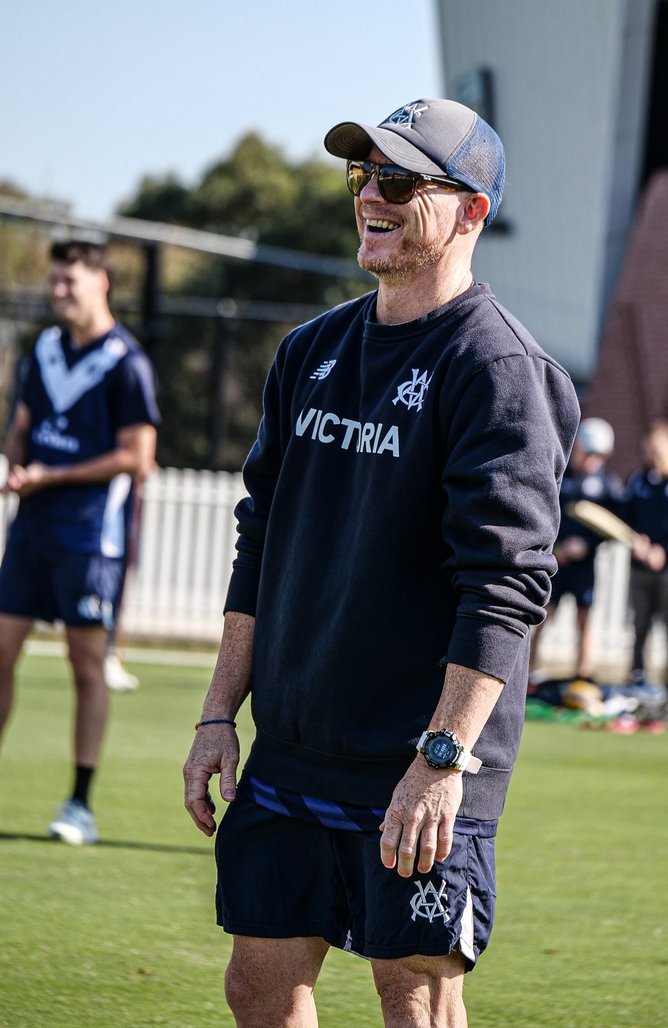
Victorian coach Chris Rogers had a similar philosophy and proposed one of two changes at a national meeting months ahead of the season.
Rogers raised removing the toss and allowing the visiting team to elect what they want to do first.
The away team armed with the toss, to Rogers, will discourage home curators from producing anything that would be arduous to bat on first.
Then there’s the points system and the idea that a team could lose a match but realistically collect three times as many points as a draw.
“I feel for the groundsmen … it feels like for whatever reason it’s on a knife’s edge,” Rogers said.
“Maybe the ball is reacting to the pitches, if there’s a bit in it, it seems like the ball is doing heaps but then it can get softer and it gets flat.
“I think the way that points system is set up, it’s still imperative that you get results.
“It’s going to be really interesting to see how state’s juggle this kind of directive to produce better batting wickets but still generate results.
“The question I’ve asked, is how you can have a game that finishes nine down with five runs to win on day four, but that game has fewer points attached than one that finishes inside two days.
“The motivation is still a little bit for the states to make sure games finish inside four days.”
South Australian coach Ryan Harris dismissed the pitches as a factor, saying some Twenty20 techniques are getting off lightly.
“I don’t think (pitches) have been that spicy, to be honest,” Harris said.
“I think the bowling has definitely been good, I don’t think the batting has been as good as it should be.
“We had a two-day game in WA, yeah, it was a tough-ish wicket but if you go back and watch the dismissals … the batting on a wicket that’s tough wasn’t great.”
Harris agrees there is a value in domestic cricketers learning the skills of fighting for a draw or chasing a last-gasp victory.
But Harris, like most others, is vehemently against an over-reaction that causes a “600 versus 600” draw.
Another industry source, again eager to offer their view off the record, believes the issue is all-inclusive.
He says a lively pitch, good bowling with the new sharper seam and a first-innings target create a “get them before they get me” mentality.
Only time, and the runs that follow, will reveal just how much the pitches are shaping this contest.
But how Australia resolves its domestic run drought will determine how smoothly it navigates the imminent changing of the Test guard.