

source : the age
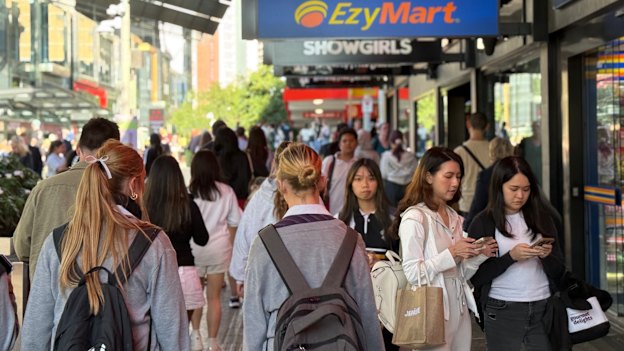
Since the coronavirus pandemic changed the way we work – and where we work – almost 60,000 fewer people walk through Brisbane’s Queen Street Mall on average each day.
Foot traffic in Queen Street Mall has not returned to pre-pandemic levels, falling nearly 20 per cent.
The trend is playing out across the CBD, as working from home changes the rhythm of the River City.
In December 2019, the last festive shopping period before COVID, 317,811 people on average walked through the mall each day, compared with 255,928 post-pandemic in December 2025.
Pedestrian movements through Queen Street Mall are recorded by six council sensors positioned in key areas, including the Albert, Edward and George street entrances, as well as Burnett Lane and the stage area near the long-standing Oasis Juice stand.
The sensors record movements, rather than individual pedestrians, so a person who walks over the same sensor five times is counted multiple times.
Analysis of the foot traffic data debunks the myth that Brisbane, which did not endure extended COVID lockdowns like Sydney and Melbourne, emerged unscathed from the pandemic.
The virus changed Brisbane permanently, particularly the CBD.
Working from home – or hybrid working – is the biggest contributor to plummeting pedestrian numbers in the city, says Gary Mortimer, a professor of consumer behaviour and retail marketing at QUT.
The Queen Street Mall has also been beset by the loss of Myer in July 2023, which created a five-level retail hole in the heart of the city.
Also in 2023, two Queen Street Mall venues – the Pig ‘N’ Whistle and Milano – were demolished as part of a Brisbane City Council plan to improve connectivity between the CBD and South Bank.
The Wintergarden has closed and parts of the building, including its distinctive butterfly exterior, will soon be demolished to make way for a new office tower, as well as the redevelopment of the former Hilton Hotel, now branded as Intercontinental Brisbane.
Despite the introduction of Brisbane City Markets every Wednesday in Reddacliff Place, the top end of the mall, near George Street, has been notoriously subdued and marred by vacant shopfronts.
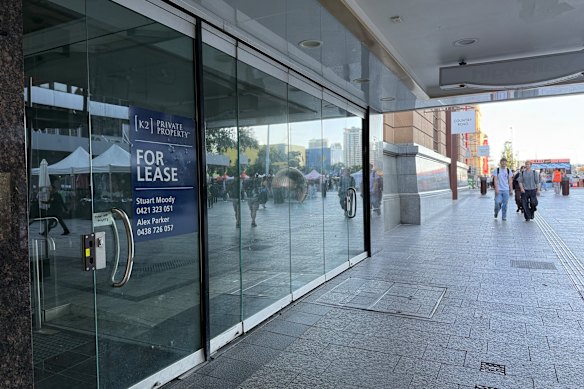
Retail vacancy rates in Brisbane’s CBD remain the second-highest in the country, behind Perth. According to commercial real estate agency CBRE, 17.5 per cent of shops in Brisbane’s CBD were empty in February.
Mortimer says that figure reflects broader retail trends, as fewer people choose to shop in the city over the likes of suburban Westfields in Carindale, Mount Gravatt and Chermside.
Darlia Argyris, 36, who works in the energy industry, is rarely in her CBD office more than three days a week.
“I love it,” she says of hybrid working. “I can’t see myself going back [to the office] full-time.
“I am now able to use my before and after work time and even lunch breaks to head to appointments without having to take leave, or leave work early, prepare dinner, catch up on housework and exercise.
“At times there are more distractions in the office, especially when all of us are hybrid [workers] and on different schedules … so you may not have seen a particular co-worker for a number of weeks, so at times my office days can become very social.”
According to figures from CBRE, however, Brisbane’s CBD is flush with office workers compared with Sydney and Melbourne.
“The Brisbane office market has actually been one of the better performers in the Asia-Pacific region since the pandemic,” CBRE head of office research Tom Broderick says.
“Office vacancy in the CBD peaked at 15.4 per cent in late 2021 and is likely to be under 10 per cent by the end of 2026.
“Our estimate is office attendance in Brisbane is at 92 per cent of pre-COVID levels compared to the national average of 81 per cent.”
But traders in the mall and its adjoining arcades are experiencing the drop in pedestrian traffic firsthand, and have been forced to accept consumer behaviour has changed radically.
Fridays are typically the busiest day in Queen Street Mall by a small margin, followed by Tuesdays and Wednesdays, according to the council’s data.
On weekdays, foot traffic unsurprisingly peaks around lunchtime as office workers venture outside for food.
Michael Makras, owner of Italian cafe Marchetti, is not sure Brisbane will ever return to being a “five-day-a-week city” and feels the CBD is yet to find its new rhythm.
“Friday used to be the biggest day for us, undoubtedly. But post-COVID, there is no pattern. Sometimes Monday is the biggest day, sometimes Tuesday. It’s very unpredictable,” he says.
“We’re just ready for any day now, which makes staffing a bit more challenging.”
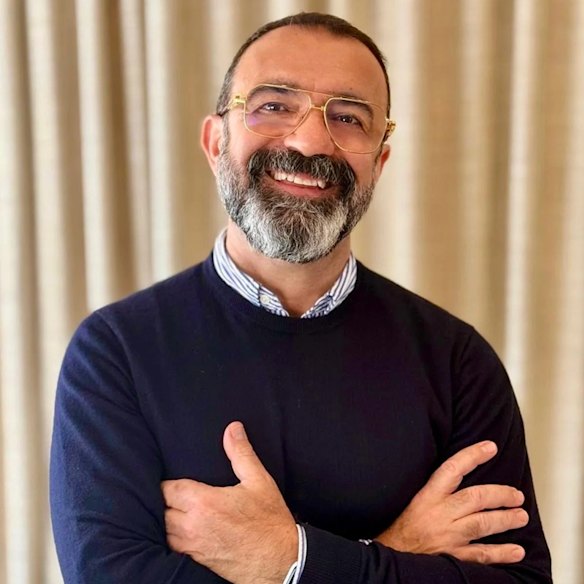
An optometrist by trade, Makras is in a unique position to observe changes in trends across the city, having owned businesses in the CBD and on James Street in New Farm.
The highly curated James Street precinct has seized upon changing consumer preferences for local, unique shopping experiences.
“Having a business in the city and having a business in the James Street precinct, I’ve noticed the shift,” Makras says. “The business in James Street was growing faster than the one in the city.”
His cafe is arguably at the “right” end of Queen Street Mall, near Edward Street, an area dominated by luxury retailers and dubbed by some as the “Paris end” of the city.
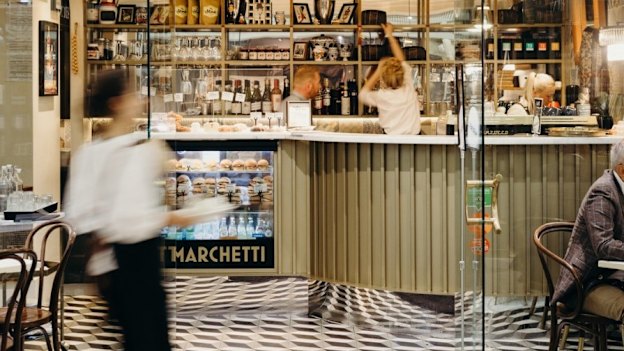
It is located in the 100-year-old Tattersall’s Arcade, which features marble floors and intricate plaster horse friezes by prominent sculptor Daphne Mayo above the shop doors.
“It feels like you’re coming into this romantic little hidden spot,” he says.
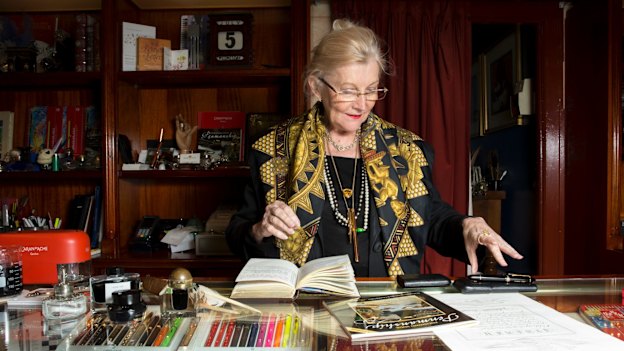
Similarly, The Pen Shoppe owner and handwriting expert Barbara Nichol says her bespoke offering in the historic setting of the Brisbane Arcade is key to the survival and growth of her business.
Nichol has watched the Queen Street Mall grow, shrink and change over nearly five consecutive decades in business.
Tammy Law
“There was a time when I used to see everybody with a Zara [shopping] bag, but I’ve noticed that’s really not a thing so much any more,” she says. “Less people are carrying shopping bags, that’s for sure.”
Not only did COVID change the working week, it cemented online shopping habits for all generations, she says.
The success of her business is reliant on her loyal customer base built over 47 years, as well as her workshops in penmanship and handwriting.
Gone are the days when businesses could rely on CBD positioning, quality products and steady foot traffic to guarantee success, Nichol laments.
The ‘real game changer’ coming to the city
Big changes are on the horizon for Queen Street Mall, chiefly its expansion into Albert Street once the new Cross River Rail station opens in 2029.
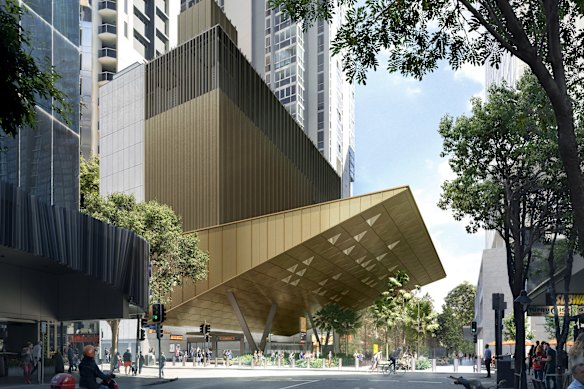
Griffith University is transforming the old Treasury Casino into a law, business and IT campus, which is expected to host more than 6000 students and staff from 2027.
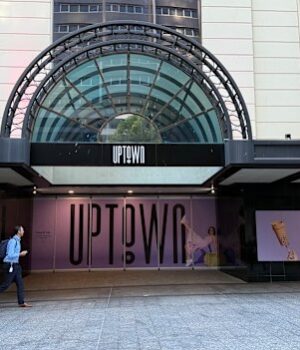
Vicinity Centres, which now wholly owns Uptown, as well as QueensPlaza, says it intends to spend about $350 million transforming Uptown by 2029 into a shopping centre similar to the Emporium in Melbourne’s CBD.
The redevelopment of the Wintergarden, and the neighbouring hotel, by IFM Investors, is also expected to be completed by then.
University of Queensland urban planning expert Stephanie Wyeth says the opening of the Cross River Rail station on Albert Street will be the “real game changer” because the position of Central Station at the top of the hill on Edward Street makes it so inaccessible.
“The next evolution of Brisbane will be about how all our different destinations across the inner city connect and complement each other: Howard Smith Wharves, South Bank, the [QPAC] cultural precinct, the mall, Eagle Street, Roma Street Parklands, and down to the Valley,” she says.
“If the mall is going to work, we have to reimagine what it is and what piece of the puzzle it is fulfilling for the city because we’re not going back to it just being purely a retail precinct.”
Wyeth says there is a lot to be learnt from the transformation of the Treasury building into a university campus.
Mortimer agrees there is not enough market demand to sustain more retail in the mall. He has repeatedly suggested Uptown, with its numerous levels of underground parking and its position above the Queen Street bus station, become a medical hub, ideal for specialists who currently practise from the difficult-to-access Wickham Terrace.
Both suggested the CBD could evolve into a new form – a walkable neighbourhood for a large number of local residents, attracted by the ability to live near where they work and be surrounded by nightlife options.
Makras is optimistic the city can evolve and adapt.
“I’ve always loved the city – I do love the city,” he says.
He fondly remembers when the city was an exciting destination, a place where you were in the thick of things; where there was always something new to be discovered.
“I loved it as a kid in the ’80s, going out in the city and meeting your friends. The Valley wasn’t a thing then, and meeting in the city was so exciting. There was always a new opening, a new bar,” he says.
“I’m really looking forward to seeing what happens next.”
Start the day with a summary of the day’s most important and interesting stories, analysis and insights. Sign up for our Morning Edition newsletter.


