

SOURCE :- THE AGE NEWS
London: The danger from drones became clear to travellers in Europe one year ago when Amsterdam’s main airport had to shut down for 45 minutes after drones were seen flying near a passenger aircraft.
The threat spread to runways across the continent and sparked talk of a “drone wall” being built by European Union states to protect essential services.
One year later, the danger is even greater. And European leaders are far more direct about blaming Russia.
An attempted drone strike at a German airport has forced the change in the debate over “hybrid” attacks that threaten lives without looking like outright war. After weeks of media debate about the likely source of the attack, the German government finally went public on Tuesday by naming Russia.
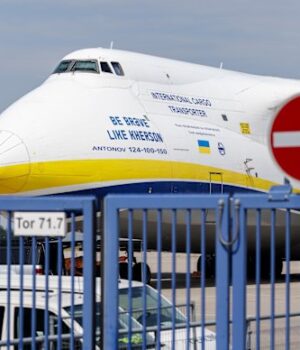
The German authorities said a quadcopter drone hit an Antonov An-124 cargo aircraft on the tarmac at Leipzig on August 4. The drone was carrying about 800 grams of explosive material. Fortunately, it failed to detonate.
Soon afterwards, a drone hit a Boeing 757 cargo aircraft that was about to land in Leipzig after flying from Marseille. Again, there was no detonation.
Germany’s Interior Minister Alexander Dobrindt said the nature of the attack showed it could be traced to Russia. He said investigators found components, explosives and a detonator that were familiar from Russian hybrid operations and the war in Ukraine.
What saved the aircraft and crew was the fact that Russia left the operation to “low-level” agents who bungled the execution.
Germany’s Foreign Minister Johann Wadephul said the Russian consulate in Bonn would be closed, funding for a Russian cultural centre in Berlin would be halted, and the Russian ambassador would be called in for a formal protest.
“With the attempted attack in Leipzig, the Russian leadership decided deliberately to do significant damage again to our already massively burdened bilateral relationship,” he said.
The Russian embassy in Berlin rejected the government’s claims as absurd.
On the very day German ministers chose to go public against Russia, the power grid in the eastern state of Brandenburg was targeted by unknown saboteurs. The state government said rockets were fired at high-voltage lines, causing some to short-circuit.
Germany is not the only country dealing with this threat. In Poland, a key railway route to Ukraine was targeted last November when saboteurs set off an explosion on the line. Polish authorities attributed the attack to two Ukrainian suspects hired by Russia.
In some cases, it is impossible to be sure if an event is sabotage or an accident. In Italy last month, a munitions factory owned by arms company KNDS was disrupted by fire and an explosion. The plant makes the 155-millimetre artillery shell used by Western allies and supplied to Ukraine.
How far will Russia go to menace the European nations that support Ukraine? Five days ago, Russian Foreign Ministry spokeswoman Maria Zakharova suggested Britain could be targeted because it was supplying weapons to Ukraine.
“We have repeatedly warned that any British military installations and equipment in Ukraine and beyond its borders could be targeted in response to Ukrainian strikes on Russian territory carried out using British weapons,” she said.
Russia has always used belligerent rhetoric against NATO members during the Ukraine war, of course. With its hybrid attacks, it shows an increasing willingness to provoke.
How far will it go? Early in August, The Wall Street Journal reported that US intelligence agencies believed Russian President Vladimir Putin could test NATO with a limited assault on a member state in the next few years.
Then, a few weeks later, the US dispatched CIA director John Ratcliffe to Moscow for rare face-to-face talks with his Russian counterpart. In some accounts, his message was to warn Russia against attacking NATO countries. In others, it was to tell Russian officials to acknowledge the need to end the war in Ukraine and to encourage Putin to accept this.
The underlying concern is that Putin will go too far.
The timing of the German airport incident, bungled though it was, displays Putin’s usual tradecraft with foreign interference. The airport serves the city of Halle as well as Leipzig, and is on the border of Saxony-Anhalt, a state that goes to the polls this Sunday. Argument about Russia is part of the election debate.
The party leading the polls in Saxony-Anhalt, the Alternative für Deutschland – known as the AfD or Alternative for Germany – represents an immense challenge to Germany’s policy of confronting Russia and supporting Ukraine.
The AfD co-leader at a national level, Alice Weidel, wants to end Germany’s boycott of Russian oil and gas, restore ties with Moscow and stop aid to Ukraine. The latest polling shows the AfD has 42 per cent support ahead of the state election, while the Christian Democrats (CDU) have only 22 per cent.
Does the Leipzig attack provoke anxiety among voters and help the AfD? Or does it bring people together against a foreign provocateur?
European leaders issued co-ordinated statements on Tuesday to back the German government and condemn Russia for what happened at Leipzig. Italian Prime Minister Giorgia Meloni, Polish Prime Minister Donald Tusk and French President Emmanuel Macron all issued remarks, as did leaders from Estonia, Finland, Hungary and Spain.
What really counts, however, is how the public responds. In Saxony-Anhalt, just west of Leipzig airport, that test comes this Sunday.
Get a note directly from our foreign correspondents on what’s making headlines around the world. Sign up for our weekly What in the World newsletter.
 David Crowe is Europe correspondent for The Sydney Morning Herald and The Age.Connect via X or email.

