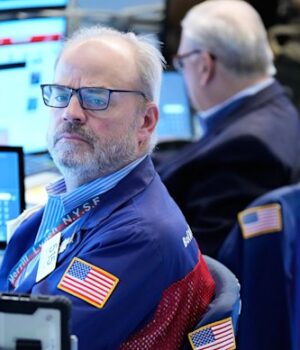
Source : the age
The Australian sharemarket gained for a second day on Thursday, shrugging off falls on Wall Street following the Federal Reserve’s first interest rate rise in three years, as oil prices dropped on signs of easing Middle East supply disruptions and bond yields eased.
The S&P/ASX 200 finished up 35.90 points, or 0.4 per cent, at 8732.40, with financial stocks leading the index higher. The upbeat session – despite futures flagging a sharp fall – came after the local bourse added 0.3 per cent on Wednesday. The Australian dollar rose 0.4 per cent to US71.14¢.
While investors generally prefer lower interest rates because higher borrowing costs slow economic growth and undercut prices for stocks and other investments, the Fed’s decision to hike its main interest rate – with suggestions of more hikes to come – reassured the market of the central bank’s independence amid pressure from President Donald Trump that rates “should be 1 per cent or less”.
“I see this as a credibility relief trade rather than a Goldilocks one,” said Charu Chanana, chief investment strategist at Saxo Markets in Singapore. Fed chair Kevin “Warsh reinforced the Fed’s inflation-fighting credentials”.
US sharemarket futures jumped 0.7 per cent in late afternoon, suggesting a strong session on Wall Street when it opens after the S&P 500 fell to its lowest since July on Wednesday right after the Fed move. Bonds pared losses and yields dropped, easing pressure on the sharemarket. The yield on America’s 10-year Treasury dropped 3 basis points to 4.99 per cent, while Australian 10-year government bond yields fell 4 basis points to 5.31 per cent.
The Fed’s move has increased pressure on the Reserve Bank to follow suit with more rate hikes as early as this month. The International Monetary Fund urged Australia’s central bank to stand ready to hike rates as needed given inflation risks remain tilted to the upside.
“Returning inflation to target should be the near-term priority,” IMF staff said in a statement in the morning, referring to the Reserve Bank’s 2 to 3 per cent target band for inflation. “Monetary policy should remain focused on containing inflation risks.”
The fund also noted the “risk that further large increases in global energy prices lead to stronger second-round effects and lift inflation expectations, warranting further tightening.”
The ASX’s gains were powered by the big four banks, which all rose between 1.2 per cent (Westpac) and 3.2 per cent (National Australia Bank). Real estate investment trusts, which suffer if bonds yields offer higher returns, also gained. Warehouse and data centre owner Goodman Group was up 0.7 per cent, Westfield shopping centres landlord Scentre rose 1.2 per cent and property trust and developer Stockland added 1.5 per cent.
Meanwhile, the pause in the oil rally continued, lifting stocks dependent on fuel such as airlines Qantas (up 0.9 per cent) and Virgin Australia (up 4.2 per cent).
West Texas Intermediate fell toward $US101 a barrel, after losing 3.2 per cent on Wednesday, the most since August 4. Brent crude was back below $US105, having reached almost $US110 in recent days. Saudi Arabia is seeking to return about half the capacity of its damaged East-West pipeline within days, and full operations in six weeks, a person familiar with the situation said.
The oil price reprieve, however, weighed on the energy sector, sending oil giants Woodside and Santos down 1.1 per cent and 2.1 per cent, respectively. Refiner Viva Energy fell 1.3 per cent, and coal stocks, seen as a fossil fuel alternative when oil prices spike, weakened, with Yancoal down 1.8 per cent and Whitehaven down 1.5 per cent.
The interest-rate-sensitive tech sector, with its extensive borrowings to fund investments into AI, also declined. Software makers Xero and WiseTech were down 1.3 per cent and 1.2 per cent, respectively, while AI data centre operator NextDC fell 2.9 per cent.
Gold stocks sent the mining sector lower following the Fed’s rate rise and its signals of more to come. Higher rates tend to make gold less attractive as an investment because it doesn’t pay interest. Northern Star Resources fell 1.8 per cent, Newmont lost 1.7 per cent and Evolution Mining dropped 1.1 per cent.
On Wall Street’s Wednesday session, US stocks slipped after the Fed’s rate rise. The S&P 500 fell 0.4 per cent after giving up a modest gain from earlier in the day. The Dow Jones Industrial Average dropped 1.2 per cent, and the Nasdaq composite was nearly unchanged after edging down by less than 0.1 per cent.
The US stock market initially held on to modest gains after the Fed announced its decision. But stock prices weakened as Fed chair Kevin Warsh said repeatedly in a press conference that inflation remains too high and the US economy appears to be strengthening. That could imply the world’s largest economy is solid enough to withstand more hikes to rates, and other officials at the Fed provided their own forecasts suggesting rates may need to go still higher.
“We removed a dose of accommodation so that financial and credit conditions would be more consistent with our ultimate objectives,” Warsh said. “Today’s action starts to show we’re serious about this, and we will deliver on the price stability objective.”
The median Fed official expects the federal funds rate to end this year at 4.1 per cent, according to forecasts published after the central bank’s meeting. That’s up from its current range of 3.75 per cent to 4 per cent following Wednesday’s increase, and it’s up from the median forecast of 3.8 per cent that Fed officials gave three months ago.
Traders, meanwhile, suspect the Fed may go even further. They’re betting on a 38 per cent probability the Fed could hike the federal funds rate to a range of 4.25 per cent to 4.50 per cent by the end of the year, according to data from CME Group.
“Clearly the Warsh commentary was much more bluntly hawkish than investors expected,” said Nathan Thooft, a senior portfolio manager at Manulife Investment Management.
It was the first hike by the Fed to interest rates in three years. The central bank had been on pause for months following cuts to rates in 2024 and 2025, even though inflation has consistently remained above the Fed’s 2 per cent target. Meanwhile, Trump has been lobbying for interest rates to go lower rather than higher.
On Wall Street, bank stocks fell to some of the market’s sharper losses. A slower US economy could mean less demand for loans from them. Banks also get hurt when the gap narrows between short-term interest rates and longer-term ones because the industry makes profit off the difference.
Helping to limit the market’s losses were gains for some influential stocks in the artificial-intelligence industry.
Nvidia rose 0.8 per cent, and Advanced Micro Devices climbed 1.6 per cent to recover more of their losses from earlier in the week. AI stocks slid worldwide on Monday after leaders of the AI industry called for a slowdown in development to address safety issues for humanity.
Microsoft slipped 1.4 per cent. Overnight, its artificial intelligence chief Mustafa Suleyman warned infusing tools like Anthropic’s Claude with humanlike characteristics increases the risks of such systems going rogue.
In an essay, the longtime artificial intelligence developer took aim at some of the language in the guiding documents behind Claude, Anthropic PBC’s popular family of large language models. Claude’s constitution expresses ambiguity about whether the assistant is a moral entity, positing that the software may have “some functional version of emotions or feelings”.