Source : the age
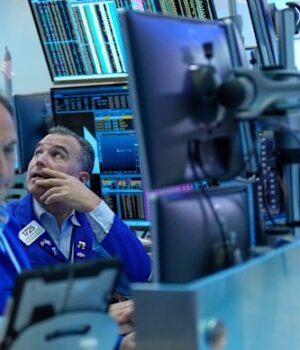
The US stock market has never been higher, even as the list of challenges chipping away at it keeps growing.
The S&P 500 climbed 0.6 per cent to a record after topping its prior all-time high set in August. Despite worries about everything from war to high inflation to pressure from the bond market, the index at the heart of many retirement accounts has soared 23 per cent since hitting a bottom in late March.
The Dow Jones Industrial Average added 253 points, or 0.5 per cent, while the Nasdaq composite tacked 0.4 per cent onto its own all-time high set the day before. The record-high stock prices are helping investors feel better about their finances, or at least less bad, when Americans are generally feeling discouraged about keeping up with the fast-rising cost of living.
The Australian sharemarket is set for a flat start, with futures at 6.58am AEDT pointing to a loss of 1 point, at the open. The ASX added 0.6 per cent on Tuesday. The Australian dollar was stronger at US69.86¢.
Many of the fears that sent the US stock market to its bottom in March have indeed come true. Oil prices are high because of the war with Iran, which has made inflation worse. Yields have cranked higher in the bond market, which threatens to slow the economy by making it more expensive for everyone to borrow money. And Americans broadly say they’re feeling more pessimistic about the economy and where it’s heading.
But one vital source of support has remained resolute for the US stock market throughout: the relentless ability for companies to make more money.
Lamb Weston, which sells frozen fries and other potato products, said on Tuesday that its profit and revenue during its latest quarter topped its projections, for example. The results also beat analysts’ expectations, and its stock rallied 7.5 per cent.
CEO Mike Smith said the company continues to deal with unexpected increases in freight and other expenses. But the company nevertheless raised its forecast for an underlying measure of profit for its full fiscal year.
It’s not just potato products proving to be profitable. All kinds of companies are lining up to report soon how much profit they made from July through September, and expectations are high. Delta Air Lines will report its third-quarter results on Friday, with several of the country’s biggest banks headlining the following week.
Analysts expect companies in the S&P 500 to deliver overall growth of nearly 30 per cent in earnings per share from a year earlier, according to FactSet. If they’re correct, it would be the third straight quarter of growth better than 25 per cent.
That’s crucial because corporate profits are one of the main levers that set prices for stocks, along with interest rates. At the moment, high bond yields are making investors less willing to pay high prices for investments that aren’t bonds. But the simultaneous strength for corporate profits is allowing the market to stay high and “to win the tug-of-war against yields,” according to strategists at Barclays.
To be sure, much hinges on companies actually meeting those expectations for fatter profits. If they fail to do so, stock prices could easily fall off their records. Some critics also point to a possible bubble in stocks in the artificial-intelligence industry after how much they soared in the frenzy around the technology.
Overnight, Paramount Skydance closed its $US110 billion ($157.5 billion) acquisition of Warner Bros Discovery, completing one of the biggest media mergers of all time. The merger brings two of America’s oldest moviemaking studios together under a new name: Skydance. The deal, which followed a tumultuous, roughly yearlong fight, further concentrates power in an industry already run by just a handful of major players.
AI stocks have been a huge force driving the US market to records, including Nvidia’s 28.3 per cent surge so far this year. That’s roughly double the broad market’s gain.
Constellation Energy jumped 12.2 per cent for one of Tuesday’s biggest gains in the S&P 500 because it’s also riding that rising tide.
It announced a long-term deal to supply Google with about as much electricity as a new nuclear reactor makes. The boom in AI data centers has made not just electricity more in demand but also construction crews and materials throughout the economy.
Elsewhere on Wall Street, Option Care Health soared 32.6 per cent after CD&R and McKesson said they’re buying the provider of infusion services. The two are paying $32.05 for each Option Care Health share, valuing it at roughly $5.8 billion.
All told, the S&P 500 rose 44.98 points to 7,818.93. The Dow Jones Industrial Average added 253.38 to 51,521.28, and the Nasdaq composite climbed 122.48 to 27,599.79.
Bond yields offered some slack on Tuesday after falling back from their highest levels in years or even decades. The yield on the 10-year Treasury, which is the focal point of the US bond market, eased to 5.28 per cent from 5.31 per cent late Monday.
It fell after oil prices steadied themselves somewhat. The price for a barrel of Brent crude oil, the international standard, dropped to roughly $97 in the morning before pulling back to settle at $100.58. While that was up 0.3 per cent from Monday’s settlement price, it’s still below the nearly $110 it was at a few weeks ago.
In stock markets abroad, indexes ticked higher in Europe as yields continue to swing in their bond markets amid concerns about high government debts and tight budgets. In France, tens of thousands of demonstrators marched in support of protests by students demanding more funding for schools.
In Asia, Japan’s Nikkei 225 jumped 1.1 per cent, and Hong Kong’s Hang Seng climbed 1 per cent, but South Korea’s Kospi dropped 0.9 per cent.