Source : THE AGE NEWS
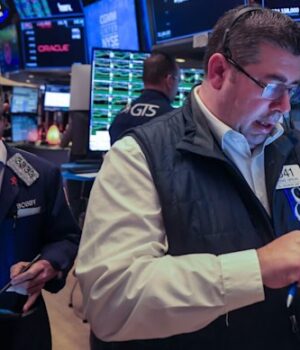
Wall Street is pulling further from its all-time high as AI stocks get back to sinking.
The S&P 500 fell 0.6 per cent and is on track for a third straight modest loss since setting its all-time high on Thursday. The Dow Jones Industrial Average was down 89 points, or 0.2 per cent, as of 1:54 p.m. Eastern time, and the Nasdaq composite was 1.2 per cent lower.
The Australian sharemarket is set to dip, with futures at 4.54am AEST pointing to a dip of 6 points, or 0.1 per cent, at the open. The ASX closed flat on Tuesday. The Australian dollar is weaker at US70.83¢. It’s another busy day on the reporting season calendar with Santos and Yancoal among companies due up.
Leading Wall Street lower were stocks that have been big winners in the boom around artificial-intelligence technology. They’ve been veering up and down on worries that their prices shot too high in the AI frenzy and that the strong demand for memory, processors and other building blocks of data centres may fizzle out if AI proves less profitable than promised.
Micron Technology dropped 7.6 per cent, and the seller of computer memory was one of the heaviest weights on the S&P 500. So were chip companies Nvidia, which fell 2.1 per cent, and Broadcom, which sank 3 per cent.
Even with their recent swings, such stocks remain big winners, and Micron has more than tripled this year.
But stocks that critics call too expensive get more scrutiny when interest rates are high, and yields remained that way in bond markets worldwide Tuesday.
The yield on the 10-year US Treasury edged down to 4.71 per cent from 4.72 per cent late Monday. But it remains well above its 3.97 per cent level from just before the war with Iran began. The 30-year Treasury yield also ticked lower, but it’s still near its highest level since 2007.
Yields have jumped since the war began because high oil prices are pushing upward on inflation and raising the pressure on the Federal Reserve and other central banks to hike interest rates. All the while, continuing worries about huge debt loads for governments and their increases in borrowing keep yields high.
The bond market often runs in the background, but it’s powerful enough to sway markets and government leaders worldwide, including President Donald Trump. When yields are high, investors are less willing to pay high prices for stocks and other kinds of investments, particularly those seen as the most expensive.
Much of the pressure on yields has come from oil prices, and the price for a barrel of Brent crude ticked up by 0.4 per cent to $US91.24. It’s been swinging sharply on uncertainty about when and whether the United States and Iran can reach a deal to allow oil tankers to exit the Persian Gulf freely again. Brent was priced at $US72.87 right before the start of the war.
High yields have already sent the average long-term US mortgage rate near its highest level in a year, which has hurt the housing industry. A report on Tuesday said homebuilders broke ground on fewer new houses last month than economists expected.
Such data helped to restrain Home Depot’s stock, which rose 0.2 per cent after reporting stronger profit and revenue for the latest quarter than analysts expected. Chief Financial Officer Richard McPhail said Home Depot saw its customers continue to pursue smaller projects.
High yields could also slow the tremendous borrowing Big Tech companies are doing to pay for data centres, putting at risk one of the big sources of growth for the US economy.
Elsewhere on Wall Street, Klarna fell 22 per cent even though the payments company reported stronger results for the latest quarter than analysts expected. The buy-now, pay-later company cut some of its financial forecasts for the full year of 2026, largely because of expectations for Germany, its largest market by volume.
Meta Platforms fell 3.6 per cent, with opening statements set to kick off in a pivotal trial in a California federal court, where states are seeking billions of dollars in damages for social media harms to children.
In stock markets abroad, indexes were mixed in Europe and Asia.
South Korea’s Kospi has been home to some of the world’s sharpest AI-induced swings because it’s dominated by two tech giants, Samsung Electronics and SK Hynix. The index fell 1.5 per cent, which counts as relatively modest move for it. It had swung by at least 2.4 per cent in each of its three prior days.
AP
The Market Recap newsletter is a wrap of the day’s trading. Get it each weekday afternoon.