

Source : Perth Now news
Australians will fork out “just a few hundred million dollars less” in passport fees than the government will make in taxing oil and gas exports by the end of the decade, a Senate hearing has been told.
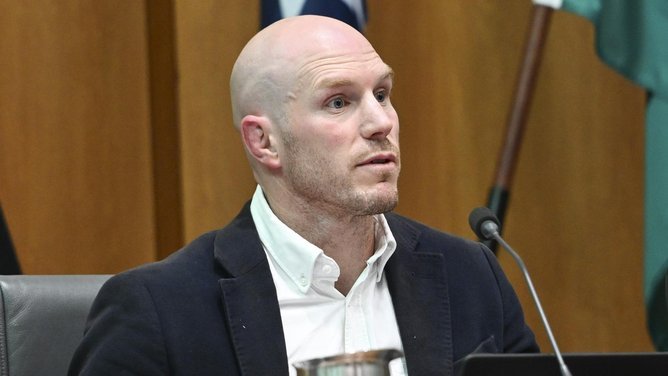
Senator David Pocock, who has long pressured the government over imbalances between the Petroleum Resources Rent Tax (PRRT) and other tax levies, quizzed the government on Thursday over revenue from passport fees.
Australia has one of the most expensive passport fees in the world, costing $422 for an adult to renew a 10-year passport and $213 for a senior or child for a five-year passport as of 2026.
The hearing was told the government forecast more than $1bn in revenue from the Department of Foreign Affairs and Trade, “predominantly” from passport fees, in the next financial year.
That was forecast to rise to as much as $1.2bn in the 2029-30 financial year.
This financial year, it was forecast the government would issue up to 2.2 million new passports, rising to as much as 2.5 million in the next financial year, officials said.
“It just seems like an extraordinary amount of money,” Senator Pocock said.
“If you look at (20)29-30, passports and Australians paying to have an Australian passport is bringing in just a few hundred million dollars less than the Petroleum Resources Rent Tax, which is how we are meant to get a return from offshore LNG.
“As one of the biggest gas exporters in the world, those two things just don’t seem to square … that’s an absurd comparison.”
Foreign Affairs Minister Penny Wong defended the government’s stance on both its passport fees and gas tax, telling the hearing she understood Senator Pocock’s views but that “we believe we found a better way to deal with national interest issues associated with gas”.
Since coming to government, Labor had improved the passport system, Senator Wong said.
“It is a high-quality, sophisticated document and one of the reasons why we receive visa-free access to over 120 countries,” she said.
Senator Wong noted the government was not considering changes to the cost of an Australian passport “other than indexation” baked into forecast increases.

However, Senator Pocock said Australians were paying in some cases double for their passports than like countries.
He told the committee a Canadian passport cost $170, a British passport $195, a New Zealand passport $225, and an American passport $250.
In response, Senator Wong said she did not know why those passports were cheaper.
“I’m not responsible for their passports,” she said.
Senator Pocock has long campaigned for a rethink of Australia’s gas tax arrangement, including after the outbreak of war in the Middle East in February.
In an earlier hearing, Senator Pocock said Australia made about $1.5bn from the PRRT, according to the 2025-26 mid-year financial outlook.
However, Australia was expected to make $2.7bn from taxes on beer.
“How do we live in a country that exports – one of the biggest gas exporters in the world – and we’re getting more tax from beer than PRRT,” Senator Pocock said at the time.
The government has defended the PRRT and its trade arrangements as being part of a broader system, especially since the outbreak of war in the Middle East, that includes the need to be a reliable energy partner as well as corporate tax.