

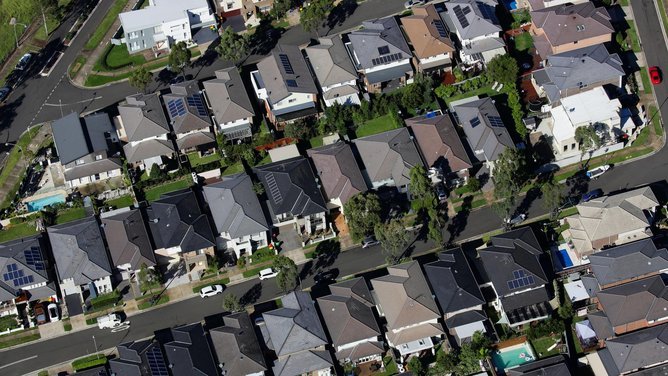
Source : Perth Now news
Australia is continuously falling behind its housing accord targets, as the number of homes scheduled to be built fell again in May.
Fresh Australian Bureau of Statistics figures show building approvals were down 1.1 per cent for the third consecutive fall.
This was due to a massive fall in new apartments and townhouses, with private sector dwelling approvals excluding houses down 10.4 per cent to 6034 for May.
Housing approvals rose 2.8 per cent month-on-month.
Australia was on track to build about 204,000 new homes in the year up to May 31. While higher than 2023 levels, the number is still below the government’s target of 240,000 homes in a year.
As part of Labor’s response to rising housing costs, the government announced a National Housing Accord – a banding together of all levels of governments to build 1.2 million new homes over five years until June 2029.
AMP chief economist Shane Oliver warns Australia remains well behind this target.
“Once allowance is made for demolitions and failures to start and complete home projects, home building is still likely to run well below the government’s Housing Accord target to build 240,000 a year,” he said.
“The rate hikes this year are also likely to drive some softening in approvals going forward and there are already some signs that unit approvals may have peaked.”
Wednesday’s figures are also the first look at how the market is responding to the Albanese government’s budget housing tax changes.
The approvals decline was driven by big drops in Queensland, Victoria, and Western Australia.
Offsetting the falls were gains in NSW, which recorded its fourth straight month of positive building approvals
The value of total residential building fell 5.7 per cent to $10.24bn.
In budget reforms dubbed the biggest housing policy changes in a generation, inflation-adjusted indexation is replacing the 50 per cent capital gains tax (CGT) discount on all investments including property.
There were also changes to negative gearing, with new investors unable to get the tax break unless they build a new place.

The Coalition has vowed to repeal Labor’s proposed changes to CGT and negative gearing, calling them “an assault on aspiration”, should it win the next election.
Earlier this week, Master Builders chief executive Denita Wawn said the National Housing Accord had produced mixed results in its first two years, with Australia more than 200,000 homes short of its target.
“That’s why builders were so bitterly disappointed by the federal budget. Not only were there broken promises, tax hikes, and cuts to apprenticeship funding, but there was a real lack of ambition in the new announcements on things like infrastructure spending and red tape reduction,” she said.
“The National Housing Accord is a joint commitment by all levels of government and industry to build 1.2 million homes in five years, and we need a joint effort to reach this ambitious target.
“An ambitious target necessitates ambitious government policy, and clearly the policy settings need further reform. Tinkering around the edges won’t work. It’s time for bold policy that will turbocharge the building of more homes.”