


Source : the age
When Amanda McKenzie – climate wunderkind, activist for hope and Climate Council chief executive – and her husband and two young children came down with COVID-19 recently, she got out the roller skates.
She and her husband unearthed some jigsaw puzzles, turned their living room into a makeshift roller rink, and told the kids to have fun.
Then, they went back to work in their home office.
As she tells this story over lunch, I’m struck by two things. First, it says a lot about their commitment to community that McKenzie and her husband chose to lock down their family at home for a week, regardless of whether they were still symptomatic.
And second: living in McKenzie’s house sounds like a hoot.
We’re meeting at Patsy’s, a tranquil up-market vegetarian wine bar in Melbourne’s inner north, where almost all the produce prepared in the kitchen is grown in the owner’s regenerative farm in Victoria’s Central Highlands.
McKenzie has nominated this lunch spot, which seems an almost too-perfect choice to interview one of the most senior women in Australia’s environment movement.
“I’m quite a utilitarian eater, but my husband has a very bougie, foodie vibe, so he’s made me more of a foodie,” she says. “I think if I was just left to my own devices, I’d be just eating a salad … premixed leaves with sun-dried tomatoes or something.”
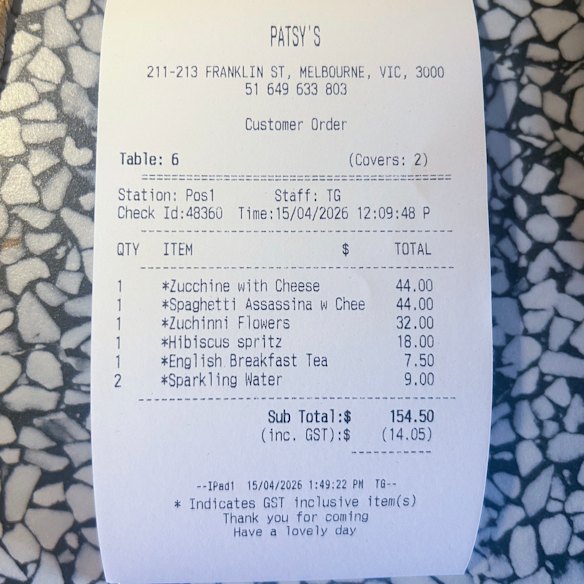
Today, McKenzie eschews wine in favour of a pot of English breakfast tea, while I order a hibiscus spritz mocktail. It is a bougie wine bar, after all.
McKenzie has lived almost half her life in the public eye, although she isn’t necessarily a household name outside environment circles. Her first leadership role came 20 years ago when, aged 23, she co-founded the Australian Youth Climate Coalition with fellow law graduate Anna Rose.
The pair hit the ground running, growing a fledgling coalition of 27 youth groups to a national organisation numbering 100,000 members three years later.
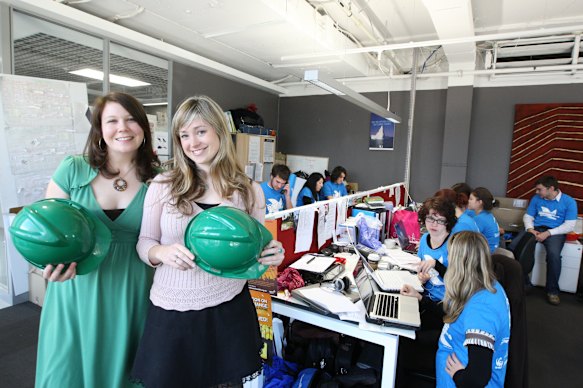
Back then, as she travelled around organising meetings and strategic campaigns, McKenzie often found herself the only woman in the room. There were many who underestimated this young woman and the importance of the message she was trying to convey.
“At that time, it was a ‘future issue’,” she says.
“I talked about [the impacts on our] kids and grandchildren, and it strikes me now, these kids I was talking about 20 years ago, they’re here: they’re eight and five, and experiencing the impacts already.”
Without intending to, it was former prime minister Tony Abbott who lit the fuse that propelled McKenzie into making her life’s mission the fight against climate change.
In 2011, she joined the fledgling Australian Climate Commission as a senior communications adviser, determined to shift public debate on Australia’s changing climate.
The commission was established by former prime minister Julia Gillard and led by Professor Tim Flannery.
It was designed to provide independent advice on the science of climate change, and was announced as public alarm grew about climate change, fuelled by back-to-back La Nina weather events, and on the heels of the 1997-2010 millennium drought.
In its first report to government, The Critical Decade, commissioners warned that climate change “risks have never been clearer, and the case for action has never been more urgent”.
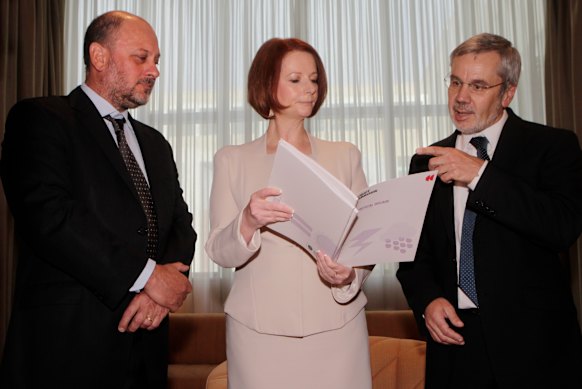
Less than two weeks after the Coalition came to power two years later, the commission’s time was up.
In one of his first acts as environment minister, Greg Hunt phoned Flannery to tell him the commission would be axed, as part of the Abbott government’s commitment to scrap the carbon tax.
“So very quietly, I’d just gone to the commissioners and said, ‘if we started a new thing, would you be up for it?’ And Tim Flannery was like, ‘Yes, let’s do it!’”
After Hunt’s announcement, the commission issued a “relatively neutral response”, McKenzie says, stressing the importance of science to Australian democracy. Flannery held a press conference in which he praised Hunt’s “gracious” conduct in their conversation.
Four days later, they officially launched The Climate Council, with founding commissioners including Flannery, the late Professor Will Steffen, Professor Veena Sahajwalla, Gerry Hueston and Professor Lesley Hughes.
“It just went crazy, as soon as it hit the media in the morning,” McKenzie says.
“We did a bunch of radio, we started to do some TV news. Some of the newspapers had it. And then it started this big viral moment crowdfunding campaign.
“Within that first day, we raised $500,000 and by the end of the day, Twitter [now X] thought we were buying followers, so they shut us down. PayPal thought we were money-laundering, so they shut us down because we’d raised money so fast … It was this cyclone of activity.”
They raised $1.3 million within the first week – more than the previous Climate Commission’s budget – from more than 15,000 people for whom Abbott’s cuts to climate commitments felt like attacks on science.
Since then, the principle that “we should base our democratic debate on evidence”, as McKenzie puts it, has driven the way the Climate Council operates.
Another element of the Climate Council’s approach is something akin to intentional hope.
“The way I think about it is, the future is not written,” she says, when I ask how she talks to younger generations about climate change.
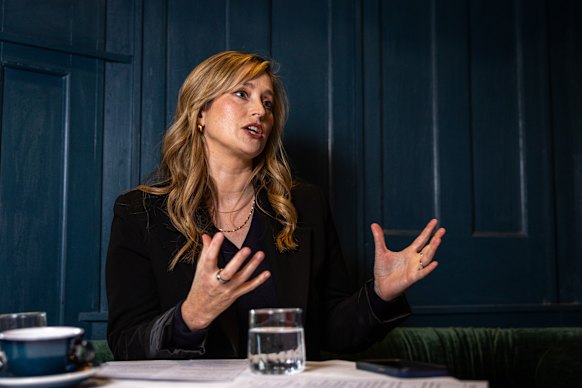
“At the moment, we feel like there’s a growing dominant story of dystopia, and that Trump and the billionaires are going to destroy everything.
“And I think there’s an enormous power in telling a better story, telling a motivating story, about a vision that can be created. And the only way to create a better future is to be able to tell the story [about] what that can look like.”
The audacity of hope
McKenzie grew up in Melbourne’s north-eastern suburbs with her parents and younger sister. Her father trained as a scientist (originally working in the oil industry) and a psychologist, and later retrained as a banker.
His intellectual curiosity has clearly rubbed off on his daughters (McKenzie’s sister works in project evaluation).
“He’s very passionate about nature and how things work; I think that’s the chemistry [background],” she says.
“So we did a lot of hiking and caving and rock climbing [as kids], and he would always be explaining the world. He does a lot of explaining stuff to my kids now. My son’s like, ‘how big is a photon?’ And I’m like, ‘good question … Granddad?’”
Giving children a sense of freedom and adventure in the natural world shapes them as an adult, I observe.
McKenzie agrees.
Then, to my surprise, she says: “I can be a bit of a scaredy-cat.”
She doesn’t come across as a scaredy-cat, I say.
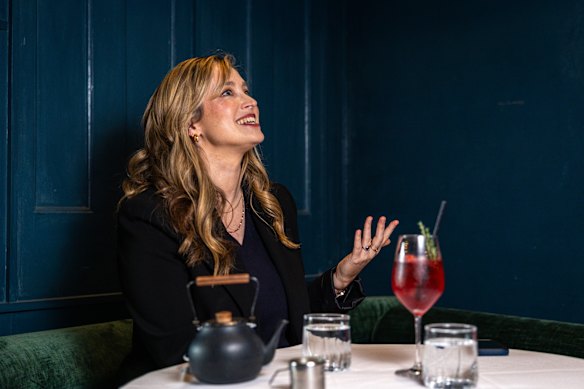
“My dad was always like, ‘we’re going sailing’, ‘we’re going climbing’, ‘we’re doing this adventurous thing’. And I wanted to be an adventurer. So I decided, ‘I’m going on the adventure’.”
I ask McKenzie whether she sees herself as an activist like former Greens leader Adam Bandt, who now leads Australian Conservation Foundation, or as someone who works inside the tent consulting governments and stakeholders.
“The second,” she says. “That’s much more where we see ourselves.
“You need some groups that are more radical, that are really pushing the envelope, and then you need groups like ours, who are going to be bringing a considered depth of policy expertise to say, ‘here are the political solutions that are available right now’ … there is a role for lots of different organisations.”
After all this talking, we realise we’ve forgotten to order food and the waiter is hovering.
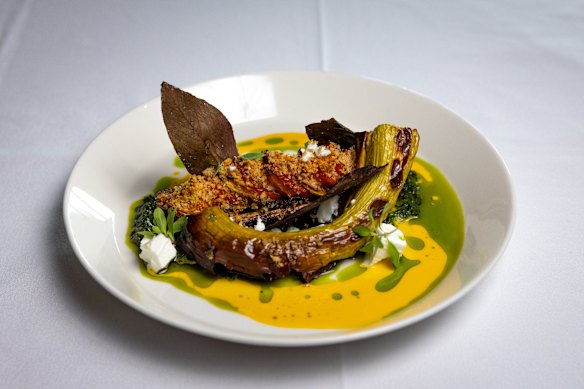
McKenzie orders a vegetarian version of zucchini ripiene – juicy zucchini hollowed out and stuffed with cheese – while I opt for spaghetti all’assassina, bursting with flavour and texture. We share stuffed zucchini flowers – the farm’s zucchinis are bountiful this season – with luxurious almond crema and tangy tarragon salsa.
We move on to the 2019-2020 Black Summer bushfires, which McKenzie believes was the defining moment in Australia’s changing climate.
“There wasn’t an adequate reckoning on Black Summer because COVID came in so quickly afterwards. But I think it’s still there in all of our psyche,” she says.
“Having worked on [climate campaigns] for 20 years, it was a big shock how bad that fire season was. I mean, there was a time when fires were burning from Hobart to Brisbane … [which is] absolutely mind-blowing.”
In the months before the fires, then Fire and Rescue New South Wales commissioner (now climate commissioner) Greg Mullins and other fire chiefs issued a series of warnings to the Morrison government about the unique dangers of that parched summer.
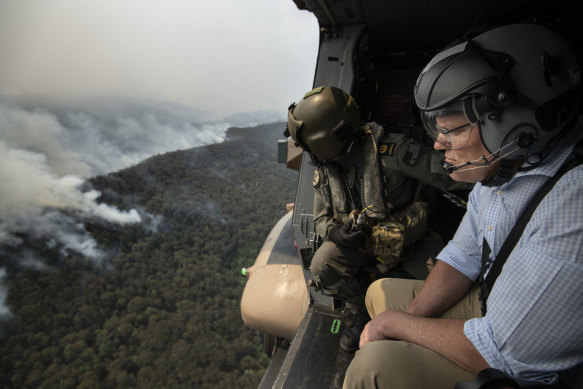
“They tried desperately to get meetings to inform the federal government, but it was just deaf ears all the way until the fires started,” McKenzie says.
“Greg and the other fire chiefs were extremely frustrated and upset over that summer that their warnings had gone unheeded.”
As the parent of two young children living through increasingly frequent bushfires, floods and other climactically induced disasters, McKenzie is aware on a personal level, as much as on a policy level, what is at stake if humanity doesn’t rapidly reduce emissions.
She’s also aware that a public exhausted from decades of bad news about climate change might be inclined to switch off.
“We’re all at the same point, basically, that everyone agrees that climate change is bad – even the right of politics agrees – but on the scale, severity, speed, there is not an adequate appreciation of the urgency. There’s only so many times you can say it’s urgent.
“You’ve got to find lots of different ways to tell the story.”
Ever the optimist, McKenzie sees the fuel crisis through the lens of opportunity.
“It’s got to be that inflection point where we say the issue for Australia is fossil-fuel dependence,” she says.
“It leaves us at risk of price spikes, of fuel shocks. And that’s not going to go away. No one thinks the world’s going to become less volatile.
“So we are arguing that it should be that inflection point where we double down on renewables and electric vehicles.”
Start the day with a summary of the day’s most important and interesting stories, analysis and insights. Sign up for our Morning Edition newsletter.


