Source : INDIA TODAY NEWS
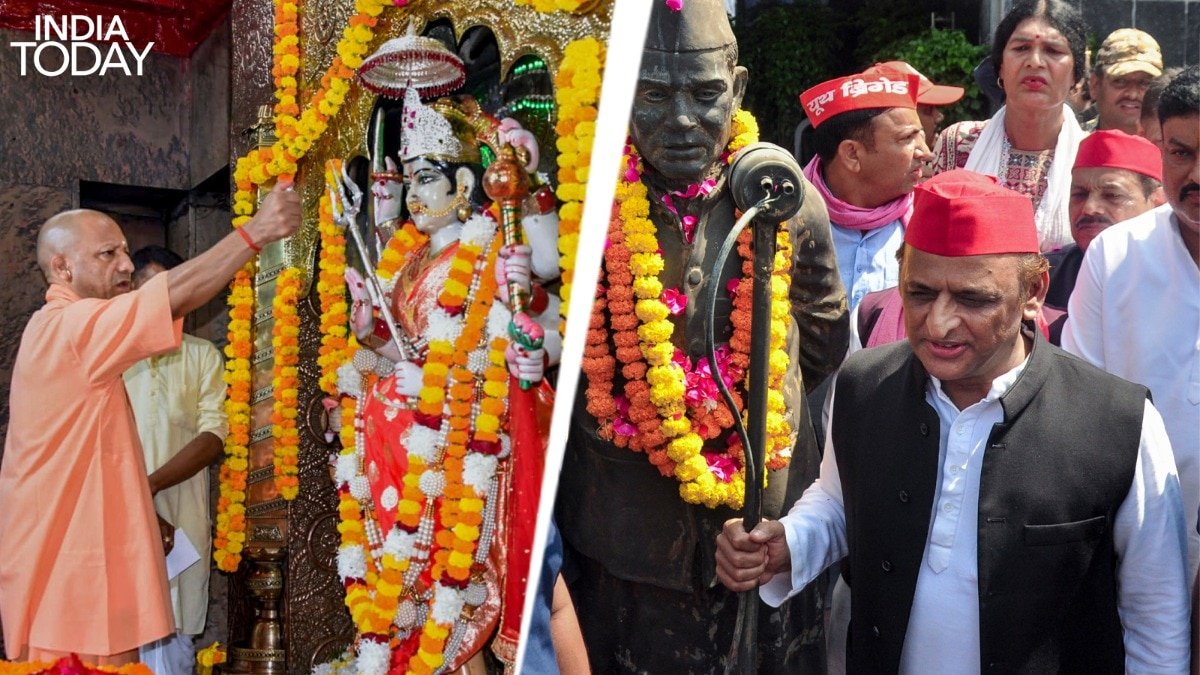
Ayodhya is once again at the centre of Uttar Pradesh’s poll battle that’s due in the first quarter of 2027, with Chief Minister Yogi Adityanath challenging Samajwadi Party chief Akhilesh Yadav to face him in an election from the temple town. On Sunday, Akhilesh turned the challenge back on Yogi, asking him to get his own election ticket confirmed first.
The exchange comes two years after the BJP lost the Faizabad Lok Sabha seat, which includes Ayodhya, in the 2024 General Elections. The Ram Temple in Ayodhya was one of the BJP’s biggest political promises. Instead, the temple town gave the saffron party an embarrassing setback. The Samajwadi Party defeated the BJP in Ayodhya.
advertisement
On Sunday, Akhilesh responded to Adityanath’s invitation by suggesting that the Chief Minister first secure confirmation of his own election ticket. The remark came a day after Adityanath publicly offered to contest against the Samajwadi Party president from Ayodhya.
“Those whose own tickets are not confirmed are talking about tickets. The Chief Minister should first get his own ticket confirmed,” Akhilesh told reporters in Lucknow after paying tribute to socialist leader Jayaprakash Narayan on his birth anniversary.
“Our wind will sweep away arrogant people,” the Samajwadi Party chief added, invoking Narayan’s legacy of democratic resistance and social change.
The exchange is significant because Ayodhya Assembly constituency isn’t just any seat. It houses the Ram temple and is closely associated with the BJP’s Hindutva politics. In 2024, Awadhesh Prasad of the Samajwadi Party won the Faizabad Lok Sabha seat, defeating the BJP incumbent Lallu Singh by over 54,000 votes.
The Samajwadi Party’s victory there, despite the inauguration of the Ram temple earlier that year, gave the Opposition an opportunity to challenge the BJP’s claim that its development and religious outreach had transformed the region. Now, with the 2027 Assembly election approaching, the exchange between Yogi and Akhilesh suggests that both sides are seeking to define the political meaning of Ayodhya before voters return to the voting booths.
It must also be noted that the Ram temple became a flashpoint amid allegations of irregularities and theft linked to the temple complex, which Akhilesh used to question the BJP’s claims of religious stewardship and governance. The Samajwadi Party especially capitalised on the controversy.
Yogi Adityanath represents the Gorakhpur Urban Assembly constituency in the Uttar Pradesh Assembly, while Akhilesh Yadav represents the Kannauj Lok Sabha constituency in Parliament. Akhilesh previously represented the Karhal Assembly constituency (part of Mainpuri Lok Sabha seat), from which he was elected in the 2022 Uttar Pradesh Assembly elections. He resigned from the Assembly seat in June 2024 after winning the Kannauj Lok Sabha seat.
HOW THE AYODHYA CHALLENGE ESCALATED
The confrontation began with Akhilesh’s challenge to Adityanath on October 8 (Thursday). The SP president questioned the BJP’s position in Ayodhya and claimed that the ruling party had been surveying potential candidates after his party announced Pawan Pandey as its nominee. He suggested that the BJP was struggling to identify a suitable candidate for the seat.
Adityanath responded on October 10 (Saturday), during a public meeting in Balrampur. He invited Akhilesh to contest against him directly from Ayodhya.
“Akhilesh Ji, I offer you a challenge. You file your nomination from Shri Ayodhya Dham, and I will also file mine. Let us test our luck once,” Adityanath said.
In his address, the UP CM argued that his visits to Ayodhya were driven by development priorities and religious faith rather than electoral calculations. He also accused the Samajwadi Party of having neglected the city when it was in power.
Adityanath also invoked the idea of Ram Rajya, presenting the transformation of Ayodhya as evidence of a broader change in Uttar Pradesh under the BJP.
AKHILESH TURNED THE CHALLENGE BACK ON YOGI
Days after Yogi’s remarks, Akhilesh responded on Sunday. He shifted the focus from whether he would accept the invitation to whether Adityanath was in a position to make such an offer in the first place.
By questioning the certainty of the Chief Minister’s own candidature, the SP chief sought to undercut the confidence behind Adityanath’s challenge without committing himself to contesting from Ayodhya.
Speaking after paying floral tributes to Jayaprakash Narayan in Lucknow, Akhilesh also used the occasion to frame the political contest in terms of democratic values, unemployment and inflation.
WHY AYODHYA IS POLITICALLY SENSITIVE, ESPECIALLY FOR BJP
The 2024 Lok Sabha elections’ result in the Faizabad seat was a setback for the BJP because the Ram temple in Ayodhya had been inaugurated in January that year.
The result complicated the assumption that the Ram Temple’s appeal would automatically translate into votes for the BJP. Local concerns, including employment, economic conditions and questions surrounding development and land acquisition, have been part of the debate over why the BJP lost the Faizabad seat.
For the BJP, Ayodhya remains central to its narratives of cultural revival and attaining civilisational goals. Adityanath’s decision to issue a direct challenge from Ayodhya can therefore be read as an attempt to reclaim the political narrative around the constituency and project confidence ahead of the 2027 Assembly polls.
The UP Chief Minister has repeatedly argued that the BJP government has changed the state’s law-and-order situation and accelerated infrastructure development. In Balrampur, he also attacked the SP over alleged criminal patronage, corruption and its choice of candidates for the Rajya Sabha elections.
Yogi Adityanath mocked the party’s PDA slogan, which stands for Pichhda, Dalit and Alpsankhyak, (backward classes, Dalits and minorities), by recasting it as “Parivar Development Authority”. He alleged that the SP’s political decisions favoured members of its own family and wealthy backers rather than the social groups it claims to represent. The next Assembly election will determine whether the BJP can convert its development claims and religious outreach into electoral support across Uttar Pradesh.
The two leaders’ exchange has placed Ayodhya back at the centre of Uttar Pradesh’s political conversation, with the BJP seeking to move beyond the setback of 2024.
– Ends
SOURCE :- TIMES OF INDIA