

source : the age
Victorians are being urged to prepare for potentially deadly thunderstorm asthma as health experts warn of an intense hay fever season following a wet and warm winter.
Ten years ago, Victoria experienced the world’s largest and most catastrophic thunderstorm asthma event, one which led to the deaths of 10 people and caused breathing issues in thousands of others.
Chief Health Officer Dr Caroline McElnay said a relatively warm and rainy winter had led to a lot of grass growth around the state, contributing to an early start to the pollen season.
“We can’t control the weather or the pollen, but we can reduce exposure,” McElnay said.
From today until December 31, the VicEmergency website and app will provide three-day forecasts of thunderstorm asthma risk for each of the state’s nine weather districts.
It will do this using seven high-tech pollen counters distributed around the state.
McElnay said people with asthma and hay fever were particularly vulnerable to thunderstorm asthma and should follow the forecasts, continue taking prescribed medication, and comply with their asthma action plans. They should also close windows and avoid being outside during storms and when it’s windy.
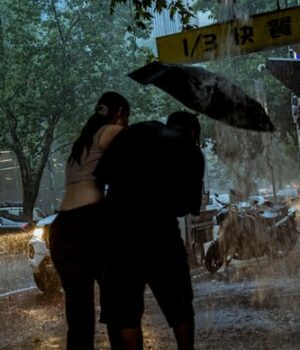
Thunderstorm asthma occurs when there is a sudden change in weather, which can lead to grass pollen grains absorbing moisture in the air and bursting. This releases thousands of allergenic particles, which can be inhaled into the depths of the lungs, triggering asthma symptoms.
People with hay fever can unexpectedly develop asthma symptoms when this occurs.
McElnay, who suffers from hay fever, recently bought an inhaler ahead of thunderstorm asthma season.
“It’s better to be prepared,” she said. McElnay developed the common condition when she moved from the UK to New Zealand.
The thunderstorm asthma forecasts are also used by health services so they can prepare for a potential rise in people turning up to emergency departments.
“What we’re trying to minimise is the number of people whose asthma would be triggered or would be so severe that they need to seek emergency care,” McElnay said.
Dr Naghmeh Radhakrishna, a respiratory and allergy physician at St Vincent’s Hospital and The Alfred, treated patients who wound up in intensive care following the catastrophic thunderstorm asthma event on November 21, 2016.
“There was one patient I saw who ended up needing resuscitation,” she recalled. “He was a young guy in his late 30s or early 40s. He had a severe episode and also had allergic rhinitis.”
She advises people with hay fever to also get tested for asthma.
“The people who died during the thunderstorm event were the people who basically had undiagnosed asthma, or they had asthma but it wasn’t well controlled,” she said.
Radhakrishna said immunotherapy and desensitisation treatments could gradually retrain a person’s immune system to tolerate pollen, reducing hay fever symptoms.
Since the events of November 2016, the state government has invested in and expanded Victoria’s world-leading Epidemic Thunderstorm Asthma Risk Forecast System. The system was modernised last year with automated pollen counters, which use advanced imaging to deliver faster and more precise data, replacing manual traps.
Health Minister Ingrid Stitt described the sophisticated pollen counters as a nation-leading tool that kept Victorians healthy and safe.
“We want every Victorian to be safe this pollen season – that’s why we’re encouraging everyone to be prepared,” she said.
Edwin Lampugnani, chief executive of AirHealth, which provides daily pollen counts to thousands of Australians through the Melbourne Pollen and Sydney Pollen websites and apps, said satellite data showed verdant landscapes, particularly in north-west Victoria.
“Everything is looking very, very green,” he said. “It’s much greener than it was in 2025.”
He said this led to the grass producing more pollen.
“We’re looking at a stronger season, or a more intense season than we saw last year,” he said.
National Asthma Council Australia spokesperson and respiratory physician Professor Peter Wark said effective day-to-day control of asthma was the best defence during the pollen and thunderstorm asthma season.
National asthma guidelines changed last year, with doctors urged to move away from solely prescribing blue puffers as a standalone treatment for those aged over 12. It’s now recommended that people with asthma use anti-inflammatory relievers.
“Even people with hay fever who have never had asthma should see their GP if they experience symptoms such as breathlessness, wheezing and tightness in the chest. These symptoms do not occur with hay fever alone,” Wark said.
About 11 per cent of Australians have asthma, the Australian Institute of Health and Welfare says.
One in four Australians suffer from allergic rhinitis, the scientific name for hay fever.
Start the day with a summary of the day’s most important and interesting stories, analysis and insights. Sign up for our Morning Edition newsletter.
 Henrietta Cook is a senior reporter covering health for The Age. Henrietta joined The Age in 2012 and has previously covered state politics, education and consumer affairs. Email her via henrietta.cook@theage.com.au or henrietta.cook@protonmail.comConnect via X, Facebook or email.

