

SOURCE :- THE AGE NEWS
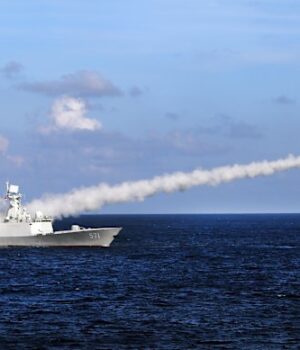
Beijing: China’s testing of a nuclear-capable missile in the Pacific Ocean generated a splash that no one heard, but every country in the region felt.
Launched from a nuclear-powered submarine at midday Beijing time, it is only the second intercontinental ballistic missile with a dummy warhead that China has launched in 40 years, and just two years after the last test.
The timing was curious, coming only hours after Anthony Albanese inked an historic defence treaty with Fiji.
Diplomatic sources and experts have stressed this is almost certainly coincidental. Weapons testing takes weeks of planning, including to manoeuvre ships into position to track missiles and record data. This suggests Beijing was not rebuking Canberra for the temerity to partner with the small island nation, though it is surely displeased at Australia’s expanding defence alliances.
What is not a coincidence is China’s desire to project its military might across the region. Monday’s launch is Beijing’s message to its neighbours that the Pacific is its domain, at a time when the geopolitical centre of gravity is shifting away from the United States.
China is expanding its nuclear weapons arsenal faster than any other country and has never felt more confident about its destiny as a military superpower capable of challenging the United States for global leadership and order.
The Pentagon and arms experts estimate that China is sitting on a stockpile of about 600 nuclear warheads, which could hit 1000 by the end of the decade. This pales in comparison to the huge stockpiles held by the US and Russia, but it is closing the gap when it comes to the intercontinental ballistic missiles needed to launch them.
China showed off a number of its new nuclear weapons systems at military parade in Beijing last year, overseen by leader Xi Jinping, who invited Russia’s Vladimir Putin and North Korea’s Kim Jong-un to hold court with him in a flex of anti-Western power.
Xi has made clear that seizing control of Taiwan is his country’s single greatest goal in achieving what he calls the “China dream”.
The Pentagon believes Beijing’s massive military acquisition is in service of being technically capable of invading the island by 2027, though few analysts believe Xi will make a move then, not least of all because he has purged the senior ranks of the People’s Liberation Army.
Last week, Xi started the rebuild and appointed two new generals to his senior command, paving the way for them to fill vacancies on the Central Military Commission – China’s top defence planning body.
There are other factors weighing against a military assault in the near team, including that it would be an extraordinary gamble for Xi, especially if the US intervenes. He may see an easier path in the aftermath of Taiwan’s presidential elections in 2028 should a pro-Beijing candidate secure the reins.
In any calculation, China will not be content with having intimidating firepower; it will also want to be seen to have it.
To this end, it is unsurprising that a nuclear-armed power will want to test its weapons. The US tested an ICBM as recently as May. Equally, it is unsurprising that the world’s second-biggest blue-water navy will want to flex its fleet, as China did in February last year when it circumnavigated Australia after conducting live-fire exercises in the Tasman Sea.
But this pattern of increasing military expansion, and limited transparency over its intentions, will only pour more scepticism on Beijing’s self-projected image as a benign major power seeking a multipolar world.
Just as Beijing’s attempted assurances on Monday that “relevant countries” should “not overinterpret the matter” will land flat in Canberra and elsewhere.
Get a note directly from our foreign correspondents on what’s making headlines around the world. Sign up for our weekly What in the World newsletter.
 Lisa Visentin is the North Asia correspondent for The Sydney Morning Herald and The Age based in Beijing. She was previously a federal political correspondent based in Canberra.Connect via X or email.