
source : the age
To submit a letter to The Age, email letters@theage.com.au. Please include your home address and telephone number. No attachments, please include your letter in the body of the email. See here for our rules and tips on getting your letter published.
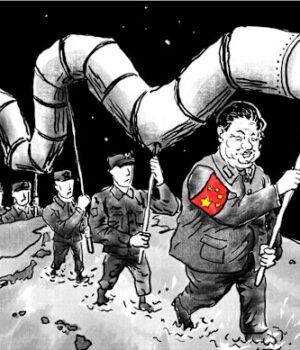
Deep concern has been expressed, and rightly so, about China’s nuclear expansion in the wake of a submarine-launched ballistic missile that landed in the Pacific Ocean on Monday, within a week of events throughout the region commemorating significant nuclear-testing anniversaries.
Prime Minister Anthony Albanese’s comments underscored the nuclear dimension of the test, as reported by this masthead, noting: “Part of our concern here … is the fact that this was a test of a nuclear-capable intercontinental ballistic missile fired from a nuclear-powered submarine.”
While Australia’s AUKUS subs will not be nuclear-armed, Albanese must take responsibility for Australia’s role in fomenting nuclear expansion in the Asia-Pacific. Acknowledge the AUKUS deal for what it is: the provocative transfer of militarised nuclear technology to a previously non-nuclear country, setting a perilous precedent for similar proliferation elsewhere, as already observed in South Korea and Brazil’s pursuit of deals to acquire nuclear-powered submarines.
Sybilla George, South Yarra
Australia’s nuclear submarines deal
In response to China’s testing of a missile, Anthony Albanese said “what we need is less nuclear weapons”. Someone needs to remind him that Australia has signed a $360 billion cheque to acquire nuclear submarines. Darren Saffin, Brunswick West
The real threat to humanity
Of all the threats to the world, China’s test of an unarmed missile in the Pacific is not the least but is well down the list. No country, apart from North Korea, will be silly enough to use nuclear weapons first because of the retaliation procedures put into place by countries with nuclear weapons. Mutually Assured Destruction would ensure that no country wants to launch last.
Satirist and songwriter Tom Lehrer said it so well: “And we will all go together when we go/What a comforting fact that is to know/Universal bereavement/An inspiring achievement/Yes, we all will go together when we go.″
Even Mar-a-Lago wouldn’t survive. The dangers of global warming are far more likely than a nuclear war.
Adrian Tabor, Point Lonsdale
Defence spending must be raised
The firing of a ballistic missile into the Pacific Ocean by China contains an urgent message for the Albanese government – raise defence spending now. The Chinese government is once again acting as the neighbourhood bully, this time unhappy with our strengthened alliances with Pacific neighbours. When taken into consideration alongside the Chinese navy circumnavigating the continent, it is obvious that China is our major national security threat. All the pleadings of peaceful motives by its diplomats are a mere smokescreen created by the Chinese government to mask deadly intent.
Peter Curtis, Werribee South
Pact with Fiji has serious flaws
What is the purpose of our new defence treaty with Fiji? If Fiji and Australia are now obliged to come to each other’s defence, it is unlikely that Fiji’s military will be of much assistance to us in the event of an attack on Australia.
Furthermore, the principal security threat that Fiji has historically faced is not an attack by China, but an internal military coup. Would this treaty oblige us to use force to restore Fiji’s government in the event of another coup?
If the objective is to block Chinese influence in the Pacific, Australia could have instead signed a deal similar to the one it recently signed with Vanuatu, which banned the establishment of foreign military bases in that country, without forcing either country to defend the other. This treaty strikes me as unsound foreign policy. Nikhil Dhanabal, Clyde North
THE FORUM
Give billboards the bird
There are far worse public eyesores in Melbourne than Pam the Bird (″Art of vandalism? Behind the cult of Pam the Bird″, 8/7). Billboard advertising has been integrated into our public environment to the extent that we are mostly unconscious of it. Billboard advertisements are used to promote brand recognition through repeated exposures. The general public has no say over their placements. Their messages often detract from the surrounding environment.
Billboards could be seen as vandalism, but they are not because they are about making money for the advertisers and those that display the advertisement. And we are conditioned to receive their blatant or subliminal messages that will earn their owners some money. Unlike Pam the Bird.
Leigh Ackland, Deepdene
Rejoice in the art
Melbourne Lord Mayor Nick Reece is not the arbiter of what is art. Pam the Bird is art writ large. We should be proud of it not condemning it.
There is a vast difference between mindless tagging and street art and Pam is a brilliant example of the latter.
Reece talks up Melbourne’s street art scene when it’s in a sanctioned and cordoned off in an “official” display area, but wrings his hands when art pops up “unsanctioned”. Go for your life to stop tagging, but leave art alone, and why are we “breaking a butterfly on a wheel” with the creator? Rejoice that Melbourne is a city that has public/street art of such calibre.
Roger Dunscombe, Richmond
Tagging the ego
Ninety-nine per cent of graffiti (including Pam the Bird) is not art but “tagging″ – which is essentially an ego-enhancement exercise.
The only way to discourage graffiti is to force perpetrators to clean it up themselves at their own expense, by incurring a debt to be paid off, if necessary.
Robert Juozas, Eaglemont
Doesn’t deserve a spray
Pam the Bird is not graffiti – it’s art. Not like the art you see while sipping chardonnay in an upmarket gallery though. It’s a performance, confronting in its execution, the physical skills involved and its rebellious nature.
It’s droll and so Melbourne, whose young people have an irresistible urge to decorate the acres of grey concrete that make up our city. Hold the bureaucratic vengeance. It must remain. It’s a tourist attraction – a thing of wonder.
John Laurie, Riddells Creek
Feasible logic
My house has fallen in price around 10 per cent in the past decade, from $1.4 million to $1.26 million. Fantastic.
If I sell it, and buy an equivalent house elsewhere, I will not have lost $140,000, but will have gained $10,500. The reason? Stamp duty and agents fees on a $1.4 million sale will total around $105,000, but will be around $94,500 on $1.26 million. And I’m still living in an equivalent house.
Brian Leonard, Rosanna
A fall for all
I would love to see the market price of my house go down – a lot – as long as everyone else’s house price also came down. That’s what I was hoping for with the new legislation, but it’s making little difference.
We must get prices down to reduce the ludicrous difference between house prices and wages. Let’s think about the wellbeing of everyone.
Don Jordan, Mt. Waverley
Pitch for safety
It was shocking to hear of the severe injury to and death of a young footballer, not only because it is a tragedy, but because it might have been avoided (″Tragedy sparks calls for review of covered cricket pitches″, 7/7).
Forty-five years ago, I worked in the parks department of the then City of Croydon. We had several ovals which accommodated both cricket and football, most with synthetic grass over concrete wickets. Every year, at the end of the cricket season, many of us left our usual activities and worked flat-out, covering synthetic wickets with heavy plastic, driving in trucks loaded with soil, which we spread over the plastic, raking the soil level while sloping the sides down to the level of the oval surface, sowing ryegrass seed and racing to the next oval until all of the synthetic wickets which had to be covered were covered with at least 15-20cm of soil. That created a slightly elevated rectangle, but it protected the football players from the hard surface and also protected the synthetic wicket from the cleats on the players’ boots.
It was not a cheap exercise. When the football season ended, the process had to be reversed. Then in the mid-1990s the then government of Jeff Kennett pushed through council amalgamations and attempted to have councils operate more as businesses rather than service providers. Costs became a, if not the, major consideration. That is not to attribute blame, it was just the new system. It is easy to understand why the expensive and seemingly superfluous task of covering wickets with soil, only to uncover them a few months later, might appear to be an easy target for cost-cutting. The trouble with viewing every activity primarily through a dollar-focused lens is that those activities probably became part of the yearly program for a good reason. And now everyone knows what that reason is. What price a life?
Helen Moss, Croydon
Coping with the heat
Peter Hartcher (Comment, 7/7) describes the terrible death toll in France and Europe where people have always cooled themselves with shutters and fans.
As a consumer of French news I note the high cost of power in France and that the ageing nuclear plants, which provide about 70 per cent of electricity there, also cannot cope with the heat. In the recent extreme heatwave 10 per cent of the power from these plants was unavailable when French utility EDF took several reactors offline due to the lack of cooling water. Judging by the crowds fighting for portable air conditioners in shops, the French are now desperate for respite from the heat. How fortunate are we that our air conditioners can easily and cheaply be powered from the solar panels on our own rooftops, something all new builds should now have. While Labor has moved slowly it has at least increased our clean renewable energy.
Helen Hook, Black Rock,
Three passport player
Donald Trump intervened to have the red card and match ban against American player Folarin Balogun removed. Balogun represents those that Trump wants banned, he was born in the US to a Nigerian mother. He holds US citizenship due to the birthright rule Trump wanted overturned. But there’s more – Balogun holds three passports, US, Nigeria and UK.
Tom Stafford, Wheelers Hill
Not Mr Fixer
Donald Trump asserts he can fix all the conflicts in the Middle East, but the reality is he can’t even ″fix″ a soccer match.
Perhaps his call to FIFA president Gianni Infantino to get a reversal of the USA’s best player’s red card so embarrassed the American team that they had no heart to play at their best.
Classic Trump result really.
Danny Cole, California Gully
Robbed of Brownlow
Michael Gleeson’s article about the AFL coaches and their messages to the players via the runner was extremely funny and certainly worth reading (″Coach’s box fever and running in the ’heat of battle‴, 5/7). We, as supporters, can only imagine the goings on.
What really grabbed my attention however was the poleaxing of Ken Hinkley. This has been a hobby horse of mine for a long time, because that act cost Hinkley a Brownlow Medal. He lost the count by one vote that year but did not score a vote in that particular game. As Gleeson wrote, Hinkley had 20 possessions up to that time and, in my opinion, was clearly best on ground. He would easily have received one, two or three votes. Hinkley was a brilliant and fair player and deserved the Brownlow that year.
Richard Bakker, Ocean Grove
Gooaaallll!
It’s interesting to watch spectators at sporting events — particularly soccer fans — who often gather together, jumping up and down in unison when their team scores or has a thrilling moment. I don’t recall seeing the same sort of celebration among AFL crowds. I wonder if the difference is because scoring in AFL is so frequent that supporters would wear themselves out if they celebrated every goal that way. In soccer, where a match can sometimes go the full 90 minutes without a goal, a single score can trigger an enormous release of excitement, making celebrations all the more intense.
Don Owen, Hawthorn
Remember Darwin
Opposition defence spokesman James Paterson says that it would be disastrous if China established a port in the Pacific. He may have forgotten what happened in 2015 when the Port of Darwin was leased to China by the Northern Territory’s Country Liberal Party government. The Coalition were in power federally at the time.
Patrick Hennessy, St Kilda
Climate counter-balance
Your correspondents are right to bemoan the poor state of climate action in Australia (Letters, 8/7). Climate and Energy Minister Chris Bowen will preside over negotiations at COP31, the annual global climate conference, this year. Given the plight of our Pacific neighbours due to climate change, Australia should be using this global platform to lead the charge to phase out coal, gas and other fossil fuels. Yet the Albanese government is not only approving new polluting projects, it is subsidising fossil fuel use by almost $15 billion a year. We need a counterbalance to the rise of inadequate and climate-denying politics in this country.
Amy Hiller, Kew
AND ANOTHER THING
World Cup
Americans should give Donald Trump a red card.
Pepe Salvatore, Fitzroy North
How dare Belgium! Don’t they know they will cop extra tariffs from Donald Trump for kicking his great team out of the World Cup?
Kum Mak, Glen Iris
The entire world was willing Belgium to win over the host country, USA. I do believe in karma. Congratulations Belgium.
Lyn Anderson, Surrey Hills
I bet there will be a tax on Belgium chocolate in America now.
Mary Wise, Ringwood
Thank you, Belgium.
James Kennedy, Keysborough
No matter where I plan to roam on my next trip, Belgium is now top of the list, just to say thanks!
Patsy Sanaghan, North Geelong
I wonder if Donald Trump could tell the difference between a foul and a duck?
Suzanne Palmer-Holton, Seaford
August 1914: Gallant little Belgium. July 2026: Gallant little Belgium.
Pam Cupper, Dimboola
A good case for increased tariffs on Belgium, Donald?
Astrid Browne, Wantirna South
Furthermore
Nuclear-capable missiles “destabilising”? Surely, China has plenty of reasons to see America’s presence in its backyard in a similar light.
Bernd Rieve, Brighton
We shouldn’t forget that the United States, Russia, North Korea, France and India have tested ballistic missiles in the Pacific. Just chill!
Peter Price, Southbank
The graffiti on the Bolte Bridge pillar is a clear sign of what a wonderful opportunity awaits for a spectacular public art use of this surface.
Matthew Hamilton, Kew
At 39 years of age, Novak Djokovic has just won the longest tennis quarter final in Wimbledon history, defeating a 25-year-old. Extraordinary.
Phil Alexander, Eltham