source : the age
Roberts-Smith has said his failure to capture Hekmatullah, who killed three Australian soldiers while they were playing cards in 2012, was one of his greatest regrets from his time in Afghanistan, as he became emotional in his conversation with Ben Fordham.
“That was a very bad day for the Australian military in general,” he said.
The military’s hunt for Hekmatullah led soldiers to Darwan, an Afghan farming village next to the Helmand River, where he is accused of executing villager Ali Jan, after he was marched to the edge of a cliff.
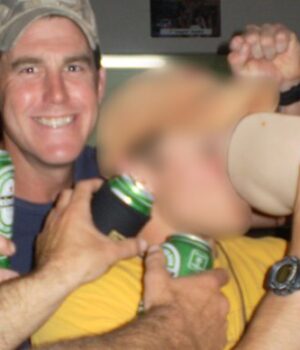
Roberts-Smith has claimed he had “no part” in the use of a prosthetic leg as a drinking vessel, despite being photographed with the leg as it was being used for drinking.
The prosthetic leg belonged to a man who had been killed in an earlier military operation.
“I think that the dark humour that so many emergency service organisations and military organisations rely upon to maintain their sanity will sometimes be misconstrued,” he claimed.
“Another point I’d make out about the leg, particularly, is that they’re legitimate targets who had a prosthetic leg, he was an objective, and on many occasions there was intelligence reporting about individuals hiding explosives in their prosthetic leg.
“Things are never as simple as they can be made to seem.”
Former Labor defence minister Joel Fitzgibbon has called into radio station 2GB to offer his full support for Roberts-Smith.
Taking a broad swing at “the system”, Fitzgibbon says what it’s done to Roberts-Smith is an “absolute disgrace”.
“The reality is that we spent a ridiculous amount of money pursuing not just Ben, but some of his colleagues up and down dale, raiding their houses, all sorts of poor treatment in pursuit of what, you know, allegations which are backed by nobody, no forensics, no site where these war crimes were supposed to be done, and with no real prospect of a successful prosecution.”
A reminder, a dedicated investigative body, the Office of the Special Investigator, spent five years looking at these allegations before laying five war crimes – murder charges against Roberts-Smith.
“We only had to say to the world that we looked at this stuff thoroughly,” Fitzgibbon told Ben Fordham.
“There was no prospect of a successful prosecution, and leave it there. That’s what we should have done, rather than spend hundreds of millions of dollars pursuing our war heroes.”
Roberts-Smith has been quizzed on the so-called code among Australian soldiers prescribing rules of communication.
It followed the release of a recording of the accused war criminal to another SAS member, in which he is heard saying: “I know you’ve been talking shit about me. I stick to the f—ing code, I’m still the only bloke who hasn’t spoken.”
Fordham asked what the ‘code’ broadly meant, to which Roberts-Smith replied: “You don’t talk shit about another operator.”
“If you’re not prepared to bring it to the table, so they have no problem, or at least address it inside the unit and say this is what my issue is,” he said.
“People were going to the media to target particular individuals. If you’ve got a problem with someone, bring it up.”
Ben Roberts-Smith claims that he lost the defamation case because he “didn’t understand that game”.
He told Ben Fordham that some of Nine’s witnesses were “paid to give evidence”. Others were “paid to not give evidence”.
“That’s a fact in the transcript,” Roberts-Smith claimed.
Not really. As far as I can make out, the only allegation around payments related to the Afghan witnesses – three men, poor farmers, who were taken out of their remote villages, taken to Kabul and put up in a hotel and fed while they waited for the court’s time.
Justice Besanko found this was not a motive for them to be dishonest. Routine travel and living assistance for people travelling to give evidence did not undermine their credibility, he found.
On the other hand, Besanko made significant adverse credit findings regarding Ben Roberts-Smith paying the legal fees of his own key witnesses.
The Seven Network paid hundreds of thousands of dollars in legal fees for witnesses Persons 5, 11, and 35, which were added to Roberts-Smith’s personal loan facility with Seven Network.
Besanko found that this created an obvious potential for the witnesses to feel obliged to co-operate or maintain a particular narrative.
Besanko also found Roberts-Smith tried to hide these arrangements by removing the name of the law firm representing those witnesses.
When these arrangements were shown up during the cross-examination, the Seven Network retrospectively adjusted its accounts to remove those charges from Roberts-Smith’s loan.
Roberts-Smith said he was shocked by his loss in the defamation case against the Sydney Morning Herald, The Age and The Canberra Times, adding that he was confident of success prior to the ruling being handed down.
The first person he contacted was his father, former Western Australian Supreme Court justice Len Roberts-Smith.
“His response, or lack of because of his shock, was probably the hardest bit,” Roberts-Smith told Ben Fordham.
“He just could not believe that that had happened. It was shock. Without going to specifics, the reality for him was he lost a bit of faith that day, I think in the system.”
Roberts-Smith has said Seven Network chair Kerry Stokes piled more than $30 million into his failed defamation case against the Sydney Morning Herald, The Age, and The Canberra Times.
“I don’t have an exact figure [but] I would say that it would have to be upwards of $30 million,” he said.
“Kerry and Christine Stokes have supported me from day one. He believed in me, and all his position has ever been is, you deserve the right to fight. You deserve a fair go.”
Roberts-Smith said Stokes asked him about the truth of the allegations before bankrolling his civil case, which the accused war criminal said was unpleasant but “necessary”.
Roberts-Smith admitted he could never repay Stokes.
There are so many things to fact-check in this interview, it’s hard to know where to start.
Roberts-Smith has told Fordham that “the stories that I sued on were not the stories that I ended up having to defend in court … the same basic story, but we’re talking about things that would evolve to meet what needed to be proved”.
His implication is that whenever he successfully defended an allegation in the reporting, the story would just morph to fit.
The fact is that all the original allegations in the reporting were successfully defended. Because Roberts-Smith initiated legal action, journalists from this masthead got access to new information and, ultimately, alleged he had been involved in seven murders. Without him taking the legal action, a number of those allegations would not have emerged.
In the end, Justice Anthony Besanko found four of those murders had been found substantially true, including those included in the original reporting.
Roberts-Smith also said that, in the civil system “you don’t have to prove that it’s true”. It was enough “to prove that they believe it, or that it might have happened”.
This is just false. The civil threshold for proof is on the “balance of probabilities”, which essentially means it’s more likely than not that something happened.
But in cases of this seriousness, the “Briginshaw principle” applies. This means “inexact proofs, indefinite testimony, or indirect inferences” are not enough, and that, for grave findings – such as murder or criminal conduct — the court requires clear, cogent, and strict proof, actual persuasion, and proper weight given to the presumption of innocence.
One thing Roberts-Smith said is true, though: “I was so naive in terms of the civil system. I just had no idea how it plays out.”
He’s right. It’s not just enough to turn up in court, funded by a billionaire, and say “I didn’t do it”.
Roberts-Smith agreed with Fordham that he would have remembered if he had murdered someone, as he doubled down on his defence against the five counts of war crime – murder he is confronting.
“I didn’t bloody murder anyone,” he said.
Roberts-Smith said he was initially glad when he learnt of the Defence investigation into allegations of misconduct by Australian soldiers, but he said he later felt it turned into an “absolute farce”. The probe found credible information suggesting unlawful overseas killings.
“I thought at this point, now we’ve got something official. It’ll stop all that rubbish, and we can just have the information,” said Roberts-Smith, who was also critical of the cost of the Defence investigation.
Roberts-Smith said he first heard rumours about his alleged misconduct through the media, which enquired about allegations of bullying, not war crimes.
“It was actually, you know, people say you don’t deserve your rewards, and I was like, OK, fair enough. Do I think a lot of other people should have got more rewards? Absolutely,” he said. “When it started, it had nothing to do with war crimes.”
Roberts-Smith told Fordham his nickname in the SAS was “Front Dagger” because “I don’t stab people in the back.”
“If I made a mistake, no one would beat me up as much as I would beat myself up about it … because that organisation needs that level of accountability between each other at the operator level,” he said.
Robert-Smith said he was first made aware of a war crimes allegation in an email from a journalist, raising allegations about the murder of a child in 2006.
“Literally reading that at the end of an email, I was basically being shot. What does that mean? … It doesn’t get any worse than that,” he said.