

Source : the age
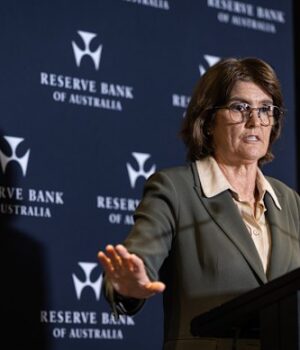
The Commonwealth Bank, Westpac, ANZ and NAB have followed Macquarie and passed on the Reserve Bank’s quarter-percentage-point rate rise to home owners, increasing borrowers’ pain after three rate rises earlier this year.
While Westpac and Macquarie said they would also increase the interest paid to depositors by the same for at least some of their accounts, ANZ, NAB and CBA confirmed that those rates were still under review.
The central bank’s move to push the cash rate to 4.6 per cent will bite for mortgage holders but federal data shows the nation’s total offset account balances are still near record highs, and overdue home loan repayment rates are very low.
Spending and labour market resilience have played into the Reserve Bank’s thinking on rates to date and, some analysts expect, could support the case for further rate rises that could exacerbate early signs of stress in parts of the economy.
CBA, the country’s largest bank, announced on Wednesday afternoon it would increase its home loan rates by 25 basis points from October 9, followed shortly after by Westpac, ANZ and NAB. CBA retail banking boss Angus Sullivan said the bank had teams to support customers dealing with the increase.
“For some customers the immediate priority might be understanding how their repayments and budget may change and where adjustments can be made,” Sullivan said. “For others it may be having a more detailed conversation with us about their finances.”
Executives from the other banks made similar comments. Westpac confirmed that holders of its Life and eSaver accounts would get an interest boost, but CBA, ANZ and NAB have not yet said whether they will pass the rate rise on to savers.
Macquarie Bank, the nation’s fifth-largest home lender, said on Tuesday it will pass on the central bank’s 25-basis-point increase in full, with the change taking effect from October 15. Savers with deposits in many of the bank’s accounts will get the same increase.
“For any customers concerned about making their home loan repayments, we encourage them to get in touch, as financial assistance may be available,” said Macquarie personal banking chief Ben Perham.
Data released by the Australian Prudential Regulation Authority on September 17 shows that for the quarter ending in June this year, Australian offset balances stood at a total of $340 billion. That is up about $39 billion on the same period a year before but down from the staggering $349 billion recorded in the March quarter of 2026.
Those accounts help cushion the consequences of interest rises by reducing the portion of an outstanding loan that is carrying interest and giving households a financial pool to draw on for repayments if needed.
Despite recent rate rises, data from the banks isn’t showing a large jump in people struggling with their mortgages. ANZ figures from August show, as of June 30, it had a 0.86 per cent exposure to home loans that were more than 90 days past due in its Australian portfolio, up three basis points compared with March.
“We continue to watch the external environment closely across our network,” ANZ chief executive Nuno Matos said at the time. “Our balance sheet and capital position remain strong and we are staying close to our customers should they need support.”
John Storey, head of Australian bank research at UBS, said that coupled with falling house prices, the offset data showed “there’s a bit of strain, with consumers that aren’t as cashed-up as they used to be”. But he cautioned that the consequences were uneven, depending on factors such as when people bought their homes.
Older Australians who owned their homes outright could benefit from rising interest rates on their savings accounts, Storey noted. Overall, he said, banks and mortgage holders were protected by the fact that many had large equity in their homes and were ahead on their payments, but flagged issues in the private credit industry and the ongoing conflict in the Middle East as risks.
Cassandra Goldie, chief executive of the Australian Council of Social Services, said while the organisation was concerned about the consequences of rate rises for mortgage holders, renters deserved protection.
“We’re very worried about renters because if we see a further increase there, people on low and modest incomes are going to be facing homelessness at this point,” Goldie said on ABC radio.
The Business Briefing newsletter delivers major stories, exclusive coverage and expert opinion. Sign up to get it every weekday morning.
 Nick Bonyhady is the business editor of The Sydney Morning Herald and The Age. He is a former deputy federal editor, technology editor and industrial relations reporter.Connect via X or email.

