

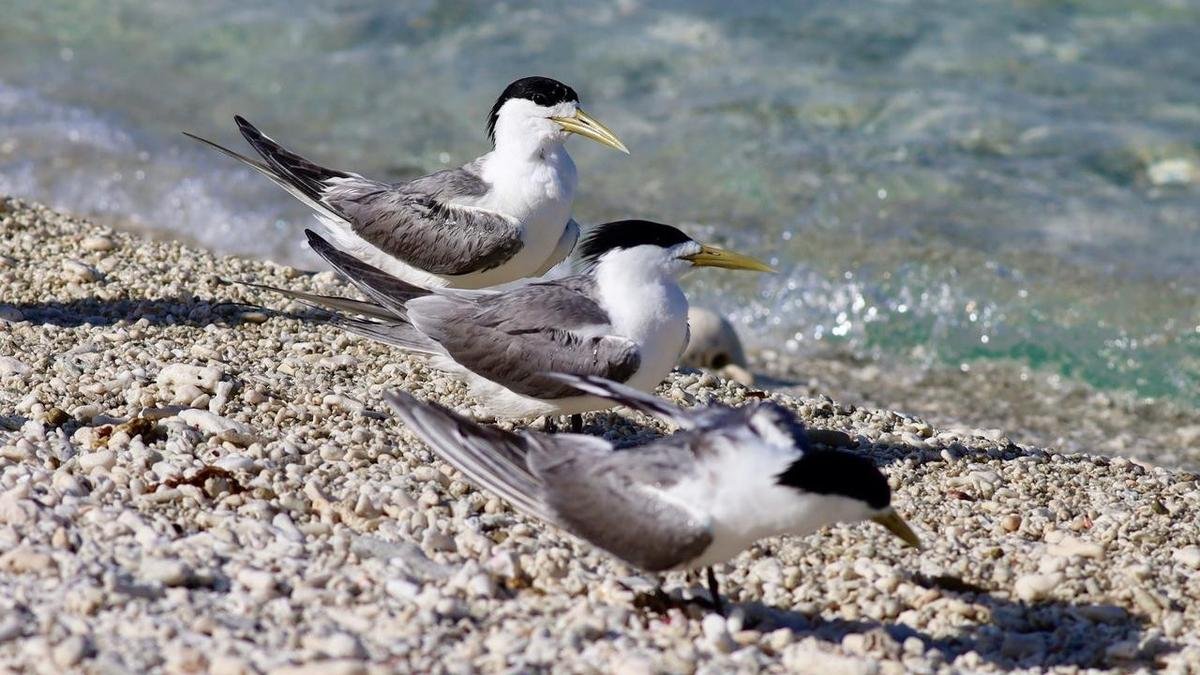
Source : Perth Now news
There are now 52 confirmed detections of bird flu in Australia, with the government confirming more than a dozen new positive results.
The Department of Agriculture, Fisheries and Forestry said on Friday night that 19 greater crested terns from several locations along South Australia’s southeast coast and Kangaroo Island had been confirmed for H5 bird flu.
The tests were confirmed at CSIRO’s Australian Centre for Disease Preparedness.
Australian Chief Veterinary Officer Dr Beth Cookson said all of the wild seabirds were found in coastal locations.
“There remain no detections in poultry or in our agricultural production system,” she said.
“The risk to human health remains low.”
Australians have been warned to brace for mass deaths in seabird colonies and marine mammals, as the deadly virus spreads.
A suspected case of bird flu in a seagull had authorities on high alert on Friday as national leaders met to discuss Australia’s response to the virus, which now spans five states.
An initial positive test on a seagull found at Robe in South Australia’s southeast was sent to the CSIRO for confirmation.
Burnet Institute chief health officer Suman Majumdar said a confirmed case in a seagull was significant.
“Gulls move between beaches, wetlands, farmland and urban areas, which could carry the virus into a much wider range of wildlife, poultry and environments,” he told AAP.
Associate Professor Majumdar said overseas experience suggested Australia should expect further spread along coastlines, mass mortality events in seabird colonies and marine mammals, and rising detections in the weeks ahead.
“What we are seeing now is the early part of that curve,” he said.
Agriculture Minister Julie Collins said they vowed to do “everything we can” to help protect Australia’s wildlife, agricultural industries and the national economy amid the outbreak.
The meeting was briefed by experts on this week’s decision to enact the H5 National Management Agreement.
The call was based on the advice of experts that the H5 bird flu in wildlife in Australia was not technically feasible to eradicate, Ms Collins said.
“What we do know is we have that local transmission in the greater crested terns in South Australia,” she said.
Four new cases of the strain – all in greater crested terns – have also been confirmed on SA’s Kangaroo Island, including one near a key breeding site for the endangered Australian sea lion.
Three were found at D’Estrees Bay while the other was at Seal Bay.
Dr Cookson confirmed positive cases to date had all been in wild seabirds at coastal locations.
The federal government had invested $113 million to prepare for the arrival of the flu in Australia, and released a further $24 million to states and territories in July.


