Source : Perth Now news
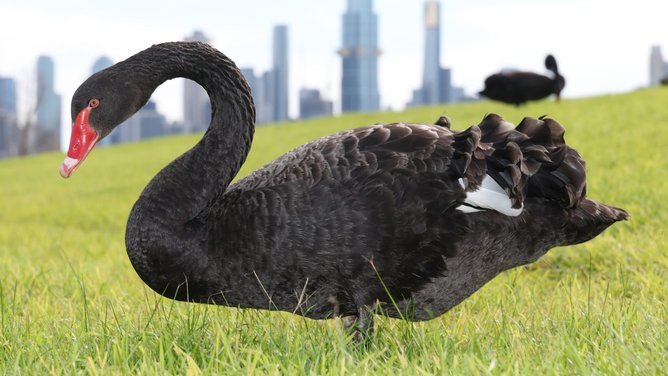
Australians could expect to see lakes without iconic native animals such as the black swan “or large numbers of carcasses on the shore” as a result of the outbreak of H5N1 bird flu, a leading environmental group has warned.
Bird flu was first reported in migratory seabirds found on a remote cape in Western Australia in June but has since spread with more than 200 cases across six states, including a little penguin killed on Phillip Island in Victoria.
A national risk report published by the Department of Climate Change, Energy, the Environment and Water earlier this month found both the little penguin and black swan were of a very high risk from bird flu in Australia.
Invasive Species Council chief executive Jack Gough warned Australians could expect to look “out at lakes across Australia where we’re used to seeing black swans and seeing none of them or large numbers of carcasses on the shore”.
“That is going to be a confronting sight for Australians,” he said.
Worse still, Mr Gough warned the outbreak, which he admitted could not be stopped, could lead to large-scale decline in shorebird populations or even the “loss of some iconic species that so many people love”.
“The genetic isolation of Australia’s wildlife – which makes it so incredible, unique, so special – is also a high risk factor for having really big impacts from these novel diseases turning up,” Mr Gough said.
“So, it is not unlikely that the impact on Australia’s wildlife could be much worse than it has been overseas.
“That applies to some really iconic species, like black swans and cassowaries, emus, but even things like pelicans and ibises that people see quite a lot, where we could start to see mass die-offs and significant declines.”
Vulnerable or critically endangered seabirds including the Christmas Island frigatebird and imperial shag are among the most at risk from bird flu, according to the report.
As was the beloved little penguin, which is now being vaccinated in Victoria.
Oceanic dolphins, such as the pygmy killer whale and the common dolphin, were also found to be at a high risk from bird flu as well as magpie geese, robins, cockatoos, cormorants and swamphens.


The Kangaroo Island and King Island emus were also found to be both highly susceptible to, and at a high risk of, bird flu.
The Australian southern cassowary, an endangered species closely related to emus, was rated at moderate susceptibility but a high risk.
Mr Gough has praised the government for its biosecurity response but urged for a $200m injection into wildlife management – including weed and feral pest management – to ensure Australian wildlife has a fighting chance.
“Look, we are not going to be able to stop bird flu,” he said.
“There is a wave of devastation that is building and is about to break across the entire continent. What we can do though is make sure that wildlife are able to recover after that first wave and are able to survive through subsequent waves.
“So, the next five years are absolutely critical for the survival of many of Australia’s wildlife … that means governments need to invest at scale in dealing with the other threats that we know they can do something about.”
The government has spent more than $100m on bird flu preparedness, including surveillance and response.
Speaking in parliament, Agriculture Minister Julie Collins earlier this week said states and territories had identified species for a vaccination program.

“Over the weekend, the NSW government has announced priority species identified for potential vaccinations in NSW and they include little penguins and the regent honeyeaters,” she said.
“This builds, of course, on the announcements last week from the Western Australian government about its vaccination trial of threatened cockatoos at the Perth Zoo, including the Carnaby’s, the Baudin’s and the forest red-tailed black cockatoos.
“The Tasmanian government, of course, has indicated that it will prioritise the vaccination of the orange-bellied parrots.
“And I’m pleased to advise the House an update today, the Victorian government has now commenced the vaccinations of little penguins at Phillip Island and will then do St Kilda.”
Ms Collins said “strong biosecurity remains our strongest line of defence”.
“The technical advice that our government has received is that as bird flu becomes more widespread in the wildlife, counting individual confirmed birds no longer gives us the clearest picture of where the disease is spreading,” she said.
“That’s why our reporting of the bird flu detections has now evolved from individual cases to focus on H5 events.”