

SOURCE :- THE AGE NEWS
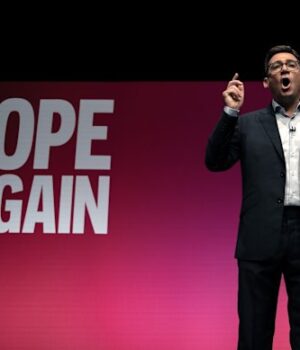
London: Andy Burnham just did something daringly different at an annual speech that is often heavy on theatre and light on ideas.
The British prime minister outlined at least six major reforms in his address to the annual Labour Party conference after candidly admitting to the failures of the last decade.
He also made an emotional plea for the United Kingdom to stick together at a time when many of its own people – not only those in Scotland and Wales – seem convinced it is broken beyond repair.
He was blunt about the referendum 10 years ago to leave the European Union. “Brexit has done more harm than good,” he said. This cleared the way for a debate on how to restore ties with the EU at a summit to be held later this year.
The instant analysis in the British media was that Burnham had fired the starting gun on the next election – due in 2029 – with an agenda to renew Labour after its drift under former leader Keir Starmer.
This was true, albeit banal. The key question was not whether Burnham could save Labour, but whether he might save Britain.
“I won’t pretend some of this won’t be difficult,” he said at one point. “I accept I may pay a political price. But someone has to go through the pain barrier and rip the plaster off.”
Australians might want to watch Burnham closely because some of his challenges have parallels in Canberra, even though times are tougher in Britain on every front.
His first major pledge was to restore the stock of public housing to ease a serious crisis with rising rents. He promised to give councils greater power to get new construction underway.
If absentee landlords left rental properties in disrepair, he said, councils would force them to renovate. Legislation would be passed if necessary to make this happen.
His second plan was to reverse the privatisation of water utilities under Conservative leader Margaret Thatcher three decades ago. This touches a nerve with British households dealing with poor water and sewerage services due to low investment by private operators.
In one glaring example, Thames Water is close to financial collapse after big investors, including Macquarie Bank, loaded it with debt and took out generous dividends. Burnham wants to restore public ownership if a private operator is no good.
The third pledge was ambitious, although uncertain. He said he would set up a new public operator of the national electricity grid to compete with private energy companies. He made cost, not climate change, the key message on energy. He said he would be “pragmatic” about oil and gas from the North Sea – a hint that he would back new projects to boost supply.
The fourth agenda item was all about social care for the aged and vulnerable. He promised to deliver more care for the elderly in their own home – a policy choice already underway in Australia – and said there would be a new National Care Service to offer free support.
“There is only one real answer: a person-centred, high-quality care service that starts in the home,” he said. “A system in the best traditions of this party, where everyone contributes and everyone is covered, free at the point of use, and no care charges paid out of your basic state pension.”
This sounded too good to be true. It could be incredibly expensive and far more generous than the means-tested system in Australia, where pensions help fund private aged care. The details are still to come.
Where will the money come from? This was Burnham’s fifth big idea – and his bravest moment. He swept away Britain’s iconic and bipartisan policy on pensions: the “triple lock” decided in 2010 to ensure pensions rise at the rate of inflation, average wage growth or 2.5 per cent each year, whichever is higher.
The state pension now costs £154 billion ($292 billion) per year, more than twice the defence budget, according to the Institute for Fiscal Studies. Thanks to the triple lock, it has risen from 4.3 to 4.9 per cent of national income since 2010. This is higher than in Australia; one reason is that Britain lacks Australia’s superannuation system.
Burnham promised to replace this with a double-lock: increasing the pension by inflation or 2.5 per cent, whichever is higher. This abandons a Labour pledge from the last election, but the new leader said the change would take effect in 2030, after the next election.
This political manoeuvre borrowed from Anthony Albanese, who dumped an old promise on the “stage three” tax cuts as prime minister in January 2024, but made sure the changes would not take effect until after the 2025 election.
This involves serious risk for Burnham, given that the Conservatives can appeal to older voters who stand to lose, but the plan could help fund at least some of the new social care services those same voters may support.
The sixth big idea from Burnham was about the voting system that delivers victory to the candidate who is “first past the post” in every electorate. In most races, Britain only counts the primary vote on the ballot paper, a fundamentally different approach to Australia’s preferential system.
Burnham did not name his favoured reform but clearly wants to drop the “first past the post” method. He promised to set up a National Commission for Electoral Reform to recommend a new system, which he would take to voters as a policy pledge at the next election.
This suggests the 2029 election would be fought on the current system, not the new one. Over time, however, Burnham seemed intent on bringing Britain closer to the Australian system.
Labour could, of course, benefit from preferential voting because it could gain the second preferences of Greens voters. But it could also work for Conservative leader Kemi Badenoch, because her party might benefit from preferences from small right-wing parties.
It might even help Reform UK, led by Nigel Farage, if he keeps the party’s core support ahead of the Conservatives.
Whether this backfires on Burnham is impossible to predict when the next election is not due until 2029 and the subsequent one in 2034. The overall impact might strengthen the major two parties after the shift to smaller parties under the current system.
The Burnham agenda had some gutsy commitments. At the heart of it, however, was a vacuum. The Labour leader offered nothing on economic reform and fiscal repair. He mentioned growth, but he did not have a specific plan to give it a boost.
He spoke about giving hope to about 1 million young people who are not in education, employment or training – the so-called NEETs – but warned against “crude” cuts to welfare. He said what the Labour faithful wanted to hear, not what they needed to be told. Without cuts, the incentives may never change and the national budget may never be repaired.
The British economy grew just 0.4 per cent in the last quarter, just as mediocre as the Australian economy. In Britain, however, public sector net debt is now 95 per cent of economic output (GDP). In Australia, federal net debt is 19 per cent. Even allowing for state debt in Australia, the contrast is stark.
Burnham cannot spend his way out of Britain’s doom spiral. The Chancellor of the Exchequer, John Healey, will reveal the budget on October 28. With debt already high, any false move can spook the bond market, which means the fiscal plan should be about saving money.
Burnham rose to the leadership on high hopes 10 weeks ago. Now he has bold plans to give his government purpose and direction. But none of his ideas will be enough if he cannot fund them with a stronger budget and match them with a serious growth agenda.
Get a note directly from our foreign correspondents on what’s making headlines around the world. Sign up for our weekly What in the World newsletter.
 David Crowe is Europe correspondent for The Sydney Morning Herald and The Age.Connect via X or email.

