

source : the age
It’ll put a spring in your step, improve your sex life and lift your mood, its proponents claim. Testosterone is in demand – among both men and women –but not everyone is excited. “Muscle strength, mood, brain fog, cognition, general vitality, wellbeing, dementia – you name it, someone will have said that testosterone is the magical cure for that,” says women’s health general practitioner Dr Karina Severin. Patients “will be very, very insistent that that’s what they want”.
As awareness grows of women’s experiences around menopause, and more women in midlife seek out menopausal hormone therapy, testosterone has entered the picture. There’s been an uptick in women seeking out prescriptions in Britain; while in the US, women over 40 taking it in high doses has become a “cultural phenomenon”, reports The New York Times, despite it not being medically approved for them. “Rhapsodic stories of sexual reawakening have spread on social media, where testosterone influencers share their experiences,” writes Susan Dominus, who notes an increasing number of women willing to risk “unpleasant – and possibly irreversible – side effects to pursue a dramatic high.”
In Australia, women’s health researcher Professor Susan Davis began researching the effect of testosterone on women in the 1990s and is considered a world expert. She says many women in midlife are “desperately seeking how to feel better.” “People are making claims and telling women it’s the missing hormone, based on absolutely no data,” she says. The buzz is being driven by various factors, she suggests, including “people of goodwill who have become evangelical” and “people who are being predatory financially”.
Women have led a surge in testosterone use in Australia, with prescriptions rising from just over 1800 in 2016 to nearly 34,000 in 2025. The female product is medically approved only for a specific group: postmenopausal women who are distressed about having low libido, a condition called hypoactive sexual desire dysfunction, which affects between 8 and 33 per cent of women and peaks in their early 40s. Yet women are seeking out testosterone for a host of other reasons as well.
Meanwhile, social media abounds with men and teenage boys “T maxxing” to improve their strength, physique, libido and mood, spurred by influencers such as US podcaster Joe Rogan, fitness influencers and “manosphere” personalities who, as one Australian study puts it, are framing testosterone testing and treatment as “remedies for a perceived masculinity crisis”.
In the US, Defence Secretary Pete Hegseth has introduced annual testosterone deficiency screening for all service members aged 30 and older (including women) to keep them “on the leading edge of lethality”. The goal, he says, is a “High-T Department of War”. Another key figure in the Trump administration, Secretary of Health Robert F. Kennedy Jr, takes testosterone as part of an anti-ageing protocol. US nutrition guidelines now include a section on how to support testosterone levels (protein is important, it says, just not too much).
As people find various ways to access testosterone drugs, including by buying it online, we’re in uncharted territory. “It’s a prescription medicine, and rightly so because it’s a very powerful drug,” says Michael Buckley, the chief executive of Lawley Pharmaceutical in Perth, which makes testosterone for both men and women.
The evidence shows if you take too much, the consequences can be serious and permanent: in men, testicular shrinkage, breast development, reduced sperm production or infertility; in women, a permanently deepened voice, changes in menstruation, uncomfortable clitoral enlargement. In both, hair loss, irritability and acne.
What does testosterone do to men and women? Why do people want it? And what does the evidence say about its benefits and risks?

Why do men want “the big T” and what does the science say?
Human bodies produce more than 50 hormones – chemicals that control everything from our metabolism and mood to our sexual function and sleep. Women and men produce the same hormones but in different concentrations. Women’s main sex hormone is mostly oestrogen; men’s is testosterone.
Men produce about 6 milligrams a day (about 10 times more than women), peaking in the morning. From the testes and adrenal glands, it moves through the blood, triggering puberty in boys, producing sperm and sex drive. It helps maintain muscle mass and bone density as well as increasing red blood cell count (the ones that carry oxygen) before it is excreted in urine.
In Australia, testosterone treatment for men is medically approved only in cases where the testes don’t produce enough, a condition known as hypogonadism, which occurs in about one in 200 men, mostly those who are older, obese or have diabetes. A deficiency can also be caused by damage to the testicles or the pituitary gland, infections, tumours and some cancer treatments. One in 600 men has hypogonadism due to Klinefelter syndrome, where an extra X chromosome results in small testes and low testosterone.
A normal level of testosterone for a young man is about 20 to 25 nanomoles per litre of blood, says endocrinologist Associate Professor Carolyn Allan. Levels fall about 1 per cent a year from a man’s late 30s. What constitutes low testosterone in a man is a controversial question, says Michael Buckley, whose company supplies testosterone products to Australia, New Zealand, South Africa and Britain, with measures varying across different places, including Europe and the United States.
In Australia, to qualify for discounted testosterone via the Pharmaceutical Benefits Scheme (PBS), a man’s levels must be lower than 6 nanomoles per litre, although men can access testosterone products without the subsidy if their levels are higher. In Australia, the medically approved testosterone treatments – creams, gels and injections – are designed to restore levels to within the normal range associated with the patient’s age group, as well as to reduce symptoms.
Prescribed testosterone therapy can ease low mood and boost libido, which is a fillip for confidence, says University of Queensland public health researcher Benjamin Bonenti. ”It’s like night and day when they get that function back in terms of the ability to tackle life,” says Bonenti, who has analysed worldwide surveys of testosterone users (including some who are using it simply for muscle strength and a buff physique).
‘You feel better, you’re in a better mood, you’re happier, you’re more driven to do things, more motivated, less lethargic and sluggish.’Nick, who is on testosterone replacement therapy
Brisbane man Nick started buying testosterone from a “contact” about 12 years ago to take his bodybuilding “to the next level”. He knows of some bodybuilders who dose themselves with 10 or 20 times more testosterone than their body would naturally produce. “Some [competitions] test for that stuff,” he says, “and others don’t. And you go to those [that don’t test] because you’re on steroids.”
Over the years, Nick has taken anabolic-androgen steroids, which mimic testosterone (anabolic means “tissue-building”). These have legitimate medical uses, such as treating delayed puberty in males or muscle loss caused by diseases such as cancer, but they’re illegal when used outside medical supervision and are, famously, banned by sporting bodies who class them as performance- and image-enhancing drugs. Their long-term effects include sudden cardiac death and kidney failure.
At other times, Nick has taken lower doses of testosterone products, or none. He now takes a dose prescribed by a doctor. “I’m nearly 40 years old now, and because I put my body through that on-and-off process a few times, and then went to TRT [testosterone replacement therapy] for a little bit, I do actually need it legitimately for replacement,” he says. Improving muscle mass was only part of the benefit for Nick. “You feel better, you’re in a better mood, you’re happier, you’re more driven to do things, more motivated, less lethargic and sluggish.”
The number of PBS-listed testosterone prescriptions for men, including transgender men, has grown from just over 148,000 in 2015 to close to 166,000 in 2025, says the federal Department of Health. However, the total number is higher, as the figures exclude men whose testosterone levels are not low enough to qualify for a PBS discount, or who have bought it offmarket, through websites, gyms or encrypted apps.
A recent University of Sydney analysis of how testosterone is portrayed to men looked at 46 popular TikTok and Instagram accounts and found 72 per cent had financial interests in promoting the hormone while two-thirds included direct links to either a test, promotion codes or a consultation at a testosterone clinic. Themes running through the posts, which were targeted mostly at men aged between 20 and 40, included “needing testosterone treatments to become better men or better versions of themselves”.
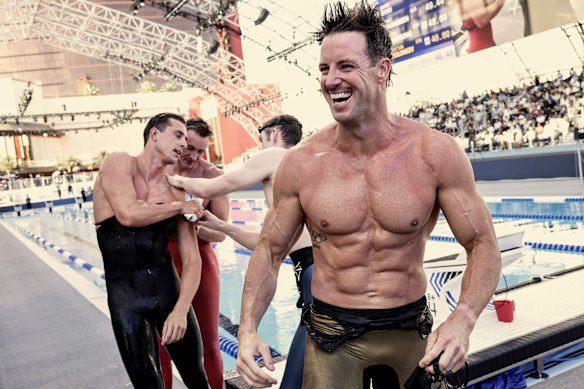
The seminal research on the effect of testosterone on muscles dates to 1996, when researchers in Los Angeles found that men given doses of testosterone higher than their body would naturally produce increased their muscle size and strength more than those who didn’t take the hormones. “Our results in no way justify the use of anabolic-androgenic steroids in sports,” the researchers said at the time. (Carolyn Allan notes “scale weight is not changed but muscle is gained and fat is lost with testosterone”.) In May, the Enhanced Games took place in Las Vegas, where athletes were allowed to take performance-enhancing drugs. Retired Australian swimmer James Magnussen took testosterone and peptides (another “trendy” substance) under medical supervision in preparation for the event, which was nicknamed “the Steroid Olympics”.
Studies have shown testosterone helps the sex drive and sexual performance of men with low levels, but there’s little improvement once levels reach a certain point.
Other studies have shown testosterone helps the sex drive and sexual performance of men with low levels, but there’s little improvement once levels reach a certain point (15 nanomoles per litre). A study co-authored by Carolyn Allan also found testosterone treatment prevented the progression of type 2 diabetes among men aged between 50 and 74 who were overweight or obese, helping to regulate blood sugar and decrease body fat.
Allan says men with underlying medical conditions such as Klinefelter syndrome, who can’t produce enough testosterone and are treated under medical supervision, “should be reassured that lifelong testosterone replacement therapy is both safe and necessary for optimal physical and psycho-sexual wellbeing”. However, there are still questions about the long-term benefits and risks of medically prescribed testosterone for men with levels that fall within the normal range but at the lower end, she says. A large US study, the Traverse trial, “did not find concerning heart or prostate cancer effects after five years,” she adds, “but we do not have information beyond this”.
Why do women want testosterone?
Erratic fluctuations in oestrogen and progesterone during perimenopause (the lead-up to menopause, which is when periods stop) can run for years and create havoc for women. Hot flushes, night sweats, disturbed sleep, joint pain, anxiety, mood swings, weight gain and bone-density loss are just some of the symptoms. Menopausal hormonal therapy, or MHT, typically consists of oestrogen and progesterone, or oestrogen alone for women who’ve had a hysterectomy because progesterone is used to reduce the risk of cancer of the uterus.
Sydney woman Belinda, who is on MHT, added testosterone about 18 months ago to boost her energy, at the suggestion of her GP. Australia was the first country to approve a female-specific testosterone product, a cream called AndroFeme, which is what Belinda takes. “The big thing I noticed was the energy,” she tells us. “I wanted to do more exercise, I’ve been back at the gym three days a week. I’d wake up [before testosterone] feeling kind of achy and old. It’s gone from that to now feeling really good in the morning.”
The typical patient once had a great sex life, got through menopause and now feels great on MHT – except for a non-existent sex drive.
Testosterone does play a role in women’s sex drive, mood, bone and muscle strength and fertility. In women, levels decline about 25 per cent by the age of 40 and continue to drop until age 60. This means that the fall in testosterone occurs before menopause (unless you’ve gone through “early menopause” as a result of chemotherapy or radiation therapy, or “surgical menopause” due to both ovaries being removed). Testosterone levels actually rise slightly again after about age 60, although the reasons are not yet known.
The drop-off doesn’t bother every woman. But it can lead to low libido and when this is distressing, for postmenopausal women at least, doctors can prescribe testosterone. Markers of success include increased sexual frequency and satisfaction. “The effects are modest – they’re not massive,” says Susan Davis, who heads the Monash University women’s health research program. “And often women will come back, saying, ‘Look, I’m not initiating sex any more, and I’m still not initiating sex’, and you say, ‘Well, yes, but if your partner initiates, what are you like?’ And they respond, ‘Oh yes, I’m more interested.’ So the effects don’t blow you out of the water, but the effects can be real.”
Karina Severin says she prescribes testosterone to women wanting to improve their libido several times a day. The typical patient once had a great sex life, got through menopause and now feels great on MHT – except for a non-existent sex drive. (As with many drugs, testosterone can be prescribed “off label”, including for patient groups for whom it’s not officially approved such as women in perimenopause.)
About 20,000 women use AndroFeme in Australia, says Buckley at Lawley Pharmaceuticals. Davis’s research has also shown the number of midlife women who use the hormone is extremely small – just 28 of 2500 participants in her Australian Women’s Midlife Years Study in 2024. Most of them used AndroFeme while others got a male drug prescribed off label by their GP or in a form compounded by pharmacists.
The bottom line, Davis says, is that any benefits other than for those seen in postmenopausal women with low libido are, for now, unproven. “That’s because either no benefit has been shown in good studies or the studies are inadequate to give us the information we need,” she says.
But what about preventing loss of muscle mass? “An effect is only seen when the dose is high enough to cause male blood levels in women,” says Davis.
And what about as a mood booster? Says Karina Severin: “I think that in general, we see lots of people having mental health issues around menopause, which could well be hormonal.” (Symptoms include anger, sadness, brain fog, low energy, panic attacks, worry and low self-esteem, and are more common in women with a history of depression and premenstrual syndrome, says Beyond Blue.) But she is wary of prescribing testosterone for low mood. “One of the biggest problems we see is there’s such a placebo effect, which means that women feel better just by the fact that they’re coming and talking to you. No-one’s shown in any study that testosterone is better than that.”

What are the concerns and side effects regarding testosterone for women?
Sydneysider Belinda says some of her friends have asked their GPs about taking testosterone for general health and vitality but have been knocked back. “So we all know the hack is: you have to go in and say, ‘Yes, I want it because I want it for my libido’, and then they will prescribe it to you. Which is interesting because why isn’t our health as important as our libido?”
Severin agrees women are using libido as a pretext. “The criteria to prescribe it for low libido are subjective,” she explains. “The questions are: did you previously have a good sex drive, has it decreased, does that bother you, and do you want to do something about it? The fifth question is exploring for other reasons why they might have less sex drive. But anyone can come and say that.”
‘I think if a woman wants to take it, she should have the choice to take it for a health and vitality reason. It should be dispensed easily, and it should be on the PBS.’Belinda, who takes testosterone
Sydney sexual health physician Dr Terri Foran says about half of her female patients who take testosterone discontinue it after a trial. When this happens, doctors and patients can look at other reasons for low libido, such as the state of their relationship.
Despite feeling better, Belinda says she’s experienced some judgement about taking testosterone, including from men who argue the hormone is not important to women. “I think if a woman wants to take it, she should have the choice to take it for a health and vitality reason,” she says. “It should be dispensed easily, and it should be on the PBS.”
The women’s product is not discounted via the PBS, unlike the 14 PBS-listed testosterone medicines for men. This means women pay about $100 for three months while men pay $25 under the PBS subsidy (and as little as $7.70 for concession cardholders). “Yes, it’s $30 a month,” Belinda tells us, “but then there’s also the oestrogen and the progesterone, and then this GP who specialises in this, she’s more than a normal GP, she’s $240 a visit, so if you start adding up all the costs of doing this, some people are just like, ‘I can’t afford all of that.’” (Buckley’s company is appealing the decision of the Pharmaceutical Benefits Advisory Committee not to list his product on the PBS.)

The experts we spoke with were divided on whether the women’s product should be subsidised. Says Severin: “I think that a lot of these people in this stage are like, you know, if that’s what I gotta pay to get my sex life back then that’s what I’m gonna pay, it’s not that much.” Foran has a different perspective. “It’s not cheap, and that puts it beyond the range of women who should have medical access to it. However, if it was PBS listed, I suspect this thing would just go nuts, it would be almost an imprimatur to use it.”
Davis thinks while there should be some discount for women by listing it on the PBS, the treatment should remain tightly prescribed. She stresses that women must use the female-specific treatment, even though it’s more expensive, as they risk overdosing on a male-specific product. “Overseas, women are getting just crazy doses [of the male product],” she says. Buckley agrees. “Testosterone in women: more is not better,” he says. (The New York Times has reported rapturous reviews from women on high doses of the male version – “It’s changed my marriage” – but tells of another whose hair fell out in chunks through overdosing and another whose voice became “very raspy” and remained so after she stopped taking the drug.)
‘Even when you use a dose within the female range, there’s an increased likelihood of acne and excess body hair growth and some weight gain.’Researcher Susan Davis
Too much testosterone can make women irritable and hot-headed, too. “I had a patient once,” Foran tells us, “who had been advised to take significantly higher doses than would be recommended, and she said she knew she was in trouble when she started getting really angry at the people around her … and she said, ‘Look, this isn’t me’. And when she stopped it, that went away.” Belinda says the cream is tricky to measure. One of her friends used “too much” and stopped “because it had such a strong effect on her mood.”
Even at medically prescribed levels, taking the hormone is not “no risk”, says Severin. “And the risk is that you’re going to have permanent voice changes and hair loss.” Adds Davis: “We know from clinical trials, even when you use a dose within the female range, that there’s an increased likelihood of acne and excess body hair growth and some weight gain [possibly due to fluid retention or increased appetite].”
Belinda grew hair she didn’t want. “The testosterone gel is very easily transferable, so you have to really rub it in. You need to vary the place when you do it, which I didn’t know at first. Because I kept doing it in the same spot, I grew hair there.” Buckley says users should apply the cream only to the upper outer thigh and buttock where there are fewer hair follicles.
Belinda is also frustrated at what she sees as a lack of research. “We know 50 per cent of the population will go through menopause, so that’s a guarantee, and we know that the other 50 per cent will be impacted by that woman going through menopause. Why is that not a benefit to everybody that we actually throw some medical research into it?”
Pharma executive Michael Buckley says there’s so much research on testosterone for women in relation to libido because the emergence of erectile dysfunction drug Viagra in the 1990s created huge momentum for a female equivalent. For her part, Davis urges women to speed up research by signing up for trials. She says it was a “nightmare” trying to recruit women to recent studies looking at testosterone’s effects on bone and muscle.

Where are we now with testosterone?
Researcher Benjamin Bonenti warns that people who source testosterone through illicit channels – those apps and “contacts” we mentioned earlier – will not always get what they expect. “The product may contain a different compound to what they expected, the dose may not match the label, or there may be contamination.”
He says many testosterone users, especially the younger ones who fear they have low levels, don’t feel comfortable talking to their GP or endocrinologist about it. “Now, that might sound trivial,” he says, “but it could be argued that that is one of the main reasons we’re seeing things being sourced from informal sources, people using doses beyond medical guidance, and people using products where the contents, dose or safety profile may be uncertain.”
Carolyn Allan notes that men actually have a lot more agency in maintaining testosterone levels as they get older than women. She knows men in their 80s whose testosterone levels are “very well-preserved – maybe not quite equivalent to their 20s but they still have very good tests. So it’s not an inevitable part of ageing for men that they will lose testosterone.” On the other hand, “all women will go through menopause – and have a [roughly] 95 per cent drop in their oestrogen levels that year that they go through the menopause transition”.
‘Hormone replacement therapy, as we know it now, will become a triple therapy. We are playing catch-up science.’Michael Buckley, whose company makes medically-approved testosterone products for men and women
Managing stress, appropriate sleep, losing weight, exercising – for men, says Allan, “all of those things are going to help in terms of optimising your body’s ability to make its own testosterone.” Studies of patients on very low-calorie diets or who had bariatric surgery for obesity have found improved testosterone. There’s a flurry of research now on whether weight loss via Ozempic is having a similar effect.
While diet and lifestyle can’t help women boost their hormones, it may help their libido, says Terri Foran. “The fitter and the healthier you are, the more energy you have, the more likely that your libido will increase. But the problem with that is it takes time and commitment, and women are time-poor.”
Michael Buckley believes that testosterone will one day – after more research and regulator approval – be added to oestrogen and progesterone in menopausal hormone therapy. “Hormone replacement therapy, as we know it now, will become a triple therapy. We are playing catch-up science.” Davis is more cautious: “We don’t have evidence to support this belief presently.” Buckley also suggests testosterone could be prescribed to help offset the lean-muscle loss experienced by people using Ozempic and other similar weight-loss drugs, although Davis notes the evidence isn’t in to support such a move.
Meantime, there’s still a lot of work to do to make sure that women in midlife, whether peri- or postmenopausal, get the support they need. “We have everything going on right now,” says Davis. “We have women who are being treated who don’t need to be treated, we have women who are being treated but with inappropriate therapy, and women who are missing out on treatment and who need it. And then women who are getting appropriate therapy with good symptomatic relief.”
Her team is studying whether testosterone also boosts the sex drive of women in early and late perimenopause. “And we hope to have the support of women,” she says, “to get these studies done so they can make informed choices.”
Get fascinating insights and explanations on the world’s most perplexing topics. Sign up for our weekly Explainer newsletter.


