Source :- THE AGE NEWS
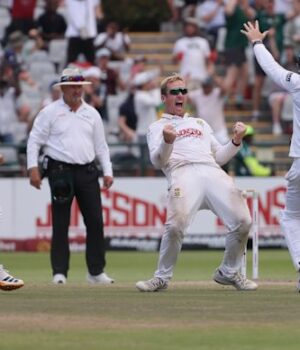
Paul Keating called the early-1990s economic downturn “the recession we had to have.” Similarly, Australia’s 111 in the fourth innings at Newlands was the collapse we had to have. Whether anyone learns from it is another matter.
I disagree with Pat Cummins that this is a very good side. It has been an excellent bowling side for a long time, but even the bowlers failed to trouble South Africa at crucial times. The Proteas batters had a plan in the second innings to let the short balls go and make the Australians bowl to them.
It was hard to discern any plan from our batters in their second innings in Cape Town. The Australian batting hasn’t carried its weight for some time, and a team holding a substantial first-innings lead doesn’t fold for 111 in the second innings if the batting is sound. The scoreboard doesn’t lie.
I take no pleasure in saying so. I’ve been a batsman, captain, selector and coach, and I’d rather be building than knocking.
I sat in a few dressing rooms after humbling experiences, but with straight shooters like Ian Chappell, Keith Stackpole and Rod Marsh, we were never allowed to pretend that we were just unlucky. It was shape up, or ship out.
Pat sees talent and good intent in that room, and he’s right. But to some extent a team operates in a bubble, and inside it every failure is bad luck. From outside, it looks different.
Start with the toss. Plenty thought bowling first on a good Cape Town pitch was a mistake, and I suspect Kagiso Rabada running through our top order was the biggest factor. Then we batted last on a surface that has historically helped spin late. A self-inflicted double whammy. We beat South Africa without Rabada in Durban, and that flattered us.
But the toss is the least of it.
For years the selectors have patched the batting with experienced first-class players who look reliable on paper. The result is a middle order heavy with age and short on resilience.
The names of Michael Hussey and Adam Gilchrist are often trotted out in defence of this approach. Hussey made mountains of runs for Western Australia and would have played much earlier if he hadn’t been stuck behind one of the best line-ups ever. Gilchrist went across the Nullarbor because NSW wouldn’t give him a regular game. Both were blocked, and both were once-in-a-generation players. You can’t build a selection policy on them.
The states aren’t blameless. Sheffield Shield sides pick safe experience over potential, so the national panel is choosing from a pool shaped by caution.
Matt Renshaw’s 369 runs at 61.5 was the best news of the tour, and he muddies my argument. He first played for Australia at the age of 20, making 184 against Pakistan at the SCG, then got dropped three times. It was nine years before he made his second hundred. Patience works, say the defenders of the status quo.
I don’t buy it. Renshaw was never a journeyman. We threw away a talent and then had to look for it again. In Durban, we were 4-84 when he came in, and he made 190 off 397 balls. He faced 115 balls on the first day for three boundaries, reached 50 off the second ball of the second morning and put on 134 for the ninth wicket with Nathan Lyon.
He left well and hit anything straight. A bouncer found his grille, and he just carried on. His words afterwards told you what the chance meant to him.
I lost my place in the Test team early in my career and wondered if I really belonged. It was only for a few weeks, so I can’t imagine what it must feel like to be on the outside for most of a decade.
Renshaw is 30 now, and he’s back because the selectors ran out of options, not because anyone had a plan. Imagine what we’d have if we’d kept faith with him in 2017 and let him grow inside the side. That’s the lesson of his story.
It also settles the question that’s bugged the selectors since David Warner retired. Renshaw leaves the ball well, is hard to shift, and he sees off the new ball. He batted at five in Durban, but his game is built for the top of the order. Renshaw opens.
The identity of his partner is the next problem. Travis Head thrives at home, where pace and bounce suit him down to the ground. On lower, slower pitches overseas, his slashing game gets exposed. He is caught in the infield or drags on to his stumps. I’m not convinced he’s an opener away from Australia.
Cameron Green looks better since his injury, but his early footwork worries me. He’s so intent on survival that he takes short strides to full balls, which leaves his contact point well in front of his eyes. The hands get pushed out, the face opens, and there’s a gap between bat and pad.
Against spin, it’s worse: short strides leave you short of the pitch of the ball, and the hands have too much to do. He needs a longer first stride, with the contact point under his eyes. Running down the pitch to defend against a spinner is a sure way to promote short strides.
I experienced similar problems at various times in my career and made a conscious effort to exaggerate my footwork in net sessions to train a longer forward stride. Cam has enormous levers, but he is not using them. He must smother the seam movement and spin, or he won’t be the player he could be.
Josh Inglis wants to score, not survive. Green ran him out in the second innings, but Inglis has done enough for at least another series.
Then there is Marnus Labuschagne. The selectors cannot dodge it any longer. I call it elite performance decline: the older player starts to doubt himself. Steve Waugh admitted that late in his career the mental effort outweighed the joy. I think Marnus is there. The kindest thing the selectors can do is put him out of his misery.
Drop him for the summer and send him back to domestic cricket. Ban the video analysis too. He’s spent years studying himself when he should be watching the ball. Strip away the triggers, guard changes and endless tinkering, and let him go back to hitting it.
Looking ahead, I’d make Cricket Australia do something about the states. Tie funding and academy resources to debuting and developing young players in the top four. Then look at Oliver Davies, who wants to score and puts the bowler under pressure. Look at Sam Konstas, with his classical high-elbow technique. Look at Campbell Kellaway, who has the desire to occupy the crease all day.
The selectors will be back at the drawing board for New Zealand, but those conditions will be familiar and suit our pace attack, which covers a lot of cracks. India is a different story. Turning pitches blunt the quicks and expose a fragile batting line-up.
The road back to the Test final is full of potholes.
Newlands wasn’t only about talent. It was about a system afraid of risk, one that papers over cracks with domestic veterans while first-class cricket decays into a white-ball shadow. If Cricket Australia and the states hide behind platitudes, the home summer will be harder than it needs to be. If they take the shock, this can be the correction that sets us right.
News, results and expert analysis from the weekend of sport sent every Friday. Sign up for our Sport newsletter.
 Greg Chappell is a former Australian captain. He led Australia in 48 of his 87 Tests, scoring 7,110 runs at an average of 53.86.