Source : INDIA TODAY NEWS
As Rahul Gandhi steps up his opposition to the Centre’s new Merchant Discount Rate (MDR) framework for UPI transactions, BJP sources have questioned why the Congress leader is opposing a revenue model that was recommended by a Parliamentary Standing Committee on Finance whose members included five Congress MPs.
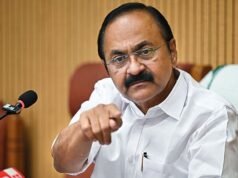
The five Congress MPs — former Finance Minister P Chidambaram, Manish Tewari, Gaurav Gogoi, Kishori Lal and K Gopinath — were part of the committee and were present on August 12 when the report was adopted, with no dissent recorded in the published minutes, according to the documents.
advertisement
“Why is Rahul Gandhi opposing something his own MPs, including former Finance Minister P Chidambaram and former UPA Minister Manish Tewari, supported within Parliament?” BJP sources asked.
The committee had pressed for a tiered MDR/revenue framework for UPI and said it should be notified and operationalised without delay.
In its report, the committee noted that legislative provisions had been brought forward to enable a tiered Merchant Discount Rate structure, following its earlier recommendation for a viable revenue model for the UPI ecosystem.
WHAT THE PANEL RECOMMENED
The committee expressed concern over the gap between the Rs 2,000 crore budgetary allocation for the UPI ecosystem and the industry’s estimated operational cost of Rs 20,700 crore.
It said that while statutory enablement existed to permit calibrated MDR on high-value transactions, any delay in notifying and operationalising the framework would leave payment service providers heavily dependent on inadequate subsidies.
According to the committee, this could threaten critical investments in cybersecurity, fraud prevention and network infrastructure.
The panel also recommended that the Department of Financial Services explore a self-reliant, tiered revenue model alongside the multi-year scheme and cashback components aimed at promoting digital payments.
It said the government incentive for RuPay debit cards and low-value BHIM-UPI transactions was intended to offset ecosystem costs arising from the zero-MDR policy.
The committee noted that the Rs 2,000 crore allocation covered only a fraction of the industry’s estimated costs and said the resulting structural funding gap could affect long-term infrastructure investment.
COMMITTEE SOUGHT FINANCIAL SUSTAINABILITY
The panel said a viable revenue mechanism was critical for ensuring that the UPI ecosystem became financially sustainable without “perpetually straining” the government exchequer.
It also recommended that the revenue model be tiered, while measures to expand digital payments in Tier 3 to Tier 6 cities continued.
The committee’s recommendation was therefore for a calibrated and tiered revenue framework, particularly involving high-value transactions, rather than a blanket charge on all UPI payments.
RAHUL GANDHI CALLS FOR ROLLBACK OF ‘UPI TAX’
The committee’s recommendations have come into focus as Rahul Gandhi attacks the Centre’s new UPI policy, which he has described as a “UPI tax.”
Gandhi has demanded a rollback of the new MDR framework and alleged that the move would benefit foreign companies. The Centre has rejected the characterisation, maintaining that MDR is not a tax and that consumers will not directly bear the charge.
The political dispute has now brought the parliamentary committee’s earlier recommendation for a sustainable UPI revenue model into focus, with the BJP citing the presence of Congress MPs on the panel while questioning Gandhi’s opposition.
– Ends
SOURCE :- TIMES OF INDIA