Source : THE AGE NEWS
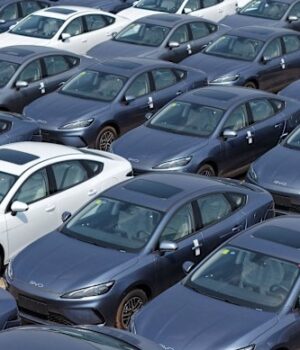
Britain is considering imposing tariffs on Chinese electric vehicle imports amid concerns that Beijing is flooding the market with state-subsidised cars, The Times newspaper reported on Sunday.
Business minister Jonathan Reynolds is drawing up a package of potential tariffs on Chinese vehicle imports, the report said, citing concerns that Chinese manufacturers are “dumping” subsidised vehicles into Britain. Reuters could not immediately verify the report.
Asked to comment, a spokesperson from the British government told Reuters no tariffs have been imposed on Chinese EVs.
“We continue to engage closely with industry so that our approach reflects the sector’s and UK’s national interests,” the spokesperson said in an email.
British ministers are ready to match the European Union’s 45 per cent levy on Chinese electric cars, The Times said, to avoid the pain of “Made in Europe” proposals, which could impact UK companies selling into the EU.
The EU’s “Made in Europe” policy is aimed at reducing reliance on Chinese components by prioritising European-made goods, raising concerns among British automakers that supply parts into European manufacturing chains and sell vehicles across the bloc.
UK Prime Minister Andy Burnham said last month he would make the case that Britain should be treated as a “trusted partner” under the proposed EU rules, warning that excluding the UK could damage its car industry.
The Financial Times reported in September that Brussels had urged Burnham to align more closely with EU trade policy and raise tariffs on Chinese cars if Britain wants to avoid the “Made in Europe” barriers.
According to The Times, citing senior government sources, ministers believe any decision on tariffs should be based on Britain’s national interest rather than automatically following the EU’s lead.
Meanwhile, the outlook for EVs is starting to brighten after the slump last year in the US market after Republican-backed legislation signed by US President Donald Trump eliminated the federal government’s $US7500 EV tax credit a year ago.
The looming cancellation triggered a brief surge in sales, pushing EV market share to an all-time high of nearly 11 per cent in last year’s third quarter.
However, the inevitable decline that followed left dealers with a glut of unsold EVs and many auto executives searching for a natural level of US demand for EVs, without help from subsidies. That is beginning to come into clearer view.
Elon Musk’s Tesla and its rival, Rivian Automotive, have both posted better-than-expected EV sales for the third quarter.
Tesla delivered 486,532 vehicles worldwide in the period, according to the company. That compared with 463,761 expected on average among analyst estimates compiled by Bloomberg.
The results are encouraging for Tesla following a period of declining auto sales and a lagging stock price. With competition in the crucial China market and sluggish demand in the US pressuring the company,
Musk is working to reorient Tesla around the futuristic business lines of artificial intelligence, driverless vehicles and humanoid robots.
“The deliveries figure is impressive,” Tom Narayan, an analyst with RBC Capital Markets, said in a note. Tesla is probably benefiting from a pullback by large US automakers from the EV market, he said, as well as high fuel costs that are driving demand for electric vehicles.
Elsewhere, executives at Hyundai Motor and Ford Motor have also flagged that dealers are asking for more battery-powered inventory to sell as customers come back. Even some lower-volume models from Toyota and General Motor’s Cadillac brand are gaining momentum.
The key driver for renewed customer uptake has been the war in Iran pushing up petrol and diesel prices. “Because of the war, because of gas prices, we’ve also seen a rise and a recovery in EV sales,” said Randy Parker, chief executive officer of Hyundai’s North America business. “I’ve got more and more dealers now asking for EV product.”
In Australia, a record 157,958 electric vehicles were sold in the six months to June, more than double the number of sales during the same period a year earlier, according to the Electric Vehicle Council’s latest annual figures, released in September.
Fully battery-electric vehicles accounted for 103,716 of those sales, while the remaining 54,241 were plug-in hybrids.
With an electric vehicle sold every 100 seconds in Australia during the first half of this calendar year, electric vehicles have expanded their share of Australia’s new car market from 10 per cent last year to more than 25 per cent – or one in four new cars sold – as of last month.
With Bloomberg and staff reporter