

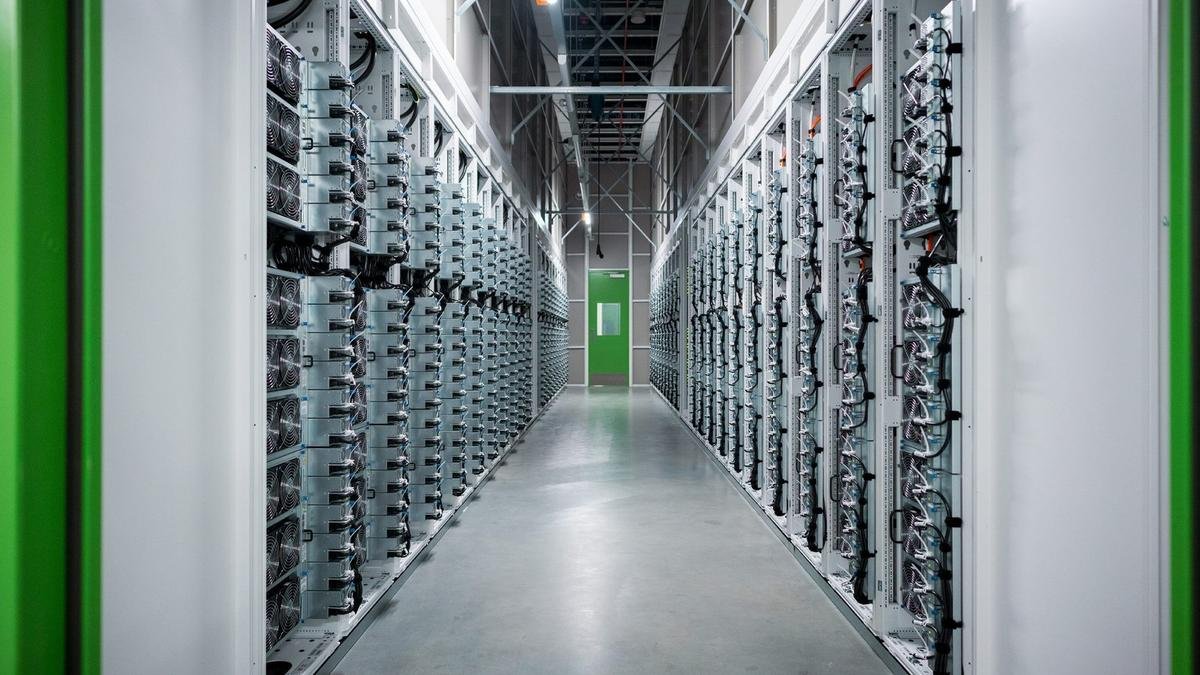
Source : Perth Now news
City of Perth staff say data centres need their own set of rules amid fears the rapidly expanding facilities could have major impacts on energy, water, infrastructure and urban amenity.
WA’s capital city is currently preparing a submission to a Senate inquiry into artificial intelligence and data centres.
On May 13, the Senate Environment and Communications References Committee referred an inquiry into artificial intelligence and data centres for investigation and report.
City of Perth officers have recommended the council approve their draft submission.
The council is scheduled to vote on the submission at its August 25 meeting.
Earlier this month the City of Stirling council rejected a proposal to investigate banning data centres across the city.
Perth officers said data centres had unique impacts on infrastructure, energy, water and urban amenity that differ from conventional commercial and industrial developments.
The proposed submission calls for electricity demand, water consumption, cooling systems and other infrastructure requirements to be considered during planning assessments, rather than only through a utility connection processes.
If approved, the city will also call for an Australia-wide definition of data centres, guidance identifying suitable locations, and a co-ordinated assessment process involving local and State governments.
“Data centres are critical infrastructure for Australia’s digital economy, yet their rapid growth has exposed gaps in existing planning frameworks,” the proposed submission says.
“Most planning schemes do not contain a dedicated land-use definition for data centres, creating uncertainty in how proposals are classified and assessed.
“The city therefore supports a nationally consistent planning framework that provides a clear land use definition for data centres, guides their strategic location, and ensures that energy, water, infrastructure, amenity and land-use impacts are appropriately considered.
“The city also supports the establishment of planning and assessment pathways for major data centre developments that enable the concurrent consideration of local planning matters and strategic infrastructure impacts, including energy, water, network capacity and broader resource security implications.
“This would provide greater certainty for industry, communities and planning authorities, while ensuring data centre development supports Australia’s digital future and long-term urban planning objectives.”
According to city officers, current planning schemes do not adequately define or regulate data centres and can leave councils treating them as an “unlisted use”.
“This creates uncertainty for proponents, decision-makers and the community,” the proposed submission says.
The submission focuses on large facilities being built in city centres, mixed-use precincts and residential areas, saying they can have “low operational employment density, limited public access, restricted street engagement, security setbacks, large floor plates and blank or inactive facades”.
“Data centres can also generate amenity and urban design impacts, including mechanical plant and generator noise, heat rejection, visual impacts, servicing movements and reduced passive surveillance,” the proposed submission states.
“Planning authorities should therefore consider both the operational impacts of data centres and the opportunity cost of locating them on high-value urban land intended for more active and publicly engaging uses.”
The city says its proposed framework “should not prevent data centre development”.
“It should provide certainty and ensure that data centres are located where they best support infrastructure efficiency, economic development and long-term urban planning outcomes,” the proposed submission states.
Senate inquiry submissions close on September 1.


