Source : Perth Now news
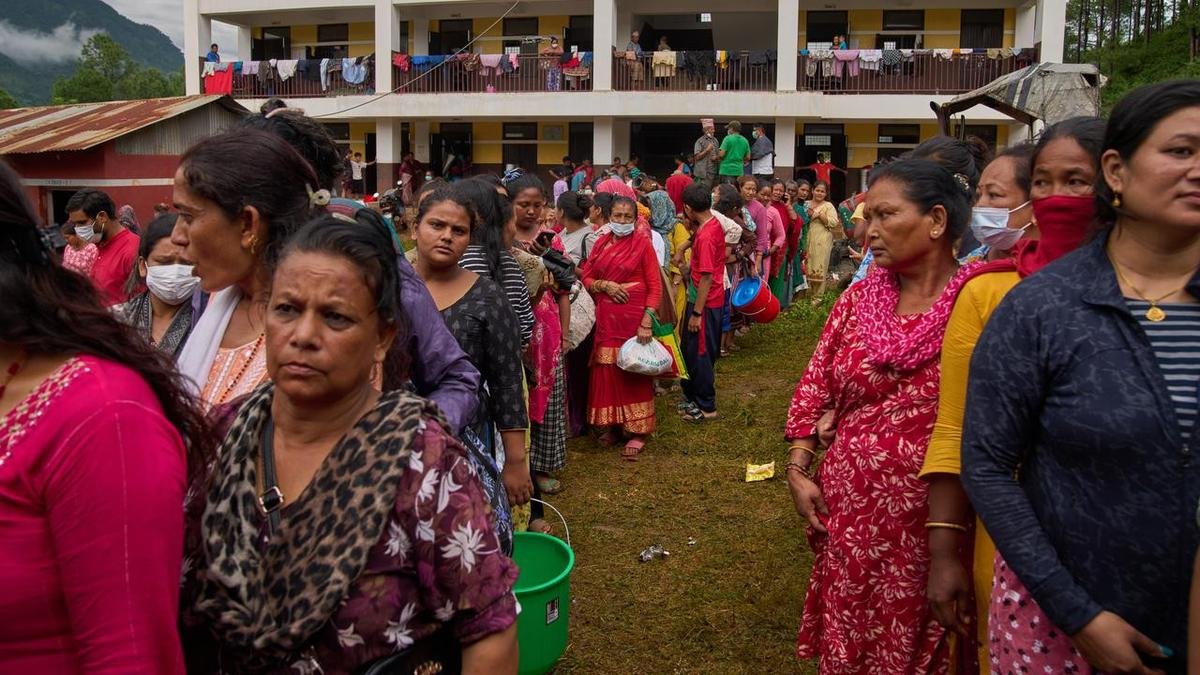
Women and girls in an area of Nepal devastated by floods are now experiencing the gendered impacts of a climate disaster.
Rates of child marriage in northern Nepal were high before the August 26 disaster, with more than a third of girls married as children, but that will only increase after the floods, Plan International Australia’s deputy chief executive said.
“Climate change is like a magnifying glass of any gender inequality that already exists,” Hayley Cull told AAP, a day after returning from Nepal.
“In an area that was already prone to child marriage, when families have lost everything and can’t get back to their homes, they can’t get back to their businesses, the risk of child marriage increasing now is really, really high.
“The single biggest prevention of child marriage is to keep girls in school.
“But so many girls can’t get to school because bridges and roads have been washed away, or because they are now having to care for family members who have been injured.”
More than one quarter (28 per cent) of girls said they’ve observed an increase in gender-based violence following climate-related events, according to a Plan International survey of 5000 girls from Bangladesh, Kenya, Senegal, Zimbabwe and Peru.
One in 10 girls had married before the age of 18, another one in 10 said they had experienced an unintended pregnancy following a climate-related event.
Schools should be kept open and free during climate shocks, a share of climate finance allocated to women and girl’s health services, and menstrual products and contraception should be included in every emergency response package, the report said.
Ms Cull called for the federal government to centre these issues at pre-COP31 climate talks in the Pacific.
“We are really strongly calling on the Australian government to use its role as the president of negotiations to centre the needs of girls in climate action,” Ms Cull said.
“And to make sure that climate funding flows much faster to affected communities, and flows in a way that really reaches the girls who are at the moment bearing the full cost of the crises.”
Fiji’s DIVA for Equality executive director Noelene Nabulivou also urged leaders to place women and gender-diverse people at the centre of decision-making, during a pre-COP31 opening session on Monday.
“Women, Indigenous peoples and gender-diverse defenders safeguard life and sustain entire societies and economies through paid and unpaid care work … and yet remain under-served by climate policies and social and economic systems,” she said.
A nine-year international framework to integrate gender equality into global climate policies and actions, named the Belém Gender Action Plan, was adopted at COP30 last year.
The plan will be discussed on Wednesday at a pre-COP31 panel.