

Source : the age
Melbourne’s inner-city councils say they will withdraw support for the state government’s plan to funnel a million new residents into the area unless they receive close to a billion dollars in extra funding for new infrastructure.
Melbourne Lord Mayor Nick Reece said the inner-city should also become a designated growth area, similar to the outer-suburbs, so that it can access state and Commonwealth programs for booming regions.
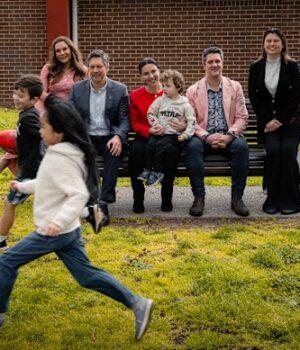
Reece’s comments were made as the chair of the M9 group of inner-city mayors who have launched an election-year push to demand more money be spent on infrastructure – from local footpaths and libraries to childcare and public hospital beds.
Over the past week, this masthead has explored the dilemma that housing almost 5 million extra residents would create for the city. In October, The Age and the University of Melbourne will host Melbourne Assembly, a three-day forum bringing together some of the world’s brightest minds in city planning, innovation, education, arts and sport to discuss ideas for the city’s future.
The M9 mayors represent the nine councils (Melbourne, Darebin, Hobsons Bay, Maribyrnong, Moonee Valley, Merri-bek, Port Phillip, Stonnington and Yarra) which are expected to accommodate an extra million residents over the next 25 years under state housing targets.
Across Melbourne, the state government has set councils a target of adding 1.7 million more homes by 2051. Of these, 525,000 are across these nine municipalities.
The advocacy group will on Monday release a report by SGS Economics, provided exclusively to The Age, which estimates the funding required to meet this demand for features such as kindergartens, libraries and sports fields.
It projects the inner-city region will require an extra $923 million be spent on local government infrastructure each year to 2051, but the councils only have capacity to fund $763 million a year.
Even when allowing for more efficient ways of delivering these projects, SGS Economics estimated there will be an average funding gap of $803 million every five years between the projects that are needed and which can be funded under the current system.
On top of this, the population growth will generate demand equivalent to 46 government primary schools, 27 secondary schools and 2350 public hospital beds – which fall under the separate funding remit of the state government.
Reece said the inner-city councils had signed on for the state government’s 2051 housing targets, which represented a quarter of Victoria’s population growth, because it could make Melbourne more prosperous and improve everyone’s lives.
“But we’re not signing up for growth for growth’s sake,” he said.
“If the investment is not forthcoming, then we’re out. We will no longer support the Victorian government’s population growth plans.
“There is a perception that the inner city is rich in community infrastructure, but what this report makes very clear is that we are going to be left woefully short, given the extraordinary population growth projections ahead of us.”
Reece said inner-Melbourne was missing out on accessing designated state and Commonwealth growth area funding “even though we are the fastest growing area in Victoria and one of the fastest growing regions in Australia”.
For every additional home, SGS Economics expects an extra $28,900 will be required to pay for local projects including libraries, early years services, footpaths and local roads. This excludes open space.
Merri-bek Mayor Nat Abboud said the inner-city councils were at the coalface when it came to the services and infrastructure growing communities needed.
“When local families are struggling to access kindergarten services close to home, when we have
sporting facilities that are waiting for upgrades to accommodate higher women participation, when
we’re making the difficult financial decision to reduce or cut community services – residents turn to
us to mitigate, improve and solve,” Abboud said.
“No one likes to make difficult decisions on what to prioritise but if structural change does not take
place, over the coming years these decisions will be harder in the years ahead.
Port Phillip Mayor Alex Makin said Fishermans Bend (in Port Melbourne) was expected to accommodate tens of thousands of people over coming decades. There are concerns over the slow progress of plans for a tram line to the urban renewal precinct.
Reece said Fishermans Bend was one of the great opportunities for Victoria’s population growth but was not being delivered with key infrastructure.
“Fishermans Bend provides a win-win solution. It’s the ideal location for high-density living for our growing city, and it takes the political pressure off the state government to try to house people in the middle suburbs and outer suburbs of Melbourne,” he said.
Start the day with a summary of the day’s most important and interesting stories, analysis and insights. Sign up for our Morning Edition newsletter.


