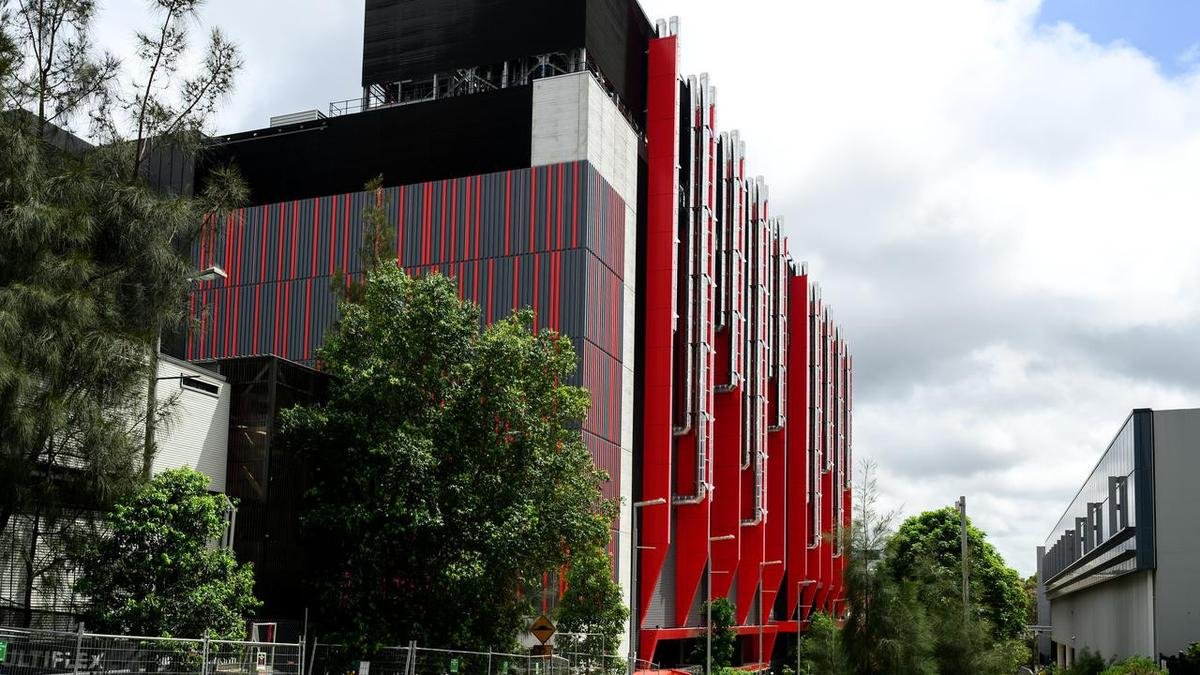
Source : Perth Now news
Australia is taking steps to shield its defence technology as data centres become targets in military conflicts.
As the Department of Defence’s Chief Artificial Intelligence Officer, Chris Crozier is responsible for ensuring the safe and secure use of AI within the military.
From cyber to undersea autonomous warfare, the department sees AI as a force multiplier, allowing for faster, deadlier and more efficient deployments.
But seven weeks into his posting, Mr Crozier used his appearance at a parliamentary inquiry into AI on Friday to stress the need to protect against risks posed by relying on the emergent technology.
These stem from information security, with leading providers located offshore, to vulnerabilities created by hosting infrastructure within the country.
“If you look at the recent examples in the Middle East, the data centres were targeted,” he told the Joint Select Committee on Artificial Intelligence.
In March, two Amazon Web Services data centres in the UAE were damaged by Iranian strikes, amid its conflict with the US and Israel, along with a third in Bahrain.
Defence last year signed a deal with Google to provide a disconnected hyperscale secret cloud to protect its most sensitive data.
It involved a “meshed series of data centres” with a substantial degree of built-in redundancy, Mr Crozier said.
“We hope we never get there, but in the event of kinetic (warfare), we want to hide in the noise and spread across multiple locations for survivability,” he said.
Mr Crozier stressed the department had taken steps to secure its AI infrastructure and that having sovereign compute was a strategic benefit.
But the comments highlight the novel challenges of modern warfare, including the risk posed by using technologies increasingly controlled by a few, foreign-owned tech giants.
A recent flashpoint concerned calls for an AI “kill switch,” a method to shut off misbehaving software should it become too powerful.
Putting aside the merits of such an application, Mr Crozier said the Australian military could not rely on any technology whose overseas creator had the ability to disable it on a whim.
“We simply can’t be working with a technology that’s based offshore, where someone can have a bad day and turn it off,” he told the inquiry.
“We need, particularly when we’re getting into conflict, we need to be 100 per cent capable with our military.”
The inquiry is probing Australia’s embrace of AI and the policy settings needed to protect against its social, environmental, security and privacy risks.
Tech giants have warned the federal government Australia needs to slow down its artificial intelligence use and create better security laws.