
SOURCE :- THE AGE NEWS
Spruiking his Iran deal at the G7 in France, Donald Trump said he did not want to be regarded like Herbert Hoover, the US president he blamed for causing the Great Depression.
An “economic catastrophe” was possible if the Middle East conflict dragged on, Trump said – perhaps revealing why, at Versailles on Wednesday night, he finally signed the agreement to end the war.
After all, the deal is hardly a ripper for the United States. As it stands, it makes numerous concessions to Iran, without eliciting much in return – apart from restating Iran’s existing position that it does not seek to develop nuclear weapons.
It is the sort of agreement one might consider successful if it were signed with a new, more moderate Iranian regime, rather than the old Islamic dictatorship. But this is not the case, insist though Trump does, that these new leaders are a much-improved bunch.
“It’s a shockingly weak deal,” says Dan Shapiro, a former US ambassador to Israel and deputy assistant defence secretary for the Middle East, now a distinguished fellow at the Atlantic Council. “What’s surprising is there seems to be significant front-loaded sanctions relief, even before the nuclear talks get underway.”
The key upfront contribution from Iran is to stop firing at ships in the Strait of Hormuz, enabling the crucial passage to reopen – toll-free – to maritime traffic. But this commitment is “for 60 days only”, according to the document dictated to reporters by US officials.
Iran and Oman are to discuss the strait’s subsequent management, alongside other Gulf states. US officials say this will thwart any attempt to impose tolls – the Gulf nations won’t accept it. Maybe, but as plenty of pundits have pointed out, the strait was open before the war, and Iran has shown how easily it can wreak havoc.
Tehran also gets immediate concessions in the removal of US restrictions on its oil sales. And it has the lure of wholesale sanctions relief down the track, based on a yet-to-be-determined schedule.
Then there’s the $US300 billion ($425 billion) reconstruction and development fund. The US is at pains to say it is not compelled to contribute a cent to this kitty, and that it will come from Iran’s Gulf neighbours. The same neighbours Iran fired drones at in March? Who believe the US failed to protect them? We’ll see about that.
Of course, there could also be some lucrative business opportunities as part of the development fund, potentially for Trump’s own companies. It may wind up being a good deal for his family, if nobody else.
Alternatively, the fund may never eventuate, nor the other elements of the 14-point plan. No more than a page and a half, the MoU is obviously brief, general and intermediary. We do not know if there will even be a final deal.
Vice President JD Vance, who led negotiations on the US side, has sold the deal as a “grand bargain” with Tehran that envisages reintegrating the rogue state into the world economy, so long as it honours its end of the bargain. He says Iran gets nothing without demonstrating good behaviour.
In that sense, it is more a declaration of aspirations than a serious document. These aspirations may be worthy, but most Iran experts are deeply sceptical about whether they are possible under the current regime.
It also means that the Trump administration is, in effect, handing Tehran a major lifeline.
The removal of US sanctions, reintegration into the community of nations and a possible cash windfall: these things would be a huge win for a regime that violently extinguished mass civic unrest in January, and which some believed was operating on borrowed time.
And yet, what options did Trump have? The economic pressure to find an off-ramp was immense. As Shapiro says, “It was clear that we would have to make the first part of the deal just to open the strait”. The alternative, palatable to few people except Washington’s most committed war hawks, was to restart the bombing and even send in troops.
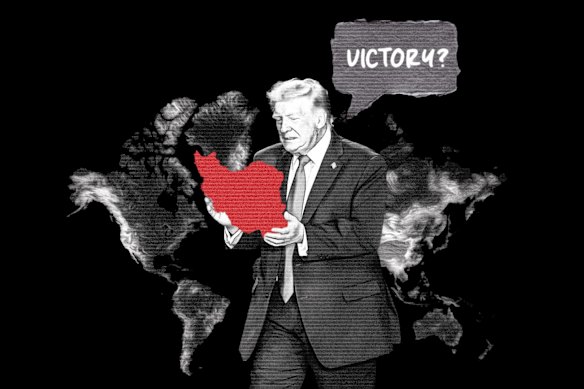
For an Iranian regime for whom survival alone was a victory, it has the makings of a jackpot.
Robert Malley, the lead negotiator of the 2015 Iran nuclear deal – the Joint Comprehensive Plan of Action (JCPOA) – said on social media: “The bottom line is that the MoU is far preferable to any of the alternatives on offer. Period.”
And the potential difference between this deal and the JCPOA is that it offers substantial carrots to Iran at a time when the regime really needs those carrots to keep surviving.
But the deal appears to have few genuine friends. Republican Texas senator Ted Cruz said Malley’s endorsement alone was reason enough to doubt it, while Bill Cassidy of Louisiana said Ronald Reagan would be rolling in his grave. Even Trump sycophant Lindsey Graham, while saying it was worth a try, was lukewarm in his endorsement.
One of Trump’s closest media allies, Fox News personality Mark Levin, was excoriating. The MoU would “capitulate to Iran’s demand to protect Hezbollah”, remove US leverage over Tehran and create a slush fund for a murderous regime, he wrote on X. “Honestly, this is too absurd to comprehend.”
One might wisely reserve judgment on this MoU because it is really just an agenda for conversations that are still to come. But for an Iranian regime for whom survival alone was a victory, it has the makings of a jackpot.
Get a note directly from our foreign correspondents on what’s making headlines around the world. Sign up for our weekly What in the World newsletter.
 Michael Koziol is the North America correspondent for The Age and Sydney Morning Herald. He is a former Sydney editor, Sun-Herald deputy editor and a federal political reporter in Canberra.Connect via X or email.