Source : INDIA TODAY NEWS
Delhi’s air has been anything but clean this October, but it still remained considerably less polluted than the previous two years.
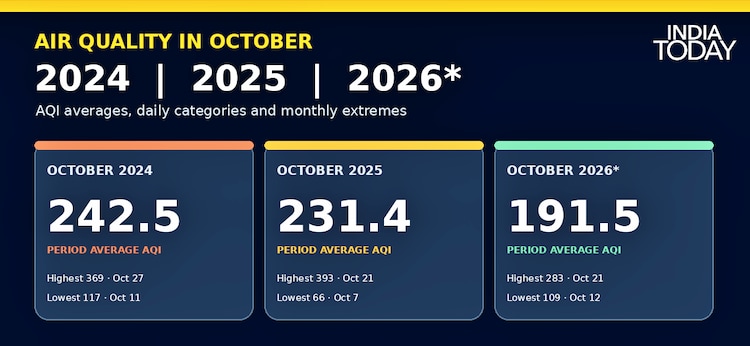
The city’s average Air Quality Index (AQI) stood at 191.5 between October 1 and 29, nearly 15% lower than the corresponding period in 2025 and about 19% below October 2024, according to AQI.in data.
That’s a noticeable improvement, but it’s still hardly a reason to celebrate.
advertisement
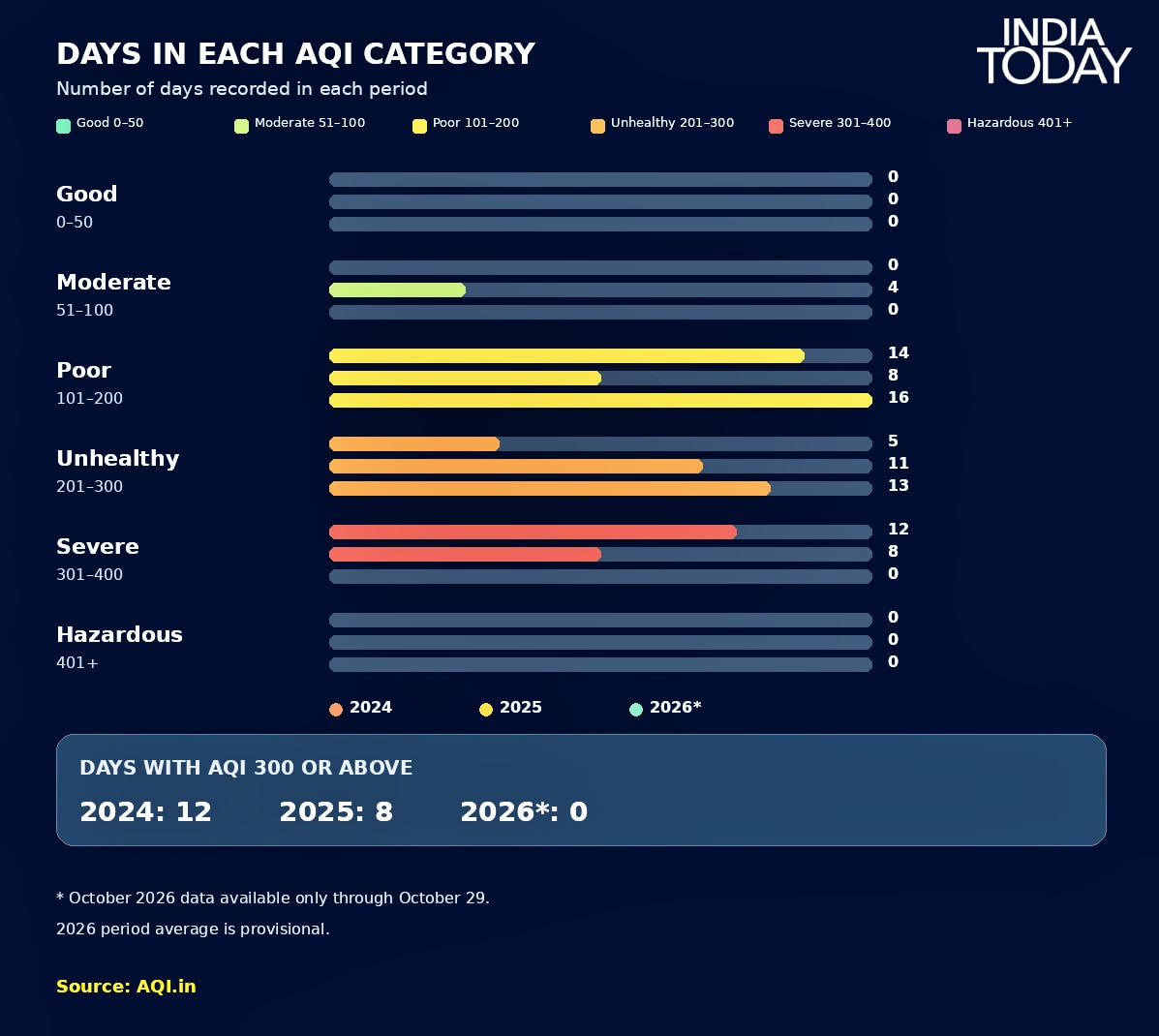
Delhi recorded 16 days of ‘Poor’ air quality and 13 days in the ‘Unhealthy’ category in the first 29 days of the month. That also means that not a single day fell in the ‘Good’ or ‘Moderate’ categories.
There is also a difference between the labels used by AQI.in and those used by the Central Pollution Control Board (CPCB).
On AQI.in, readings of 201-300 are classified as ‘unhealthy’ and 301-400 as ‘severe’, while the CPCB calls the same ranges ‘Poor’ and ‘Very poor’, respectively.
IndiaToday.in analysed AQI.in data for October 1-29, 2026, figures that were provisional as AQI.in had no readings for October 30 and 31 at the time of this article’s publication.
HOW MUCH BETTER WAS OCTOBER 2026?
The difference becomes clearer when the three years are compared over the same 29-day period.
Delhi’s average AQI between October 1 and 29 was 236.8 in 2024 and 226.1 in 2025. This year, however, it was 191.5.
The full-month averages in 2024 and 2025 were higher still, at 242.5 and 231.4, respectively.
Further analysis brought yet another trend to light, one having to do with the number of days when the AQI crossed 300.
Delhi recorded 12 such days in October 2024 and eight in October 2025. In the first 29 days of October this year, there were none, with the highest reading of 283, recorded on October 21.
But the absence of pollution spikes does not translate to the air being consistently better.
Delhi still spent 13 days in the 201-300 range on AQI.in’s scale, with readings pointing to persistently unhealthy conditions.
THE CONTEXT BEHIND DELHI’S POLLUTION
One thing that has set this October apart from those in the last two years is the timing of Diwali.
The festival fell on October 31 in 2024 and October 20 in 2025, but is being celebrated on November 8 this year.
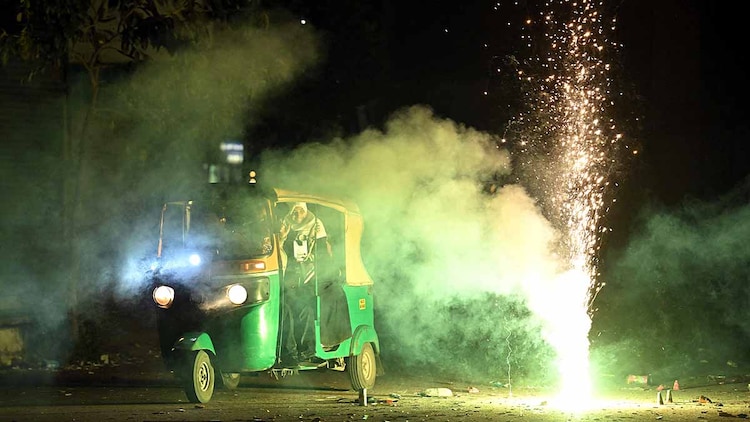
In other words, the October 2026 figures do not include the Diwali period, when firecracker emissions can add to the city’s pollution that lingers for days after the festival of light.
Weather, too, plays a role.
Unlike previous years, October 2026 has been supported by sporadic spells of rainy days that have helped to clean the air. The most recent spell was fuelled by Cyclone Arnab and a western disturbance, causing the AQI to drop significantly.
As Delhi edges towards winter, weaker winds and more stable atmospheric conditions can limit the dispersal of pollutants, allowing pollution to accumulate.
The decline in stubble burning may have also helped keep Delhi’s October AQI lower than in the previous two years.
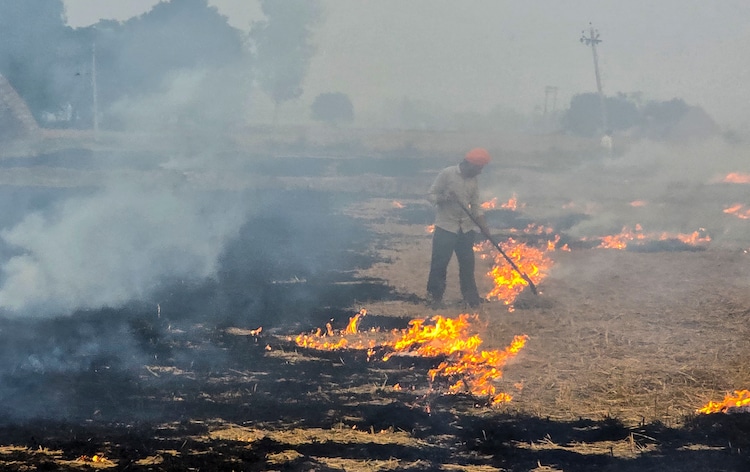
Data from the Indian Council of Agricultural Research (ICAR) showed that farm-fire incidents across six states fell 31.3% between September 15 and October 27 compared with last year.
Stubble burning remains a seasonal source of pollution, with its impact on Delhi’s AQI depending on weather conditions and the number of fires. Smoke from farm fires in neighbouring states can travel to the capital and add to its pollution levels.
The lower average this October is therefore a clear improvement over the previous two years, but it needs to be seen in context. With no ‘Good’ or ‘Moderate’ air-quality days in the period, Delhi’s pollution problem still remains far from over.
– Ends
SOURCE :- TIMES OF INDIA