


SOURCE :- THE AGE NEWS
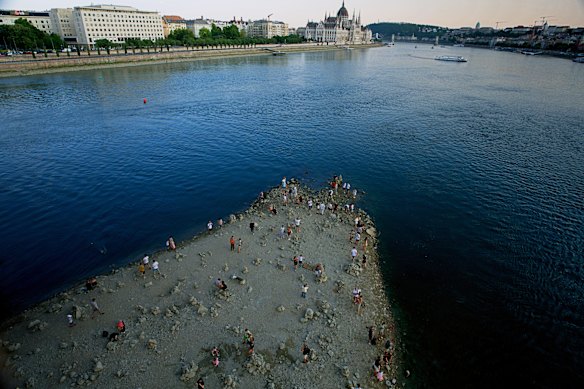
Water levels on the Danube river, the second-longest in Europe, have dropped so low because of drought that the hulks of dozens of World War II German battleships are emerging.
They are a curious distraction from the summer heat crisis.
The Danube’s record-low water levels have also pushed power plants to the brink of shutting down, and governments across Central and Eastern Europe are taking steps to conserve electricity.
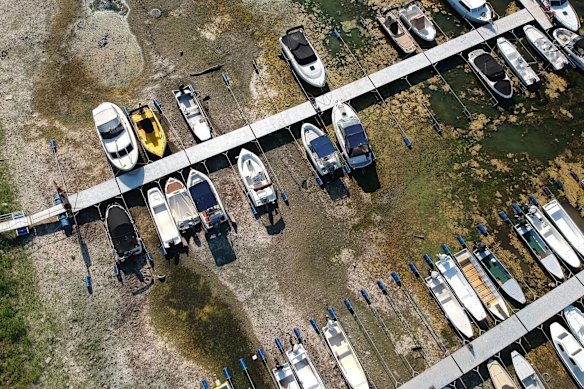
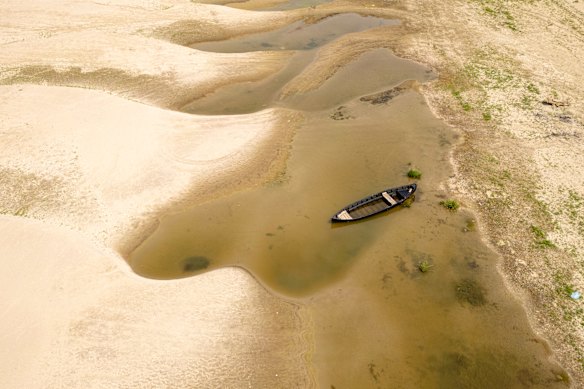
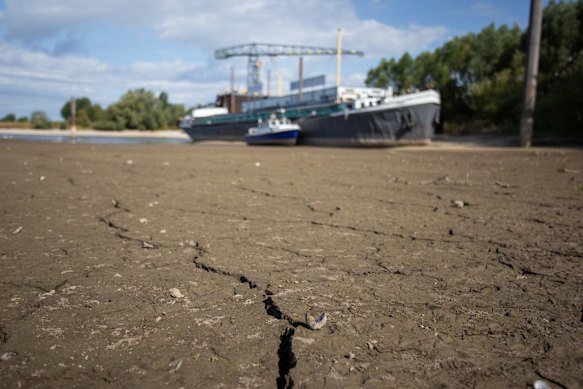
The succession of record-breaking heatwaves in Europe this summer has caused a severe drought in parts of the continent, affecting major waterways such as the Danube and the Rhine.
In the middle of the Danube, separating Serbia and Romania near the Serbian port of Prahovo, a rusty hull is now visible, along with a broken mast where the Nazi flag once flew.
The ships, some still laden with weapons, belonged to Nazi Germany’s Black Sea fleet that the Germans deliberately sank as they retreated from Romania, and as Soviet forces advanced deeper into Europe, near the end of the war.
Historians say up to 200 German ships were scuttled in September 1944 near Prahovo in the Danube gorge as they came under Soviet fire. The idea behind the deliberate sinking was to slow down the Russian advance in the Balkans.
Nazi Germany surrendered months later, in May 1945.
The sight of the old warships is a reminder that the Serbian government, with European Union financial support, has long been trying to do something about them.
Some were removed from the river by communist-era Yugoslav authorities, but most have remained because of the explosives they carried.
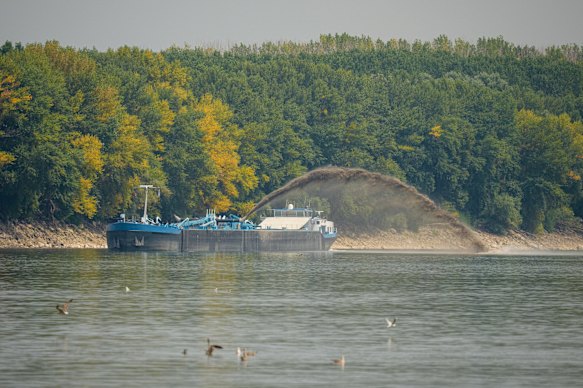
Now, however, authorities are trying to keep traffic flowing on the Danube – which flows through 10 nations – as the dropping water levels create dangerous conditions.
Experts have linked the unusually hot weather to global warming and other factors.
Krsta Brandic, a Prahovo resident, said the low water levels had almost stopped shipping traffic: “As you can see, the [big] ships can’t pass any more.”
Further north, Germany is facing similar concerns over the impact of drought on transportation and industry as water levels on the Rhine continue to drop.
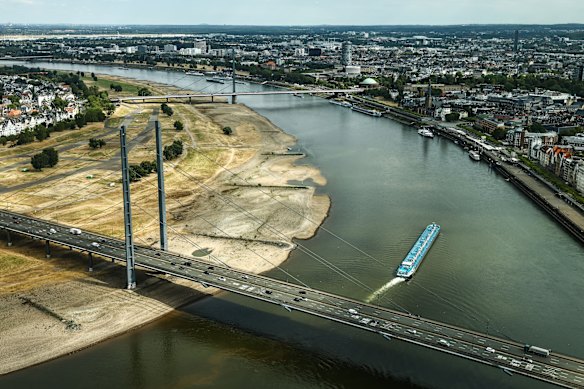
Transport Minister Steffen Bilger met affected organisations on Thursday and warned that low water levels posed major challenges for shipping, industry, and the broader logistics chain.
In Bulgaria, the shrinking Danube has exposed parts of the foundations of the ancient Constantine Bridge, giving local archaeologists a rare opportunity to document what they describe as one of the Roman Empire’s most impressive engineering achievements.
An even older discovery was made last week when the remains of what is believed to be an ancient mammoth were revealed on a drying riverbed in northern Bulgaria, the BTA news agency reported, citing historians.
The bridge, commissioned by Emperor Constantine I and inaugurated in AD 328, linked the ancient city of Ulpia Oescus with Sucidava in what is now Romania.
Stretching more than 2 kilometres, it is regarded as one of the longest bridges of antiquity, though short-lived. It is believed to have been largely destroyed about AD 367.
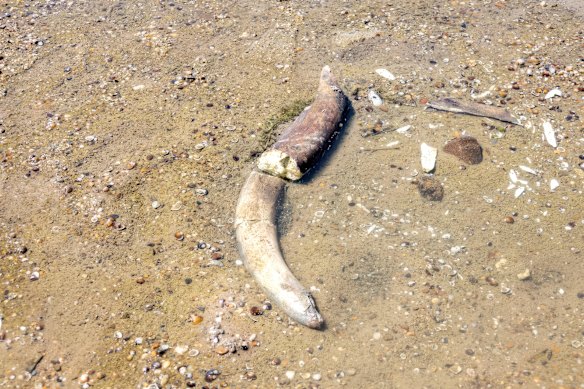
The prehistoric specimen was found by a local resident of the village of Ryahovo, who alerted specialists at the Regional History Museum in the nearby town of Ruse.
Museum director Nikolay Nenov told BTA that experts recognised a lower jaw, two tusks and possibly a mammoth rib. The bones have been removed for further examination.
In Hungary, prolonged drought and the Danube’s record-low water levels have severely affected the country’s only nuclear power plant, which relies on river water to cool its reactors.
Plant operators have reduced output to about 10 per cent of normal production, prompting the government to introduce emergency conservation measures as a record-breaking heat wave grips the country.
Authorities have asked major industrial users and households to cut electricity consumption. The government also cancelled parliamentary sessions this week to conserve power.
The heat wave has shattered temperature records across the country.
On Wednesday night, Budapest recorded its warmest overnight temperature on record, with temperatures falling only to 28 degrees.
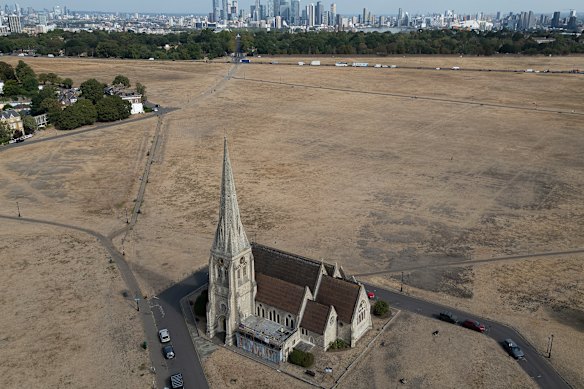
Drought has also been declared across more than half of England after the driest July on record, with large areas of England and Wales recording 20 per cent or less of their typical monthly rainfall.
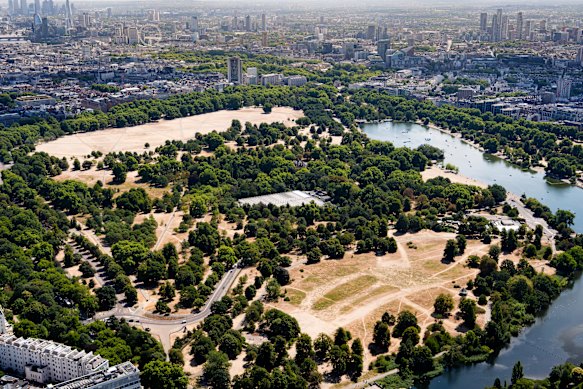
London and the south-east have been hit particularly hard, with beauty spots and parks left yellow and parched, including Greenwich Park, Blackheath, Primrose Hill, Hackney Marshes and Peckham Rye.
Reuters, Bloomberg
Get a note directly from our foreign correspondents on what’s making headlines around the world. Sign up for our weekly What in the World newsletter.


