SOURCE :- THE AGE NEWS
London: Britain’s peak Jewish group has urged the UK government to prevent Australian author Randa Abdel-Fattah from visiting the country after an outcry over her past remarks about the October 7 attacks on Israel.
The Board of Deputies of British Jews said it was concerned at plans for Abdel-Fattah to promote her new novel in the UK when she had previously described the Hamas attacks as “exhilarating” and a sign of hope.
“At a time when Jewish communities are remembering the victims of 7 October, providing a platform to someone who has spoken of that day in such terms is profoundly insensitive,” the board said.
“We urge the Home Secretary [Shabana Mahmood] to use her powers to exclude her from the UK.”
The statement heightens the debate about the author’s visit next week after a Conservative Party frontbencher, Chris Philp, called on the UK government to consider refusing or cancelling any visa or travel clearance she might have.
Mahmood has not made any public comment on the case but the Home Office said it was committed to “rooting out antisemitism” and anyone spreading hatred.
Abdel-Fattah, who is Palestinian-Australian, was dropped from the Adelaide Writers’ Week this year due to her remarks about Israel, leading 180 writers to quit the literary festival.
While South Australian Premier Peter Malinauskas strongly criticised Abdel-Fattah, the Adelaide Festival board later apologised to the author and offered her a place at its 2027 events.
The controversy centres on social media posts and statements by Abdel-Fattah about the October 7 attacks, when Hamas crossed into Israel and killed 1195 people. Those killed included 36 children and hundreds of adult civilians, such as 364 people attending the Nova music festival.
Survivors of the attack reported sexual violence against victims, but Abdel-Fattah dismissed this as “rape atrocity propaganda” despite a detailed investigation reporting a pattern of rape, mutilation and extreme brutality against women on the day.
Hamas is listed by Australia and other nations as a terrorist organisation.
One year after the October 7 attacks, Abdel-Fattah wrote about the events using messages that described it in positive terms.
“If you ask me about hope, there was a glimmer on October 7,” she wrote. “It was palpable, real, and exhilarating. If you ask me about confusion, fear, and expectations, they were there in the early hours and days.”
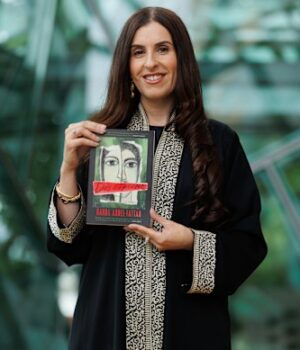
Abdel-Fattah’s novel, Discipline, concerns the personal and public debates about Israel and Palestine and is published outside Australia by London publisher Oneworld.
The writer is due to speak at events in the UK and Ireland from Wednesday night, although Cambridge University’s Newnham College Literary Festival chose in early September to cancel her planned appearance. Oneworld lists five speaking events in Dublin, Manchester and London.
Philp wrote to Mahmood on Sunday to ask her to look at ways to stop the book tour going ahead, although he said this would depend upon the legal power to do so.
“The government cannot say that it is determined to confront extremism while failing to scrutinise overseas speakers whose rhetoric appears to celebrate or excuse the events of October 7 and refuse to describe a proscribed terrorist organisation for what they are,” he wrote.
“The timing makes this visit particularly concerning. Ms Abdel-Fattah’s tour falls around the anniversary of the October 7 atrocities, at a time when British Jewish communities continue to face acute security.
“I therefore urge you to review Ms Abdel-Fattah’s case as a matter of urgency and, if the relevant legal threshold is met, refuse or cancel any Electronic Travel Authorisation, entry clearance or other permission required for her to enter the UK.”
Abdel-Fattah made a brief remark on Instagram when the Cambridge festival stopped plans for her appearance this month: “Another literary festival, another cancellation.”
She has not made any public response to Philp’s request for her to be banned from Britain, and she could not be reached by this masthead. Her publisher, Oneworld, did not respond to a request for comment.
In her response in January to the Adelaide Festival, however, she argued for the right of authors to speak despite attempts to silence them.
“To be Palestinian in this world is to confront the violence of erasure, gaslighting and dehumanisation over and over again,” she wrote.
“It is heartbreaking to think about the lost opportunities that marginalised and debut writers will face with such boycotts, especially in circumstances when so many had debut books.
“We must do everything we can to hold decision makers accountable for callously abdicating their duty of care towards us all.”
Get a note directly from our foreign correspondents on what’s making headlines around the world. Sign up for our weekly What in the World newsletter.
 David Crowe is Europe correspondent for The Sydney Morning Herald and The Age.Connect via X or email.