

source : the age
A new report demands urgent action as it sets out to turn the tide on Western Australia’s “biodiversity crisis”.
And of immediate concern is the rate at which the state’s native vegetation is being cleared, with 51,000 hectares already approved by the state government and another 128,000 hectares in new applications, according to the Conservation Council of WA.
The state’s peak conservation body will release Back from the Brink: A Protection Agenda for Nature, which sets out 36 recommendations for the government to act on.
Among the recommendations are calls to expand the Environmental Protection Authority’s strategic assessments, review the Biodiversity Conservation Act, limit the use of environmental offsets, and review the prescribed burning program in WA’s south-west.
CCWA executive director Matt Roberts said the report featured “real-life examples of where policy is failing nature right now, with recommendations for urgent change from experts across the environment movement”.
Roberts said the Swan Coastal Plain had seen “severe degradation” over time, but the “huge tracts of land” cleared for mining in the Pilbara was often overlooked.
“When we hear that we need some sort of fast-tracking system for industry, what we’re seeing is there are no breaks being applied to the clearing in this state,” he said.
The report was developed alongside conservation groups, Aboriginal leaders and environmental specialists as a “collaborative roadmap” for a suite of reforms.
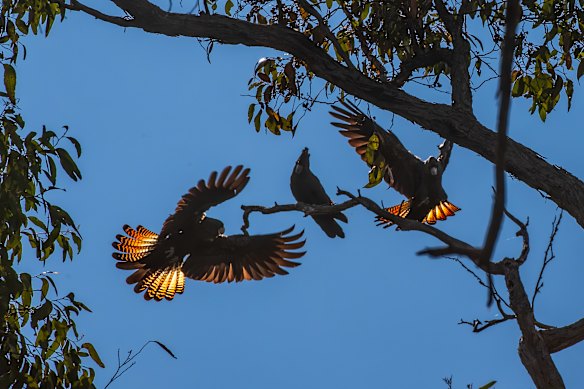
The impact of clearing on threatened species, such as black cockatoos in the south-west and the northern quoll and ghost bat in the Pilbara, was central to the council’s concerns.
Roberts pointed to reforms to the federal Environment Protection and Biodiversity Conservation Act and a memorandum of understanding signed by Environment Minister Murray Watt and WA Premier Roger Cook in April, as examples which paved the way for a system that prioritised approvals at the expense of a proper assessment.
“The reality is we also hear rhetoric around trying to balance nature against industry, and how we can manage that,” he said.
“We have failed to manage that demonstrably for decades and decades and decades in WA.
“What we’re saying here is, if you really want to redress that balance, or you want a balance, these 36 recommendations, these are the balance on the other end of the scale.”
University of Western Australia School of Biological Sciences Professor Kingsley Dixon said the report brought together scientists and the community “in a common call that we are a minute to midnight for so much of the extraordinary nature that has survived for tens of millions of years”.
“We are more biodiverse than 98 per cent of other countries, but our nature is unravelling before our eyes,” he said.
The recommendations in the Protection Agenda were not “unreasonable demands”, Roberts said
However, they were also not “something that can fit easily into a slogan about fast-tracking or keeping the engine room going”.
“But they are necessary reforms in order to actually bring balance back to nature,” he said.
Recommendations included to protect critical and remnant habitat, which involved “well-substantiated and enforceable buffer zones” and a moratorium on clearing within any local government authorities where native vegetation cover is “critically low”.
It also called for early filtering for projects that were unlikely to be environmentally acceptable before they got to the EPA; for the Department of Biodiversity, Conservation and the Arts to publish biodiversity audits; and to strengthen mine site rehabilitation and environmental compliance.
More protections to guarantee the EPA’s independence, and for the authority to assess greenhouse gas emissions when conducting its assessments, were also among the recommendations.
Roberts acknowledged the question of prescribed burning in the state’s south-west had been a “divisive debate”, but emerging technology meant a conversation around the practice was warranted.
“It’s not a simple solution as saying do or don’t burn this or that,” he said.
“But what I would say is that the practices as they have been implemented thus far have led to things like the loss of significant trees that will never come back.
“And there have been fires that have actually jumped the barriers that they’ve set while trying to meet quotas, and it had severe impacts on our landscapes down in the south-west.”