

source : the age
A high-profile extortion case against the Melbourne boss of an outlaw bikie gang and former CFMEU Big Build official has collapsed in a major setback for authorities as they seek to clean up Victoria’s building sector.
The shock decision is set to be referred to the royal commission into the building industry amid questions about why the state Labor government has failed to act on repeated police requests first issued in 2014 – and most recently again this year – to toughen laws to force gangland figures out of the construction sector.
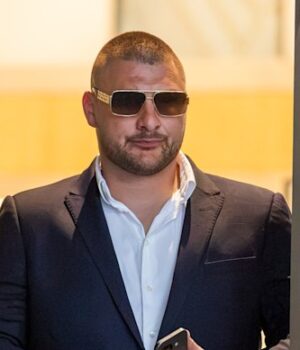
Earlier this week, Victoria’s Office of Public Prosecutions moved to withdraw a blackmail charge laid by Victoria Police’s Taskforce Hawk against Joel Leavitt, after the Bandidos president had been accused of demanding a building industry financier pay more than $650,000 to a construction firm owner.
The Age has confirmed that detectives secured a covert recording of Leavitt telling his alleged victim that he could be “very convincing when he needed to be”.
“Someone has to pay,” Leavitt was recorded saying after the victim explained that he owed no debt.
Legal sources not authorised to speak publicly said a jury would never hear the recording after the OPP decided to drop the blackmail charges because of concerns Victoria’s criminal law did not unequivocally outlaw the conduct allegedly captured in the covert recording of the bikie gang leader.
One area of legal concern was that Leavitt’s message that he could be “very convincing”, along with his appearance at his alleged victim’s businesses with patched bikie gang members, may not be enough to establish the “menacing behaviour” a prosecutor is required to prove under Victorian law.
In Victoria, blackmail is a crime involving an “unwarranted” demand made with a “threat” or menace.
Police had also obtained CCTV footage of Leavitt, accompanied by several patched Bandido gang members, attending two business premises associated with the alleged victim in the hours and days before the demand, and also driving past the purported victim’s home.
The alleged victim has fled interstate where he remains in hiding.
The legal sources said the OPP’s decision to drop the charges not only highlighted why police have held longstanding concerns about flaws in Victoria’s criminal laws, but sent a message to bikie gangs that they could work as debt collectors and mediators in the construction sector with little fear of police action.
“As long as [they] … are careful with what [they] say, a bikie gang boss in Victoria is free under the law to collect debts or negotiate with unions or building companies with their gang members,” one official source said.
The decision of the OPP to abandon the blackmail case is a significant blow for Taskforce Hawk, which was launched in July 2025 to investigate crime and corruption in the building industry.
Leavitt has been a high-priority target of Hawk, given his major building industry activities. The former Queensland CFMEU activist and veteran bikie was recruited by the Victorian branch of the union around 2021 to work as a health and safety representative on Melbourne’s Metro Tunnel and the Hurstbridge rail line upgrade.
Until he was forced from the union after being shot at a bikie clubhouse in 2023, Leavitt allegedly exploited his CFMEU power to give lucrative Big Build jobs to bikie gang members and criminals. In 2024, the union arranged for Leavitt to work at an Amazon data centre site in Melbourne’s west, before Leavitt launched his own demolition and labour-hire business which continues to operate in Victoria and Queensland in partnership with other Bandido gang members.
Legislative changes first sought by police from the state Labor government in 2014 would have made it a criminal offence for an outlaw bikie gang member such as Leavitt to work as a union representative or construction industry mediator or debt collector.
In September 2014, the force’s then-assistant commissioner Stephen Fontana issued a public call for these reforms while testifying before the Dyson Heydon-led royal commission into trade union corruption.
In June, 12 years after Fontana’s testimony – and after police made repeated submissions to the government for legislative reform – senior police issued an identical public plea for action. Taskforce Hawk Detective Inspector Ross Mitchell told The Age there was “no doubt” law reform was needed to regulate debt collectors and industrial union fixers.
Premier Ben Carroll has indicated he will support police requests for reform, and established the Kourakis royal commission after becoming leader in late July. Asked about the government’s failure to act on previous police calls for action, he said the royal commission “has the power to make recommendations on any urgent or immediate actions that should be taken to respond to criminal conduct on current construction projects”.
The withdrawal of the blackmail charges will likely be seized upon by supporters of Leavitt from the exiled CFMEU leadership regime and who have attacked Hawk as engaging in overreach. Victoria Police was heavily criticised by the CFMEU when the OPP withdrew blackmail charges laid in 2015 against the union’s then-boss John Setka.
In that case, the OPP withdrew the charges after serious inconsistencies in witness testimony were unearthed.
While escaping his blackmail charges, Leavitt on Thursday pleaded guilty to two lesser offences: failing to provide police access to his phone’s PIN code and engaging in debt collection despite having a prior conviction for violence. He was convicted and fined $2000.
Under existing Victorian consumer law, a bikie gang boss can lawfully collect debts in the company of gang members, but a person convicted of fraud or violence can not.
Leavitt’s lawyer, Christopher Terry, told the Melbourne Magistrates’ Court his client was never violent during the January meeting in which the demand for money was made.
“He’s not making threats. He’s polite and, dare I say it, charming,” Terry said.
However, prosecutor Natasa Stevic insisted the interaction with the Bandidos president was both “frightening” and “terrifying” for the alleged victim.
Terry also said Leavitt was planning to move interstate as he could no longer find construction work in Victoria due to ongoing media attention.
In July, the prospect that the blackmail case against Leavitt might collapse was first flagged during a Magistrates’ Court hearing. At the time, the court heard that if it could not be proven that Leavitt’s conduct amounted to blackmail, charges against several co-accused would also fall away.
The court had also heard allegations from police that Leavitt had been accused of travelling to a cafe at Yea on January 18 with five others, some of them patched bikies, to “discuss money owed” from a business loan gone bad.
The alleged victim refused to attend and asked Leavitt to instead meet him at a factory in Brooklyn. Police said the next day, Leavitt and patched bikie members on motorbikes and in cars allegedly went to the Brooklyn factory and demanded more than $600,000.
 Nick McKenzie is an Age investigative journalist who has three times been named the Graham Perkin Australian Journalist of the Year. A winner of 20 Walkley Awards, including the Gold Walkley, he investigates politics, business, foreign affairs and criminal justice.Connect via email.
 Lachlan Abbott is a crime reporter at The Age. He was previously a city reporter and covered breaking news.Connect via email.

