

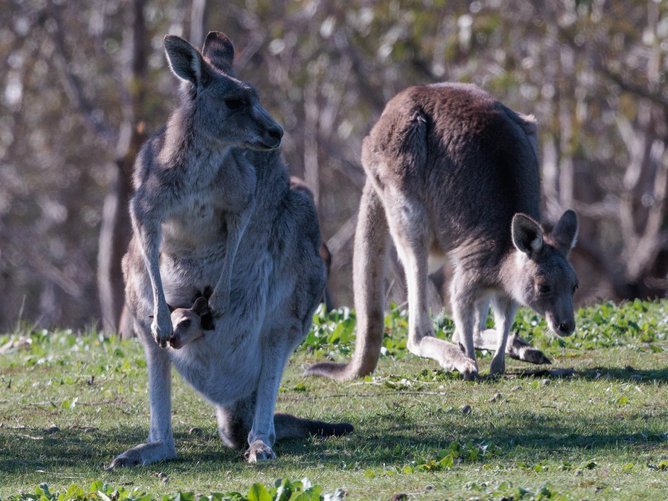
Source : Perth Now news
A wild life expert has voiced fears a new strain of bird flu could impact some of Australia’s most iconic creatures.
In recent weeks, the country has seen its first cases of the new H5 bird flu, with confirmed cases found in Western Australia and South Australia.
And with a suspected case also now found in NSW, fears are growing about the threat this pay pose to Aussie icons such as the kangaroo and the koala.
Jose Quintero, a lecturer in poultry from the University of Sydney, said Australia’s wildlife was likely not prepared to cope with new, developing disease.
“Australian wildlife is so unique and cut off, so it is unprotected from new strains of disease, meaning it is impossible to know what will happen,” Dr Quintero said.
“We just don’t know what might happen with Tasmanian devils, koalas and kangaroos – and I think that is a large concern.”
While the flu is mainly known to impact avian species, the H5 strain has already had a major impact on mammals elsewhere in the world.

In recent weeks, experts have reported how the highly contagious flu had torn through seal colonies on the sub-Antarctic Aussie islands of Heard and McDonald, wiping out more than 13,000 elephant seal pups.
The unknown element of how it could affect indigenous species in Australia is causing alarm.
“It is absolutely unknown which species could be affected by it,” Dr Quintero said.
“We know that at the moment it is just migratory birds that have been affected, those who are passing through Australia, rather than native to it.
“If it gets into native Australian wild birds it could spread very quickly and that is a fear.”
Dr Quintero said it was vital Aussies remained vigilant and ensure that if they do see a sick or dead bird, to not touch it and immediately alert authorities.


It comes as NSW authorities anxiously wait on a suspected case found at Hawks Nest, north of Newcastle.
Preliminary tests were carried out on a giant petrel found at the NSW seaside destination, with the results of further tests expected on Saturday.
Another petrel was also found at Perth’s Mullaboo Beach, which returned a positive preliminary test.
Should both birds be confirmed cases, it would take the total number of Australian cases to seven.
The strain, also known as H5N1, has torn through other parts of the world, but until recently, Australia was the only continent in the world to be free of it.


