Source : the age
The smartphone playbook has been rewritten around generative AI, with Google, Samsung and Apple banking on smart agents, magic photo manipulation and automated workflows to trigger the next major upgrade cycle. However, at least anecdotally, consumer excitement is chilling into something resembling feature fatigue. The promises are familiar, the improvements are incremental, and the squeeze that AI is putting on component manufacturing means some phones may soon cost as much as a used car.
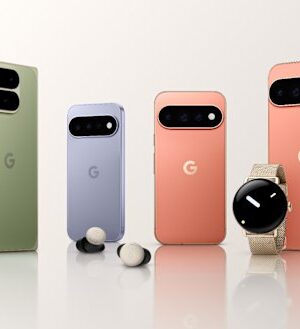
Last week Google showed off its Pixel 11 line-up at its annual showcase, with new chips, a baseline of 256GB storage, and new capabilities powered by Gemini models that can run locally on device. The Pro models even have a new “HiLight” on the back, which can show when the AI assistant is thinking or responding while the device is placed face down. But do users benefit from Gemini becoming an even more prominent part of their lives? And who pays for it?
Phones are now a wrapper for AI
With Google’s annual phone reveal sandwiched between Samsung early in the year and Apple around September, there’s generally a rhythm to the competitive new features being baked in. But while some previous years have seen brands battling to improve speeds and power, pack in better cameras, boost battery life or thin down designs, AI features now dominate presentations. The phones are getting better elsewhere as well – I’m sure once I test the new Pixels I’ll find the cameras are amazing – but the emphasis on generative features has become pronounced.
Samsung and Google both spend lots of time trying to convince users that they need to have AI at their beck and call so they can have it remember what was said in text messages, or add an event from a web browser ad into a calendar, or change a photo after the fact to reflect their intention rather than reality. And Apple has also shown off new capabilities for Siri coming later this year that do the same things.
Some of the features coming to iPhone — realistic image generation in Image Playground, or text generation via Write with Siri — seem so counter to Apple’s human- and creativity-focused mission that there’s really only one explanation: it doesn’t think it can afford to sit this battle out. The company is maintaining its focus on privacy, security, and not collecting user data for training, which keeps pressure on Google to justify every bit of information Gemini soaks up, but the prospect of Apple drawing a line and declining to implement generative AI has disappeared.
Are consumers clamouring for more AI? Or are they just being shown it often enough that they’ll eventually accept it as a necessary part of the device? For Pixel 11, Google showed how its AI can remove hesitations, filler words, and mid-sentence corrections so natural human speech becomes clean, readable text, and how it can pre-edit your photos by automatically cropping, unblurring and choosing the optimal moment from hundreds of frames. It may be impressive tech (if a bit on the sanitising-the-humans-out-of-things side), but is it solving genuine pain points? Google’s sell for HiLight is that it lets you ignore annoying notifications, which non-AI features already let you do.
Passing the cost on to us
Given that every piece of consumer technology has become more expensive in the era of crushing component shortages driven by AI data centre demand, Pixel fans looking forward to the new phones may have been bracing themselves for pain. Yet Google has surprisingly kept costs mostly static. For the models with 256GB of storage, only the Pro Fold and Pro XL have gone up, by $100 each compared to last year.
By contrast, Samsung raised the prices of most of its phones this year. And while Apple’s most recent major phone launches (in 2025) didn’t increase prices much at all, the company has been clear to set expectations that its 2026 line-up of iPhone 18 models may be significantly more costly. So is Google just eating the cost of more expensive production? It wouldn’t be surprising. It’s one of the biggest drivers of AI adoption, and it wants as many users as possible interfacing with Gemini. So instead of making its phones too expensive to buy, the cost moves to the subscriptions it charges for advanced AI access.
Of course it probably helps that Google is one of the companies buying out all the components to build AI; it may be easier for it to get some chips on the side for its phones. And it doesn’t have to manufacture on the same scale as the others, given Pixels are less popular than Samsungs or iPhones. But Chinese media outlets are citing manufacturers saying that the squeeze on Apple’s production may mean only the iPhone 18 Pro models will launch this year, with the standard iPhone 18 waiting until 2027. As for the supposed folding iPhone, which has been referred to as the iPhone Ultra, rumours have it arriving first in the US, with international availability coming later.
The true cost of AI is becoming clear in a way that I’m not sure many consumers would accept as an improvement for phones overall. Massive data centre investments push component prices sky high, yet actual consumer features feel like gimmicks or minor conveniences at best, often experimental or even sketchy. Instead of hardware improvements, we get more subscriptions, and new ways to engage our pocket computer in discussions or have it be creative on our behalf.
The things that I think most people want from their phones, like good cameras, quick browsing, a clean proactive interface, long battery life, durable build and useful apps, are still getting better. And there are things to be excited about on both the Android and the iOS side. But there is also a friction you can’t help feeling, as we’re all told to pay more for features we’re not asking for.
Get news and reviews on technology, gadgets and gaming in our Technology newsletter every Friday. Sign up here.