Source : Perth Now news
High-level delegations from Saudi Arabia, Pakistan and Turkey have met Iranian authorities in Tehran to try to avert renewed fighting in the Iran war.
Many in Iran are anxious about a possible return to all-out war.
Israeli and United States leaders have been sharpening their threats before elections in both countries while Iranian leaders have remained defiant.
The four countries agreed on Monday to continue talks on expanding co-operation among them, particularly about regional peace and security, a statement said.
No details were given about a date or place for a future meeting.
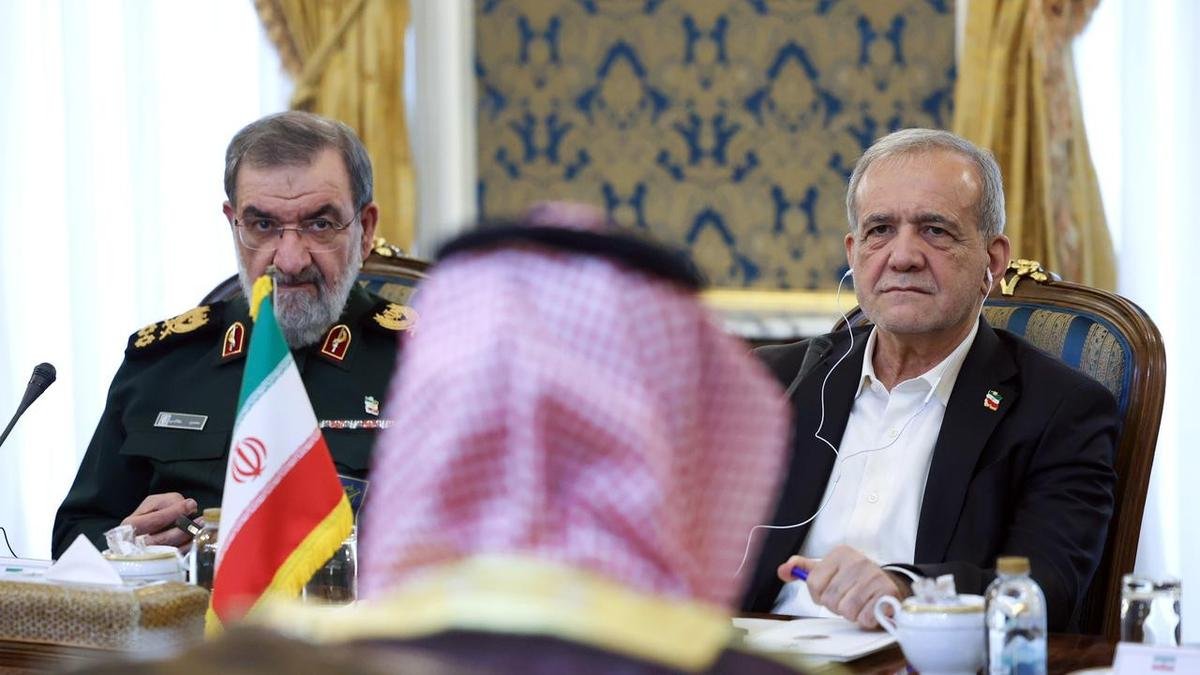
Saudi Defence Minister Khalid bin Salman, Pakistani army chief Field Marshal Asim Munir and Ibrahim Kalin, the head of Turkey’s intelligence service, attended the talks hosted by Major General Mohsen Rezaei, secretary of Iran’s Supreme National Security Council.
Iranian President Masoud Pezeshkian said on Monday that Iran supports any agreement that would deepen regional co-operation, resolve differences and make greater use of the shared resources and capabilities of Islamic countries.
The visiting delegations sought to avoid further turmoil in the region.
Turkish President Recep Tayyip Erdogan warned in a televised address on Monday that renewed attacks on Iran would destabilise the region and hurt countries that are not party to the conflict.
“It is our hope that all parties will refrain from any actions that could drag our region into a new spiral of violence,” Erdogan said.
Saudi Arabia said in a statement that the delegations hoped to find “ways to de-escalate tensions, enhance regional security and promote its stability”.
Qatari mediators also travelled to Tehran on Sunday, working in co-ordination with the United States, as part of efforts to de-escalate regional tensions, according to a regional official speaking on condition of anonymity because of the sensitivity of the talks.
Pakistan and Qatar helped broker an agreement in June aimed at having Iran fully reopen the Strait of Hormuz to shipping, ending a US blockade of Iranian ports and opening negotiations on a broader settlement addressing Iran’s nuclear program.
The deal unravelled quickly, however, as both sides renewed attacks.
With worries about renewed fighting before Israel’s election on Tuesday and the US midterm election on November 3, Iranian foreign ministry spokesman Esmail Baghaei said over the weekend that Iran had not closed the window of diplomacy and that messages were being passed to the US through intermediaries.