Source : THE AGE NEWS
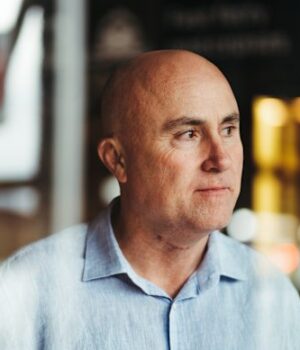
Phil King doesn’t fit the mould of a rock star fund manager. You’re more likely to see him riding a pushbike than driving a Maserati, or lounging by the pool of a Point Piper mansion.
He started investing before he grew facial hair and “became hooked”.
When King founded his company Regal 20 years ago, a couple of million dollars seemed like a lot of money. Now, on the eve of his departure from money management, Regal boasts funds of more than $21 billion.
When he announced plans for his retirement this week, hearts skipped a beat in financial circles. In Australia, where King has been a market kingmaker for the past two decades, crucial for successful block trades, capital raisings and floats, he has been called pivotal. The Australian Financial Review even described him as the market’s plumbing.
His impending departure in June next year has been likened to the end of an era in which active fund managers such as King used valuation skills, delved deeply into companies’ underbellies, closely studied industry sectors and surveyed the wider environment to handpick shares ripe for gain.
‘Working for a broker [is] how you learn how to make money, and working for a fund manager, that’s how you learn not to lose money.’
Phil King
King’s influence on investing is immense. He is the bloke who last year took a big bet that shares in our largest bank, Commonwealth Bank, would fall. The stock has dipped just 3.9 per cent this year, but he hasn’t budged on that view.
When asked how successful this trade was, King declares: “It’s not over yet; it’s still playing out.”
He says the banking giant got too expensive for a number of reasons. One is the massive inflow into heavyweight stocks such as CBA from passive funds, including Australia’s giant industry funds. Another reason, he believes, is the Australian tax system, which discourages investors from selling shares because “if you never sell them, you never have to pay capital gains tax on them”.
While many smaller active funds managers remain, the bulk of our retirement savings are these days invested in what is known as passive investment – in which fund managers track stock indexes with the aim of avoiding underperformance, rather than seeking to beat market returns.
King says that when he founded Regal, he wasn’t looking to invest for others. But when people came knocking at his door, he let them in.
He began his professional career as a chartered accountant at KPMG, where he honed his skills as a detailed numbers guy. Then it was off to the Millionaires Factory at Macquarie, where he worked as a broker analysing media companies – a job which he says in those days involved using a ruler to measure the volume of classified advertising in Saturday’s Sydney Morning Herald.
His shift to fund management with a hedge fund in London provided him with additional skills.
“I always say that working for a broker [is] how you learn how to make money, and working for a fund manager, that’s how you learn not to lose money,” which, he says, are vital attributes to have in managing risk.
One of the biggest risks to manage for his firm will now be the “key man risk”. In leaving, King has become Regal’s biggest challenge: how to convince investors and clients that the show will successfully go on without him.
King says he has been thinking about succession planning since he started his business and handed over the day-to-day running of Regal many years ago to focus on investing. He has been studiously appointing talent to manage the firm and its portfolios, but convincing everyone that it will be the same without the King X-factor will take time.
Before he heads off to the fairways and bike paths of Manly, King’s focus remains on markets.
Looking at the Australian market, he doesn’t like what he sees. It’s inefficient, he says, mostly because of the country’s capital gains tax regime, which is in large part to blame for the disappointing growth and returns of the local bourse compared with Wall Street.
America has lots of great growth companies, whereas the Australian market is dominated by large low-growth legacy companies such as the big four banks and the two supermarket chains, he says.
“We have a lot of capital trapped in old low growth companies … and a lot of these companies get very, very expensive, and only when there is a disappointment, the shares suddenly collapse because no active managers are willing to buy them,” says King.
Wall Street, by contrast, boasts ultra-growth companies, particularly in the technology space, he says, pointing to the rocketing sales of AI giants OpenAI and Anthropic. “It’s incredible and almost unprecedented what they achieve, such month-on-month revenue growth.”
So, is King an AI follower, or does he subscribe to the AI bubble theory?
“It’s way too early to call it a bubble,” he says. There’s a lot of uncertainty, he acknowledges. “We don’t know whether these large language models will be a winner. We don’t know whether the competition will catch up with Nvidia, or whether the hyperscalers will get a return on their investments.”
But there are a couple of certainties as well. The AI ramp-up is probably the biggest capex boom in history, and there are ways to make money out of it, the funds management veteran says.
That said, King readily admits that rolling out AI at his own firm has been an eye-opener. “It’s fascinating what it can do.
“It can do a model much more quickly than some of our analysts,” he says, making him worried whether his kids will be able to find jobs in an AI-driven future.
King has achieved a lot in his career, but he still has ambitions. One is to play more golf, though he’s yet to be given a handicap because he is still on the waiting list to join the local Manly Golf Club.
It seems fitting to write about King’s departure, the end of an era, on a day when I will finish my last daily column for The Sydney Morning Herald and The Age. I will not be hanging up the keyboard completely, but will write fortnightly going forward.
I will miss the daily grind, I will miss my colleagues – but most of all, I will miss the wonderful readers, who have so generously contacted me with thoughts, thanks, ideas and, of course, criticism.
The Market Recap newsletter is a wrap of the day’s trading. Get it each weekday afternoon.