

source : the age
The NSW government has demanded an explanation from the health watchdog over its suspension on the sale of defibrillators used in the state’s ambulances.
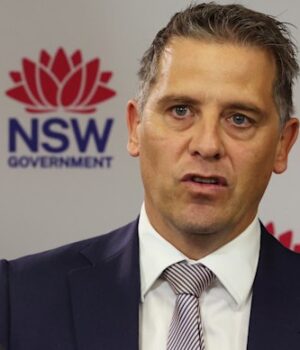
“I’ll be writing to the TGA to see if they could give us a little bit more information,” Park told a press conference on Wednesday morning. “They’ve made a decision not to disclose the details … that can be a little bit frustrating.”
The government and NSW Ambulance continue to assert that the devices are safe for patient use, despite widespread complaints from paramedics, including reports of the device failing to discharge a shock.
It comes after this masthead revealed on Tuesday that a senior NSW Ambulance figure told staff that the corplus 3 and corplus 3T defibrillators recorded 1229 failures in 2025 alone.
Park said that “not all of those have been serious failures. It could be a lead not working. It could be a range of different areas”.
He said the TGA had not instructed his government to remove the devices from circulation, but that an incident management team had been established.
“I’m still confident, based on the advice of the NSW Ambulance … as well as the TGA, that this should remain in our ambulances and form a part of the life-saving equipment that we have for people,” he said.
NSW Shadow Minister for Health Sarah Mitchell said it was “pretty concerning that the health minister hasn’t been made aware already by the TGA what the major concerns are”.
This masthead revealed on Tuesday that Marty Nichols, Ambulance NSW’s associate director of clinical practice, sympathised with paramedics who had raised concerns about the devices on an internal forum of more than 4000 members, where he said they had a “right to be disappointed”.
Nichols, responding to one of the hundreds of comments from paramedics about the $30,000 defibrillators, said in his post that while paramedics at large stations might hear of failure “almost every day”, that should be weighed against the 1.5 million callouts every year.
In Wednesday’s press conference, Alan Morrison, NSW Ambulance’s executive director of clinical capability, said these complaints did not represent failures, but a “range of technical issues in a complex piece of machinery”.
“We’re not talking about a large number of defibrillation failures … we have not identified any safety issues impacting on patients,” he said. “However, our staff, as they should as clinicians, raise these technical issues as they arise. They are a thing we need to look into and address.”
He said there were a variety of issues reported, including in relation to the defibrillator’s connection to its leads.
NSW Greens health spokesperson Dr Amanda Cohn said defibrillators were the “single most time sensitive piece of equipment in an ambulance”.
“If a defibrillator fails, waiting for a back-up from another ambulance could cost a life,” she said, and called for NSW Ambulance to move to a different device and bring their tender process forward, rather than waiting for the devices’ contract to expire in six years time.
The TGA has been contacted for comment.
Start the day with a summary of the day’s most important and interesting stories, analysis and insights. Sign up for our Morning Edition newsletter.
 Anthony Segaert is the Parramatta bureau chief at The Sydney Morning Herald. He was previously an urban affairs reporter.Connect via X or email.
 Liam Mannix is an investigative journalist at The Age. Before that, he was national science reporter for The Age and the Sydney Morning Herald.
Contact him via email or Signal (encrypted) liammannix.18
Connect via X, Facebook or email. Amelia Ballinger is a Walkley Award-winning journalist and TV producer. A former foreign correspondent, she has covered major stories around the globe and has a particular interest in investigations.Connect via email.

