SOURCE :- THE AGE NEWS
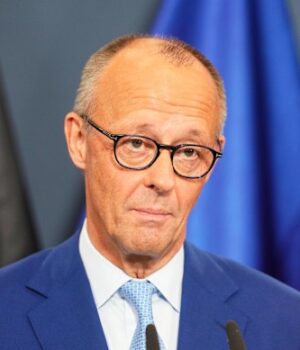
Friedrich Merz, the pugnacious, stubborn German chancellor, has come out fighting in a desperate attempt to save his chancellorship.
The leader who promised to transform his country’s fortunes when he took power last year suffered another bloody nose at the ballot box from the Alternative for Germany (AfD) on Sunday.
The hard-right party won state elections in Mecklenburg-Vorpommern, taking 37 per cent of the vote, according to the first exit poll.
It was not the crushing victory the AfD won earlier this month in the other east German state of Saxony-Anhalt, but Merz’s conservative Christian Democratic Union (CDU) still took a beating, and his leadership could be on the brink.
Merz’s approval ratings stand at just 10 per cent, with voters weary of his brusque, tough-guy management style, which persists even as he fails to stop the rise of the AfD and deliver on key manifesto pledges.
The irony is that some CDU insiders blame their Social Democratic Party (SPD) coalition partners in the federal government for slowing Merz’s reforms aimed at rebooting Germany’s struggling economy.
The chancellor appeared contrite after the Saxony-Anhalt result and made an uncharacteristic and unconvincing promise to listen more to voters.
Mecklenburg-Vorpommern is a smaller state, with just under 1.6 million people, but the timing, and that of the state elections in Berlin on the same day, was dangerous.
In the capital, voters handed the hard-Left Die Linke a 24.5 per cent victory over the CDU on 20 per cent. The AfD came third, with 16 per cent, the exit poll said.
There have been murmurs of discontent within the CDU, a party not accustomed to replacing its leaders less than two years after coming to power.
Germany as a whole is not used to palace coups after 16 years of Angela Merkel. But Merz’s predecessor, the SPD’s Olaf Scholz, also did not see out his full term; his coalition collapsed because of infighting.
‘German Burnham’ required
Merz had been on manoeuvres in the days running up to Sunday’s elections.
He cancelled his planned appearance at the UN General Assembly. Party insiders insisted a leader, derided by some as a foreign-policy chancellor, a charge also levelled at former British prime minister Keir Starmer, was needed in Berlin.
Before the exit polls dropped, Merz held a behind-closed-doors meeting with senior party members to challenge them to continue backing him. If they do not, he will demand they name a successor.
The front-runner is Hendrik Wüst, North Rhine-Westphalia’s minister-president, who is viewed as Germany’s answer to Andy Burnham.
But he has state elections in April, and missing them to take on the big job is an idea frowned upon by many in a decidedly old-fashioned and stuck-in-its-ways CDU.
Merz’s pressure has already brought some results, including a letter of muted support from eight state leaders, including Wüst, who claimed that Europe, faced with a surge in support for populist parties, needed a strong and stable Germany.
He can also rely on the fact that his party knows that changing the chancellor will require the SPD’s agreement, which could demand a slowdown of much-needed reforms in return.
Merz is also attempting to strike a crowd-pleasing note to shift the narrative of a month of three bruising elections. He is planning measures to cap the soaring price of petrol amid record diesel prices and has softened his position on early retirement.
But he remains almost fatally tone-deaf. His hopes for new laws that would force people to post online under their real names seem misguided, as voters are far more concerned with the cost of living.
His chances of survival depend not on his political skills but on his party’s risk-averse nature and a German political system that makes it difficult to remove a sitting chancellor.
With the CDU not enduring the historic humiliation of falling below 5 per cent, Merz will pray that a period of intense political pressure around the three state elections will now begin to subside.
On the point of being knocked out, he is hoping to hang on long enough to be rescued by events.
The Telegraph, London
Get a note directly from our foreign correspondents on what’s making headlines around the world. Sign up for our weekly What in the World newsletter.