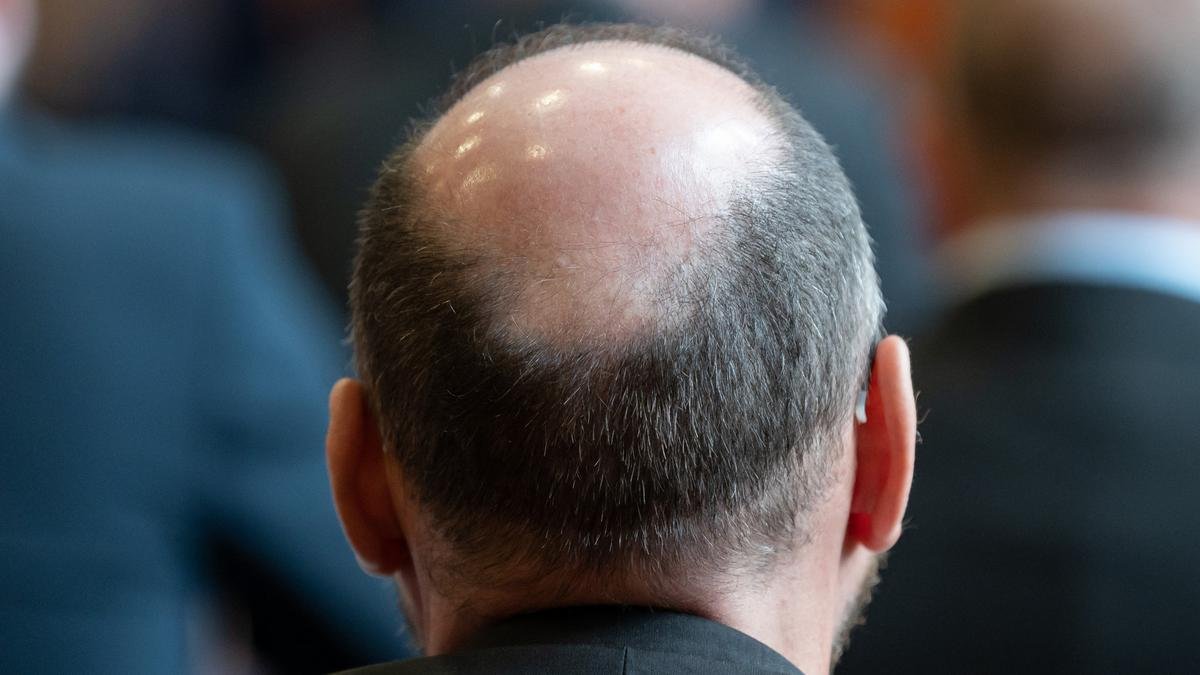
Source : Perth Now news
Wegovy maker Novo Nordisk could turn its attention from shrinking waistlines to tackling baldness, after a senior executive suggested hair loss may be a future area of interest.
The Danish pharmaceutical giant has made billions from semaglutide, the active ingredient in Wegovy and Ozempic, which works by mimicking the hormone GLP-1 to reduce hunger and food intake.
Now the company believes its expertise in hormones could potentially be applied to alopecia, the medical term for hair loss.
Martin Lange, Novo Nordisk’s chief scientific officer, told Bloomberg: “We could leverage our scientific knowledge potentially moving into that space.
“It’s not necessarily what we’ll pursue first, but that would be a clear possibility.”
However, a source stressed that Lange was using hair loss as an example rather than referring to a specific project currently being developed by the company.
Existing treatments including minoxidil and finasteride have been available since the 1990s and have become major sellers through online pharmacies.
Professor Lynn Petukhova, from New York University’s Langone Health, said the huge success of weight-loss drugs had demonstrated the commercial potential of treatments targeting hormones.
She told The Sun: “Novo Nordisk demonstrated enormous success with the GLP-1 hormone and we know that hormones drive hair loss – testosterone has been implicated for a long time.
“Historically it has been very difficult to get funding to study hair loss because it has not been considered medically important.
“Investors can see how much consumers are spending on it now, which has demonstrated there is a huge market.
“This could be an enormous opportunity.”
But there is an awkward wrinkle.
Professor Petukhova recently published research suggesting semaglutide may increase the risk of male pattern baldness, meaning the same drug is unlikely to simply be repackaged as a hair loss treatment.
Male pattern baldness affects around eight in ten men at some point, while illness and cancer treatments can also cause significant hair loss in both sexes.
Professor Petukhova said future treatments could take many forms, but warned against expecting a miracle cure.
She added: “It is too extreme to say we will one day eradicate baldness.
“Biology proves over and over again that it is not easy to control, and some people simply aren’t bothered.”