

source : the age
Missed opportunities to intervene in convicted killer Beau Lamarre-Condon’s policing career are expected to be scrutinised at an inquest, as a former colleague raises concerns red flags went unchecked.
The former senior constable was convicted on Wednesday of two counts of murder over the shooting deaths of Sydney couple Jesse Baird and Luke Davies.
Potential failures by the 31-year-old’s former supervisors – including acting on concerns about his suitability to serve as an officer – are the subject of an ongoing internal critical incident investigation, overseen by the state’s policing watchdog.
The critical incident investigation separately examined the circumstances of Lamarre-Condon’s entry to the force and his policing career. Lamarre-Condon’s psychometric entry testing did not raise concerns about his fitness to serve, according to sources familiar with the investigation but not permitted to discuss it publicly.
A coronial inquest into Baird and Davies’ deaths is expected to further scrutinise any missed opportunities after the criminal proceedings conclude. A date for the inquest has yet to be set.
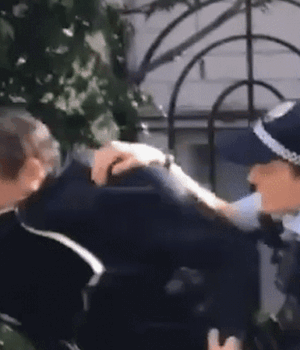
Footage of a 2020 incident showing Lamarre-Condon repeatedly Tasering a man in Sydney was played in court in the absence of the jury in his criminal trial, but was ultimately ruled inadmissible.
Informal warnings
One of Lamarre-Condon’s former colleagues, who sought anonymity to freely discuss his time working alongside the then junior officer, said concerns had been raised about the young constable’s competence and attitude, and that he had received informal warnings about his conduct.
The warnings related to day-to-day police work, including record keeping and following up on cases, according to the former colleague. No concerns were raised about physical violence.
Discussions about putting Lamarre-Condon on a performance management plan, which could have highlighted concerns about his suitability to serve in the early years of his career, did not come to fruition, said the former colleague, who is no longer a serving police officer. A formal supervision plan may have changed the trajectory of Lamarre-Condon’s career and limited his access to firearms, they said.
The NSW Supreme Court trial heard Lamarre-Condon used his police-issued Glock pistol in February 2024 to shoot Baird, a former Network Ten producer and presenter, and Davies, a Qantas flight attendant, “in cold blood”.
Prosecutors alleged the then 28-year-old plotted to kill Baird, 26, after he ended their non-exclusive relationship in November 2023. Davies, 29, was killed to eliminate a witness to his crime, the court heard.
Lamarre-Condon’s conviction has renewed scrutiny of NSW Police’s recruitment practices and raised fresh questions about how he was deemed suitable to serve.
The Tasering incident
Lamarre-Condon’s apparent lack of composure in high-pressure situations, including during the 2020 incident in which he repeatedly Tasered a man in Sydney’s eastern suburbs, should have raised questions about his ability to serve, the former colleague said.
“Any time anything would escalate … he would lose his composure,” they said.
No adverse findings were made against Lamarre-Condon over the Tasering incident.
Lamarre-Condon had complained of homophobic behaviour and “weaponised his sexuality” after receiving warnings about his conduct, including poor record keeping and dismissive attitude, according to his former colleague.
The Tasering video
During legal argument without the jury in Lamarre-Condon’s criminal trial, the prosecution played a video of the Tasering incident.
Crown prosecutor Brett Hatfield, SC, submitted that the footage showed the Tasering was “completely unnecessary on the face of it”.
Justice Natalie Adams said she was not persuaded the Crown should be permitted to rely on the video to rebut any suggestion by the defence that Lamarre-Condon did not have a history of violence.
The judge ultimately ruled the Crown was not permitted to tender the video, and the defence was limited to adducing evidence Lamarre-Condon had no prior convictions.
Review of recruitment processes
Separately, NSW Police has launched a large-scale review of its recruitment processes to modernise tests undertaken by prospective officers and remove outdated metrics that historically deemed some applicants unsuitable to serve in the force.
The review, established earlier this year by the force’s people and capability command, is exploring changes to physical and psychometric testing, medical assessments and vetting requirements that senior police believe will bolster recruitment by expanding the pool of potential applicants.
The ongoing review was launched as a proactive measure to address longstanding recruitment and retention challenges and mirrors recommendations from an independent review into NSW Police’s culture, released in June, that the force implement culturally informed entry testing and vetting processes that reflect modern policing duties.
NSW Police did not answer questions about Lamarre-Condon’s recruitment, including his entry testing, citing the ongoing criminal proceedings.
The ongoing police recruitment review was not a response to several high-profile convictions of serving officers, including Lamarre-Condon, according to several sources familiar with the review but unable to speak publicly about it due to its ongoing nature.
The review, revealed by NSW Police in response to questions about changes to processes since Lamarre-Condon’s arrest in February 2024, was sparked earlier this year by an alarming lack of new applicants and commissioned research into police recruitment, the sources said.
The review, one of the largest into NSW Police recruitment practices, was launched after issues were identified during the independent culture review and in anticipation of former Victorian Human Rights Commissioner Kristen Hilton’s final recommendations. No final recommendations from the recruitment review have been made, but are expected in the coming months.
Adjustments to psychometric testing that allow for neurodivergent conditions, including ADHD and autism spectrum disorder, and alternative physical and fitness testing that better reflects the requirements of day-to-day duties are among the changes being considered.
Changes to make academic testing undergone by recruits more operational have also been canvassed, while reviewers have explored removing financial barriers facing prospective officers, including replacing the requirement to undergo a specialised medical examination worth hundreds of dollars with an assessment from a general practitioner.
Police insist the proposed changes will not lower recruitment standards, and will not impact security vetting of prospective officers.
“The NSW Police Force takes the recruitment of future officers very seriously given the critical role they will undertake in their communities,” a police spokesperson said.
Support is available from the National Sexual Assault, Domestic Family Violence Counselling Service at 1800RESPECT (1800 737 732), the Rainbow Sexual, Domestic and Family Violence Hotline (1800 497 212) and Lifeline (13 11 14).
Start the day with a summary of the day’s most important and interesting stories, analysis and insights. Sign up for our Morning Edition newsletter.