

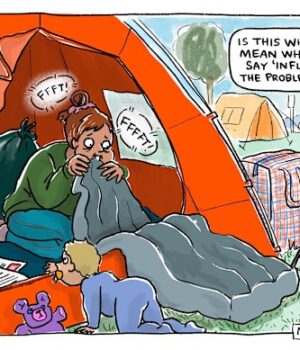
source : the age
To submit a letter to The Age, email letters@theage.com.au. Please include your home address and telephone number. No attachments, please include your letter in the body of the email. See here for our rules and tips on getting your letter published.
I am seriously confused. Inflation is too high so we need to increase interest rates so those fortunate enough to have a mortgage have to curtail their spending. The government then looks at measures to put more money into the economy in the guise of tax cuts or whatever may be effective in ensuring they may not lose votes. That, of course, may be inflationary ensuring another rate rise to curtail inflation.
How can the so-called money managers (Labor or Liberal) see this as a solution? How can no government economist (is this an oxymoron?) see that belting those who strive to buy their dream home is very narrowminded?
For goodness sake, increase the tax rates to reduce spending across the board.
David Raymond, Doncaster East
RBA move is not fair
Raising interest rates has to be an inefficient means of combating inflation. Borrowers are the major cohort of those impacted by a rate rise – and that happens to be about a third of us.
The other two-thirds are basically unaffected by a rate rise. In effect, the Reserve Bank wants to control inflation by impacting only part of the community (″RBA warns of more rate pain to come″, 30/9).
Those unaffected go about buying their needs as they want to, making no impact on inflation other than perhaps creating demand – which may well contribute to inflation.
Why not make use of all of the population by altering taxation, in particular the GST. All of the population is then contributing to the lowering of inflation. And the government gets the benefit of reaping more dollars, lowering the deficit.
To disallow governments changing the GST at their whim, allow only the RBA make a directive to alter the GST rate similar to what it does now with interest rate changes.
Peter Randles, Mornington
Don’t rely on ideology in a crisis
Let’s try and take the politics out of the rise in inflation and the rise in interest rates. RBA governor Michelle Bullock has put the primary cause at increased petrol prices which will soar if US President Donald Trump cuts diesel supply.
There is in my opinion an ideology that governments who don’t reduce income tax are inefficient. Ideology is not something to rely on in a crisis. The only people who have any sort of discretionary spending are higher-income earners. I suggest that the tax rate for people earning over $135,000 increase from 37¢ to 40¢ in the $1, which will decrease spending. It can be put in place for two years until things improve.
I am sure if Labor suggested it, the Coalition would throw a fit. But I can’t see the Coalition having anything better to suggest, other than get rid of Labor in 18 months.
John Rome, Mt Lawley, WA
Rise an ineffective tool
The Reserve Bank has failed to qualify why the latest increase is necessary. Hiding behind the stated goal that it is to reduce inflation is not a justification in itself, unless the RBA can demonstrate how increasing the cash rate will act to prevent institutions, industries and commerce from raising their prices.
Recent increases in the cash rate have clearly shown that it has done nothing to reduce inflation, nor will this latest increase.
David King, South Yarra
Banks are the holders
As interest rates rise again, we see many articles regarding the plight of “mortgage holders”. Can we get the terminology right: the “holder” of the mortgage is the bank. The borrower pledges the right to the mortgaged property as security to the lender.
Angus McLeod, Cremorne
A tradition we could do without
It’s reassuring to see that the Reserve Bank has observed the time-honoured Australian tradition of punishing the most vulnerable the most harshly.
Steve Walter, Newstead
THE FORUM
Funds and services
A shortage of staff at the new Footscray (″New hospital, fresh crisis″, 30/9) and Royal Children’s hospitals, a shortage of beds to house homeless people, childcare upheavals leaving families without places, roads across the state in poor condition, and public schools struggling for funds are all symptoms of the increasing need for better service delivery demanded by the community.
Also, the Middle East war and Reserve Bank interest rises are adding to the cost-of-living crisis that cannot be addressed unless governments have access to more funds either through borrowing or increasing taxes.
In debates surrounding the issues, the thought of paying higher taxes are excluded,
while ideology and self-interest dominate.
Whoever wins the next Victorian election has a massive challenge, and no simple solutions other than more funds will solve the problems. Let’s not be fooled by rhetoric and grandstanding by those seeking election.
Ray Cleary, Camberwell
Housing is key
The Age editorial (30/9) supporting an assertive homelessness outreach program points out that it is but one part of the whole. Housing is the issue, and the dream of home ownership is over for the foreseeable future for many Australians – a result of decades of policy neglect and failure from most governments.
The Age has a proud history of exposing government failures, and our housing crisis is fertile ground. All major parties should be asked to respond to the following assertions: Without serious government intervention, we will have a permanent under-class of citizens who cannot afford to purchase, struggle to pay private rents and cannot access public or social housing.
Band-aids applied for decades such as first home-buyers grants, selling scarce urban land for private development with paltry increases in public housing stock or encouraging superannuation funds to invest in social housing are not effective.
There is no substitute for adequate public funding for housing – as occurred from the 1940s to the 1970s – and credible analyses demonstrate significant net socio-economic benefits from such investment.
As Age columnist Ross Gittins has observed, this might smooth the impact of the cyclical nature of the private housing sector.
Norman Huon, Port Melbourne
Billionaires aplenty
Your correspondent highlights the success of Australia’s super rich (Letters, 30/9). We are certainly doing very well in terms of wealth concentration. The United States has about 12 times Australia’s population (342 million v
28 million) and while we have about 180 billionaires, they have only about 1000.
Perhaps it is some kind of achievement in having twice as many billionaires per head of population as the US, the nation that is usually recognised as the leader of the Western world in terms of inequality.
Peter McCarthy, Mentone
The peace supports
Politicians claim they want peace in the Middle East and stop there, as if everything would then be resolved and we can wash our hands of the situation.
Peace is not only the absence of war but requires actively putting in place the practical opportunity for prosperity, freedom and justice. Without these opportunities, peace is not only meaningless but will not last.
Roy Olliff, Mont Albert North
Airport rail a waste
Why build airport rail when the Skybus takes, at most, 25 minutes from Southern Cross Station (“Carroll makes tracks in rush for airport rail by 2031”, 30/9)?
The train from Southern Cross to Sunshine station takes about 25 minutes. Another 10 minutes for the new line from Sunshine to the airport, and guess what? The bus is quicker. Do the maths: airport rail is a waste of money.
Peter Heffernan, Balaclava
Careful with labels
I don’t doubt that Xi Jinping is a dictator, but is China an enemy state as Peter Hartcher asserts (Comment, 29/9)? There are many dictatorships around the world and many authoritarian states, but we usually manage cordial relations with them and avoid labelling them as enemies.
Even countries with whom we have had long-standing good relations can prove difficult at times. I think we do need to be cautious in our dealings with China. Alas, I also think we need to be cautious in our dealings with the United States in its current authoritarian phase. I don’t think it helps our efforts to maintain good relations to label them as enemies.
David Rose, Montrose
The benefits of trout
While it is true that trout are an invasive species, as your correspondent rightly says, (Letters, 29/9), brown and rainbow trout are almost certainly the only “pest” whose introduction has been, on balance, beneficial to Australia. Trout anglers are a large part of an industry that spends nearly
$11 billion annually and supports thousands of jobs in regional areas, all in pursuit of a fish that has had an almost negligible impact on our natural environment. Trout should not be considered as pests in the same context as other invasive species that have ravaged Australia.
Greg Hardy, Upper Ferntree Gully
Children, ssshhhh
This may make me sound heartless, but maybe it’s time to ban children from libraries who don’t respect this sacred environment. While I have been studying and been respectful of the culture, some parents let their children run amok. It’s not an extension of school, children can be a nuisance and can disrupt the privilege of a quiet space. Kid-free zones may be a nice option.
Panagiota Frangopoulos, Malvern
Neglected Footscray
As a 20-plus-year resident of the inner western suburbs of Melbourne and having founded the local community independents group (Voices of the Inner West of Melbourne), I’ve never seen our Footscray district area making news headlines as much for unfortunate reasons. The high-voltage powerlines through Yarraville residential streets, fast-tracked data centre developments, failed social support and safety in the Footscray urban area, and now the reporting on the dire situation at the Footscray Hospital (“Closed theatres, empty beds: The problems plaguing Melbourne’s new $1.5b hospital”, 30/9).
These examples speak to the widespread frustration of residents who have been feeling overlooked and taken for granted for many years – and now realising with this Victorian election that the district of Footscray is actually a marginal seat.
Anthony Warren, Seddon
Superbug super scary
Amid the many alarming stories in The Age yesterday, one stood out: “Ultimate Superbug: New form of antibiotic resistance uncovered” (30/9).
Science reporter Angus Dalton’s overview revealed 10 of Victoria’s 14 independent research institutes will close because of the “slow strangulation of the research sector by flat state and federal funding”.
I’d always assumed wealthy pharmaceutical companies in Australia – and throughout the world – would help fund such vital research but ironically, antibiotics are deemed “the opposite of a profitable blockbuster drug”.
While experts express concern about the prospective fatal intrusion AI will create, who’s worried about an emerging “ultimate superbug” resistant to existing antibiotics that is a genuine threat to human lives?
Regrettably, it seems, no one.
Sally Davis, Malvern East
Plight of the humble bee
While walking the dogs recently, I noticed some bees, but so few it seems that they can afford to
be selective, feeding only on lavender bushes.
In the evenings, with the light of Jupiter standing in for the Moon, I have recently seen swarms of what I guess must be bogong moths landing on and feeding on the streetside bottlebrushes (″After catastrophic decline, the bogong moth is springing back″, 29/9). They are so small though, possibly offering only tiny snacks for any of Sydney’s micro bats?
I can remember much larger moths in the past with these markings, that with their wings extended could cover a child’s hand. With councils tending to replace all-year-round flowering natives like bottlebrushes with northern hemisphere deciduous trees (bare in winter), what hopes remain for these and other nocturnal nectar feeders and pollinators?
Garry Dalrymple, Earlwood, NSW
Hive of humanity
Can you imagine how insufferable people would be if they only spoke after checking with artificial intelligence? They would always be right and no one would have differing opinions, anecdotal incidents to relate, and creativity would be lost because everyone would be attuned to what AI thinks is the correct fashion.
Empathy and sympathy, love and affection may become scripted, but will we recognise the falsity of it?
Our eyes, ears need to absorb natural things before they become overwhelmed by unnatural ones. The simple touch of a human or animal is enough to trigger all sorts of endorphins in our brain.
I can’t see an AI machine doing that without us popping a pill to activate it. Unless we have proper human interaction, it will become a short, boring grey life we lead.
Our biggest data centre is the 8 billion real people in the world.
Sharing each other’s feelings and experiences is our primary weapon against AI.
Greg Tuck, Warragul
Sketchy planning
We seem to be very good at drawing the Airport Rail Link. Just not very good at building it.
Ron Mather, Melbourne
AND ANOTHER THING
Finances
Why do we need politicians and economists while we have the Reserve Bank governing our lives?
Richard Sykes, Bell Park
When Australia’s underlying rate of inflation is nearly the same as Puerto Rico’s, you know we are definitely on the path to becoming a banana republic.
Martin Newington, Aspendale
It might be tough, but I still remember running a business and having a mortgage when the Reserve Bank raised the interest rate to 17.5 per cent.
Les Aisen, Elsternwick
Furthermore
Two signs seen in a cafe in Scotland – ″Dogs Welcome” and “Unsupervised children will be given a triple shot macchiato and a free kitten”.
Kathy Keech, Beaumont, SA
Somewhere in Russia, there must be people who are different from Vladimir Putin. Pity we only ever get to see Putin’s cruel excesses.
John Walsh, Watsonia
When we read that OpenAI promises to do better after the Medicare hack, is the statement coming from company human management or its machine?
Tim Nolan, Brighton
So Donald Trump has changed the name of artificial intelligence to super intelligence. He may have considered the name, supreme intelligence, but I believe he’s saving that title for himself.
Henry Herzog, St Kilda East
Did anyone else have a metacarpal moment of Mark Latham v John Howard when Donald Trump took to Adam Scott with a mild case of attempted dislocation of his shoulder?
David West, Essendon
Your correspondent (letters, 29/9) laments the lack of genuine original thought and ideas in letters to the editor. I agree, but around 3000 years ago it was said: ″There is nothing new under the sun″ (Ecclesiastes 1:9). Keep trying, though.
John Massie, Middle Park
George Orwell’s novel, 1984, should be renamed 2084.
Kerrin Adams, Greensborough


