

Source : THE AGE NEWS
Australia’s financial watchdog says insurance companies are increasingly settling claims on home damage with cash payouts that are sometimes so low they won’t fund the repairs disaster-stricken customers need.
A review of home insurance by the Australian Securities and Investments Commission has warned that policyholders who accept cash settlements are often not fully informed about the risks and are frequently being short-changed.
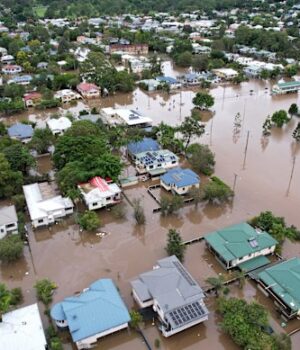
The watchdog focused on the industry’s use of cash settlements in claims following Cyclone Jasper which caused widespread damage across Far North Queensland in December 2023. The regulator examined policies and procedures from leading insurers, including brands NRMA, CGU, Suncorp, AAMI, Apia, QBE, Allianz and Sure.
Two in five insurers used full or partial cash payments to settle more than 80 per cent of claims relating to the cyclone. Crucially, 52 per cent of cash settlement offers were based on just one quote gathered by an insurer. Within that, nearly three-quarters of the one-quote offers were from an insurer’s preferred supplier.
The watchdog said it was particularly concerned by insurers relying on a single quote from a preferred supplier because those suppliers routinely offered discounted quotes due to their potential to get repeat business.
Customers who accepted a cash settlement on that basis would struggle to get such favourable quotes if they attempted to organise the repairs themselves, ASIC Commissioner Alan Kirkland said.
The review cited a builder telling a customer they quoted insurers 40 per cent less than what they quoted an individual seeking just one job.
“Receiving a cash payment can seem attractive but what it means in effect is you have to do all of the work, from finding tradespeople, sourcing quotes to organising repairs,” Kirkland said.
“You may find that when the time comes to pay, it may be a lot more than what you got in the settlement,” he said. “[And you’re] dealing with unexpected costs and navigating issues that would otherwise be handled by the insurer.”
Inflation in repair costs, where the rush to organise tradespeople and source materials in an area following a natural disaster increases costs, is also exacerbating the risk of a gap between cash settlements and true costs which are leaving policyholders out of pocket.
“The easy option for insurers can be the expensive one for home owners. If the amount falls short, consumers can be left shouldering the cost of repairs and paying the difference out of their own pocket,” Kirkland said. “If home owners are taking on more work, more risk and potentially more costs, home insurers need to take this into account when offering to settle with cash.”
As part of its review, the commission found two instances where an insurer obtained more than one quote for repairs, but the insurer offered to settle on the lowest quote. In response, ASIC called on insurers to apply a loading on top of quote amounts used to formulate settlements, to act as a contingency buffer for customers facing more expensive repair costs.
Insurers’ policies were inconsistent with this approach, the commission found, with one insurer applying a 10 per cent contingency to one claim but not others.
In another example, an insurer applied a 20 per cent contingency to a cash settlement, but only after a customer lodged a complaint that their initial offer was too low.
“The examples where consumers challenged the cash settlement offer, and it was then increased, raise questions about whether the initial offer was fair,” Kirkland said. He encouraged policyholders to ask their insurers how their quotes were formulated and, if they were concerned it was insufficient, to complain both to the insurer and the Australian Financial Complaints Authority.
ASIC also noted a cash settlement trend outside of the Cyclone Jasper period, with 63 per cent of home insurance claims in normal, non-disaster times involving a full or partial cash settlement.
More broadly, ASIC was concerned by insurers failing to consistently apply policies when dealing with vulnerable customers. “Even when these customers were identified, some insurers did not record information or share it with third parties involved in the claim process,” Kirkland said.
An Insurance Council of Australia spokesperson said there had been “a significant industry uplift since Tropical Cyclone Jasper, with a focus on making sure cash settlements are clearly explained and understood”.
“Insurers are committed to fair customer outcomes and recognise that customers must have clear information on cash settlements,” the spokesperson said. “A cash settlement can provide customers with flexibility, giving them speed, choice and control over their own repairs after a disaster, including the ability to prioritise urgent fixes and decide how the funds are spent.”
The Business Briefing newsletter delivers major stories, exclusive coverage and expert opinion. Sign up to get it every weekday morning.
 Elias Visontay is a National Consumer Affairs Reporter at The Sydney Morning Herald and The Age.Connect via email.

