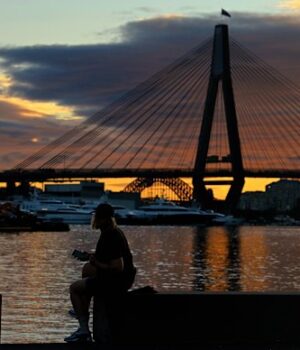
source : the age
Sydney’s east will take on the majority of the city’s new housing over the next 20 years, arresting the outward sprawl of development and locking in the west as an economic powerhouse, under a critical NSW government plan to accommodate an extra 1.3 million people by 2046.
The government’s finalised Sydney Plan to manage future growth envisages 30 “interconnected centres” spreading jobs, services and economic activity across the city, anchored by central business districts in Sydney, Parramatta and the emerging city of Bradfield, near Western Sydney Airport.
These hubs, along with dozens of local centres, would be “vibrant, mixed-use places that support more homes, jobs, services and activities, and active day and night economies” close to transport.
Planning and Public Spaces Minister Paul Scully said the plan to guide future growth in 33 local council areas would provide long-term certainty for residents, councils, businesses and investors.
“This is looking forward at how Sydney will grow, where people will be employed, and where people will recreate and enjoy themselves over the next 20 years. We have to accommodate all of that.”
It underscores the government’s attempts to slash duplication in the planning system, give councils greater clarity, and rebalance Sydney’s housing growth by boosting density near train stations and bus interchanges under its transport-oriented development and low- and mid-rise housing policies.
Sydney has about 2 million existing homes for its 5.3 million residents. The plan aims to create capacity for 800,000 new dwellings and 950,000 more jobs across Sydney by 2046, by which time the region’s population is expected to have jumped by 23 per cent to 6.6 million.
Just under half of those homes would be built in eastern Sydney council areas along public transport routes, such as the future Bays West development, compared to less than a quarter in the west.
The plan said western Sydney would experience the largest growth in jobs across Sydney, with a 59 per cent increase from 475,000 jobs in 2026 to 755,000 jobs in 2046 – a surge propelled by undeveloped industrial lands, Western Sydney Airport and the Mamre Road intermodal terminal.
Scully said: “This continues the work that we’ve been doing in rebalancing housing growth towards the east, and jobs growth towards the west.
“It’s not saying that there’s no greenfield [residential] development in the future, but it recognises we should be taking advantage of where we’ve made infrastructure investments and have capacity.
“We’ve got big investments around the new airport, which means that there’s a huge contribution to jobs and the economy that will come out of western Sydney, and we’ve got to embrace that.”
One of the tweaks in response to feedback on the draft plan, Scully said, was the emphasis on requiring councils to maintain a pipeline of at least 30 years of feasible housing capacity at all times, to ensure housing supply kept pace with population growth beyond short-term population targets.
Every council must have an affordable housing contribution scheme in place by 2027.
The finalised document will replace the regional plan released by the former Greater Sydney Commission in 2018. It planned for a metropolis of three separate but connected cities: the “Eastern City” near the CBD, the “Central City” around Parramatta and Olympic Park, and the Western City.
Scully said that plan “artificially divided” the city, whereas the new plan saw Sydney operating as one metropolis, connected to other regional centres including the Illawarra and Central Coast.
“Even though there are differences across the city, we want to embrace, encourage, and take hold of those differences and use them to our advantage rather than use them to chop up the city,” he said.
The report said policies to lift density had boosted the capacity to build more homes and diverse housing types, but noted the feasibility problems posed by construction costs and labour shortages.
As of July, NSW was tracking about 40 per cent behind the rate required to meet the Minns government’s commitment to build 377,000 homes by mid-2029 under the National Housing Accord.
Scully said he would “like to be further along, but we had to turn around the worst planning system in the country to create the capacity to do this. That’s starting to come through now.”
Committee for Sydney chief executive Eamon Waterford said the plan provided the “long-term vision Sydney needs”.
Planning Institute of Australia NSW president Sue Weatherley welcomed the requirement for councils to plan for 30 years of feasible housing capacity, but said councils would need clear guidance, funding, skilled planners and access to feasible capacity modelling tools.
Local Government NSW said in its submission on the draft plan that councils wanted a planning system that allowed councils aligned growth with enabling infrastructure, and involved local councils in plan making and delivery.
“The support of councils and communities is the social licence for growth and greater density in our pre-eminent city. Development that occurs in an ad-hoc way, unsupported by necessary infrastructure, can diminish quality of life and productivity.”
Start the day with a summary of the day’s most important and interesting stories, analysis and insights. Sign up for our Morning Edition newsletter.