

Source : the age
Usually, when there’s a big-spending splurge event that overlaps with the rate of inflation being higher than the Reserve Bank would like it to be, the temptation from many is to point the finger of blame at those splashing the cash and roll out the usual warnings about how they should know better than to risk upsetting the economy.
But over the past week, something strange has happened, and we’ve seen the blame game flip on its head thanks in large part to one of the biggest pop bands in the world.
But before we get into how a Korean boy band galvanised people against the music industry, we need to go back to 2024, when Taylor Swift was preparing to bring her Eras Tour to Australia for a series of sold-out shows.
At the time, it was one of the biggest world tours any musician had ever undertaken. Ultimately, it went on to become the highest-grossing tour of all time, netting $US2 billion ($2.8 billion) in ticket sales alone.
When Swift and her tour landed on Australian shores, a vocal posse of doomsayers predicted the Melbourne and Sydney shows would bring the local economy to its knees because of how much money her fans would spend at a time when inflation was already high. Two years later, we know that the sky did not fall in, the economy did not collapse and everything worked out perfectly OK.
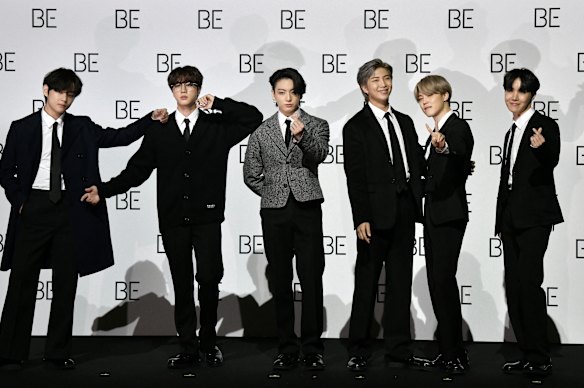
All of this brings me to BTS, whose tickets for their upcoming Arirang world tour went on sale this week. While BTS might not have the same kind of broadscale name recognition in Australia as Taylor Swift, they are easily one of the biggest – if not the biggest – band in the world right now.
Many people (myself included) had no idea that it was even a legal practice to not disclose ticket prices until the day of sale.
With a fan base of more than 90 million people globally, the Korean analyst firm NH Investment and Securities estimates that their upcoming world tour, which will make its way to Australia in February 2027, could generate as much as $US5.3 billion globally. The firm has dubbed the expected boom “BTSnomics”.
Just as was the case with Swift, when tickets went on sale this week via presale and general sale events, the demand was huge. But problems for Ticketmaster and Live Nation, the ticketing and touring companies responsible for the Australian tour dates, had already come days earlier when they found themselves caught in the crosshairs of BTS’s diehard superfans.
That’s because initially, Ticketmaster announced it would not publish ticket price or seating options for the Melbourne and Sydney shows until the day the tickets went on sale, telling fans that prices “will be made available once the waiting room [where people wait to access tickets during high-demand sales periods] opens”.
In other words, no one would have any idea of how much they’d be on the hook for until minutes before they were expected to pay up.
Similar to Ticketmaster’s dynamic pricing scheme made infamous during the 2024 Australian Open, many people (myself included) had no idea that it was even a legal practice to not disclose ticket prices until the day of sale.
And with stadium tours for major groups being what they are, fans rightly predicted that they would be on the hook for hundreds of dollars per ticket – meaning they absolutely needed to be able to budget and consider their options ahead of time.
The problem for Ticketmaster and Live Nation is that with such a large fan base, the blowback from BTS supporters was swift, mighty and highly publicised.
In an open letter written to Ticketmaster and posted via the BTS_Australia Instagram account on May 26, fans wrote: “Without access to basic pricing information ahead of time, we are unable to make complete, informed financial decisions before entering an extremely high-pressured purchasing environment during an already stressful cost of living crisis.”
The letter continued: “Withholding ticket information until your consumers are already in the waiting room or actively within the sales process places fans in an unnecessary and completely avoidable position of difficulty and stress. For many Australians and New Zealanders, attending these long-awaited concerts will require coordination to ensure they do not overcommit to the purchase or risk their financial security with impulsive decisions on the day in an attempt to secure a ticket.”
In addition to pointing out that many people would need to factor in things like travel expenses, accommodation costs, general budgeting and annual leave to attend one of the shows, fans also pointed out that for BTS shows outside of Australia, Ticketmaster had previously released ticket prices and seating maps, meaning there was no clear explanation as to why they wanted to do something differently here.
Thankfully, people power paid off. By June 1, just one day before presale tickets and three days before general sale tickets became available, Ticketmaster reversed its decision and published detailed seating plans and ticket prices across both cities.
Just as fans had predicted, the shows aren’t cheap, with the most affordable ticket going for $152.69 in Melbourne, and $156.82 in Sydney. The most expensive option in Melbourne, meanwhile, is $662.44 and $669.37 in Sydney.
We still don’t know what Ticketmaster or Live Nation’s intentions were in trying to withhold prices until the very last minute. But what we do know is that when people splurge or overspend on “treat” purchases, it almost always happens because a combination of emotional triggers like anticipation or the fear of missing out, as well as social pressures, are present.
During long periods of sensible budgeting and financial stress (ie. the ongoing cost of living crisis and threat of rising inflation), these kinds of feel-good buys are guaranteed to give us a big hit of dopamine because they feel like a reward after having reined in our spending for so long.
They also allow us to make memories we’ll cherish for years to come, which can feel rare when you’re in a daily grind.
We also know that the cure for overspending when splurging is creating the opposite environment – somewhere that’s relatively calm and where people have enough time, space and information to make good financial decisions.
In this instance, common sense won out thanks to people calling out practices that don’t pass the pub test.
That’s a win for BTS fans and the Australian economy, which will not only survive the BTSnomics boom but benefit from it. But that it had to get to such a point at all is seriously disappointing.
Victoria Devine is an award-winning retired financial adviser, a bestselling author and host of Australia’s No.1 finance podcast, She’s on the Money. She is also founder and director of Zella Money.
- Advice given in this article is general in nature and is not intended to influence readers’ decisions about investing or financial products. They should always seek their own professional advice that takes into account their personal circumstances before making any financial decisions.
Expert tips on how to save, invest and make the most of your money delivered to your inbox every Sunday. Sign up for our Real Money newsletter.
 Victoria Devine is an award-winning retired financial adviser, best-selling author, and host of Australia’s number one finance podcast, She’s on the Money. Victoria is also the founder and managing director of Zella Money.