Source : INDIA TODAY NEWS
A Chinese ship in the Middle East was nearly intercepted by the US military after an intelligence report falsely claimed it was carrying components linked to a nuclear weapons programme, according to a CNN report. The episode unfolded this spring during the US-Israel war with Iran and exposed the potentially dangerous consequences of relying on artificial intelligence in military operations.
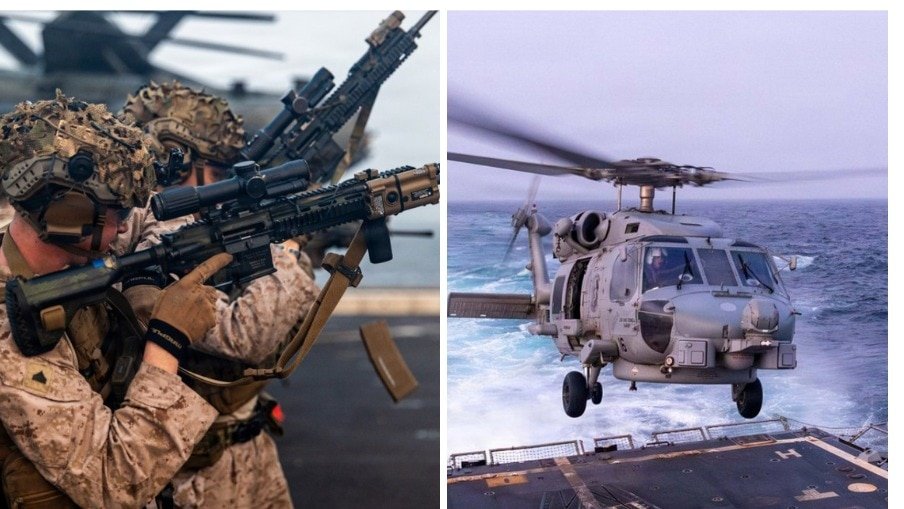
The US military reportedly moved rapidly after the intelligence report circulated through military channels. Plans were drawn up to intercept the vessel, while armed US personnel prepared to board it. Military aircraft were also reportedly airborne as officials prepared for the operation.
advertisement
But shortly before the planned action, officials examined the intelligence more closely and discovered that the report had been generated with the help of AI.
AI CHATBOT MISIDENTIFIED THE SHIP’S CARGO
The report had been prepared by an analyst linked to US Special Operations Command Pacific, based in Hawaii. The analyst had queried a chatbot about intelligence concerning the ship’s manifest.
According to sources cited in the report, the AI system inaccurately identified the material being transported by the Chinese vessel. The exact cargo that was misidentified remains unclear.
One source described the resulting intelligence report as “entirely false” and said it had “almost started a war”.
The danger was particularly acute because any US military operation against a Chinese vessel could have triggered a much wider confrontation between Washington and Beijing.
The chatbot had reportedly combined open-source information with classified signals intelligence available within government systems before reaching its conclusion. The analyst then used AI again to turn the findings into a standard intelligence report, which was subsequently disseminated to military officials.
AI PUSH INTO MILITARY TARGETING
The incident comes as the US military and intelligence community rapidly expand their use of AI, including for intelligence analysis, targeting, logistics, budgeting and supply-chain management.
The technology is increasingly being viewed as a way to process enormous quantities of information and accelerate battlefield decisions, including determining which targets to strike and where military assets should be deployed.
US officials have argued that Washington cannot afford to fall behind in military AI capabilities, particularly as it prepares for the possibility of a future conflict with China or another major adversary.
In January, Defense Secretary Pete Hegseth unveiled an “Artificial Intelligence Acceleration Strategy” aimed at expanding the military’s use of AI and reducing bureaucratic barriers to its adoption.
But the Chinese ship episode has highlighted the risks of deploying the technology in high-stakes military situations where a single inaccurate assessment can have potentially catastrophic consequences.
NO COMMON STANDARD FOR VERIFYING AI OUTPUTS
The US military’s adoption of AI is reportedly decentralised, with different parts of the government using different systems, under varying orders and safety standards.
Officials familiar with the process said there is no single standard governing how AI-generated information is verified before it is used or disseminated. The reliability and capabilities of the systems can therefore vary significantly.
That has raised particular concerns about AI being used in targeting operations.
One source familiar with current military policies said the use of AI in targeting was increasing, while there was no clear guidance on how keeping a human “in the loop” would necessarily prevent civilian casualties or accidental attacks on friendly forces.
The type of AI “hallucination” involved in the Chinese ship episode has also reportedly occurred elsewhere in the intelligence community.
‘AI ALLOWS YOU TO GET TO A BAD IDEA FASTER’
The incident has added to broader concerns within the US government about the speed at which AI is being integrated into sensitive operations.
Some intelligence officials who support the technology have warned that AI could pressure analysts to produce intelligence more quickly, potentially increasing the risk of errors.
Sources also said younger analysts, who are more accustomed to using AI tools, may be more inclined to trust their outputs without sufficient scrutiny.
One source summed up the danger bluntly: “AI allows you to get to a bad idea faster.”
– Ends
SOURCE :- TIMES OF INDIA